Soviet Withdrawal from Afghanistan: May 15, 1988
1988 · Kabul, Afghanistan
The Soviet Union began withdrawing its troops from Afghanistan, marking the start of the end of the Soviet-Afghan War.
December 24, 1979
The Soviet Union invaded Afghanistan, marking the beginning of a decade-long conflict. This invasion led to widespread international condemnation and was a significant event in the Cold War era.
Kabul, Afghanistan | Soviet Union
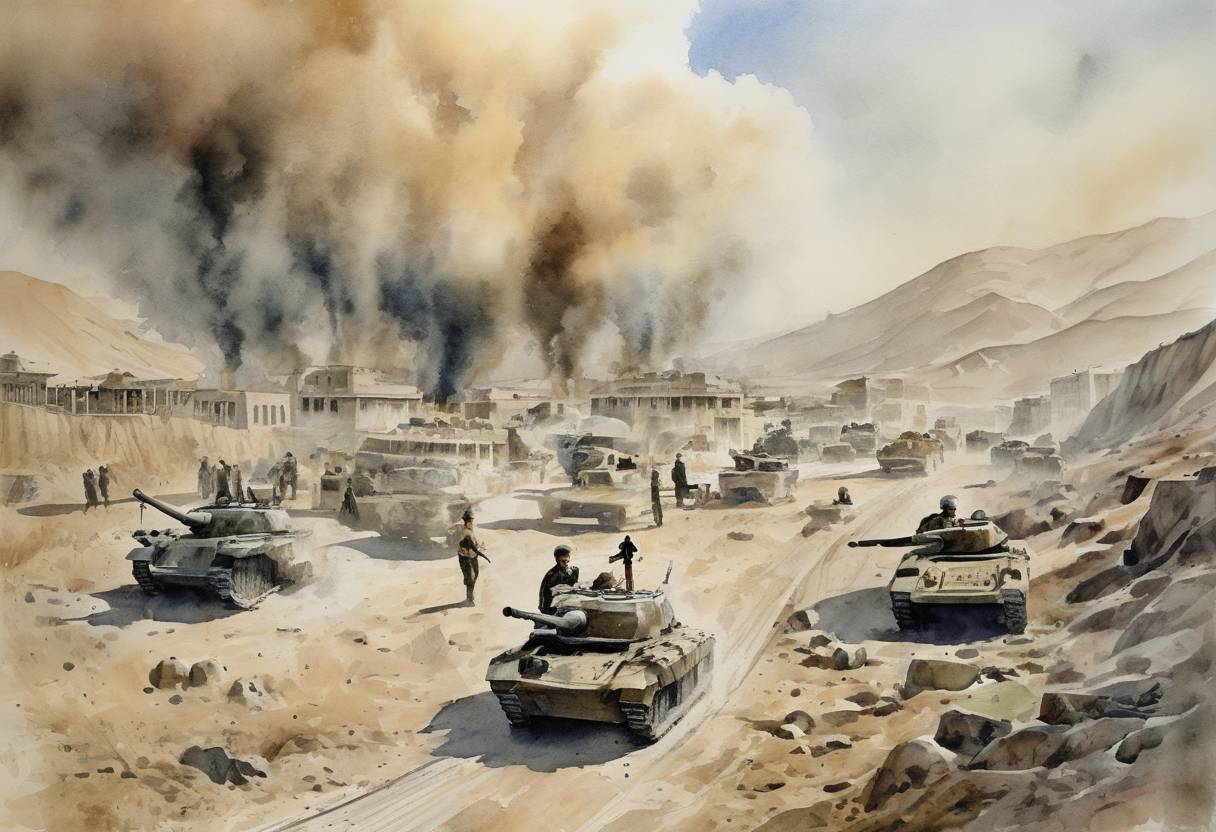
On December 24, 1979, the Soviet Union launched a large-scale military invasion of Afghanistan, marking the beginning of a decade-long conflict that would have profound implications for both the region and the broader Cold War dynamics.
The invasion was rooted in the complex political landscape of Afghanistan during the late 1970s. In April 1978, the People’s Democratic Party of Afghanistan (PDPA), a Marxist-Leninist group, seized power in a coup known as the Saur Revolution. The new government, led by Nur Muhammad Taraki, sought to implement radical socialist reforms, which were met with widespread resistance and rebellion across the country.
The internal strife within the PDPA, coupled with growing insurgency from mujahideen groups opposed to the communist regime, created instability. In September 1979, Hafizullah Amin overthrew and killed Taraki, further exacerbating the situation. The Soviet Union, concerned about the stability of a neighboring socialist state and the potential spread of Islamic fundamentalism, decided to intervene militarily.
On December 24, 1979, Soviet forces began their invasion, with an estimated 30,000 troops crossing into Afghanistan. The operation was swift, and by December 27, Soviet troops had secured Kabul, the capital. They executed Hafizullah Amin and installed Babrak Karmal, a more compliant leader from the PDPA’s Parcham faction, as the head of the government.
The invasion was met with widespread international condemnation. The United States, viewing the Soviet action as an aggressive expansion of communist influence, responded by imposing economic sanctions on the Soviet Union and boycotting the 1980 Moscow Olympics. The United Nations General Assembly passed a resolution condemning the invasion, and many countries provided support to the Afghan mujahideen fighters.
The Soviet-Afghan War became a protracted conflict, with Soviet forces facing fierce resistance from the mujahideen, who were supported by the United States, Pakistan, China, and other countries. The rugged terrain of Afghanistan and the guerrilla tactics employed by the mujahideen made the conflict costly and difficult for the Soviet Union.
The war continued until 1989, resulting in significant casualties and destruction. It is estimated that over a million Afghans died, and millions more were displaced. The conflict drained Soviet resources and contributed to the weakening of the Soviet Union, which eventually dissolved in 1991.
The invasion and subsequent war had lasting impacts on Afghanistan, leading to decades of instability and conflict. It also played a crucial role in the Cold War, highlighting the geopolitical tensions between the superpowers and influencing U.S. foreign policy in the region.
The Soviet invasion of Afghanistan remains a pivotal moment in history, illustrating the complexities of international politics and the far-reaching consequences of military intervention.
Source: en.wikipedia.org