Adlertag: The Launch of the Main Luftwaffe Offensive in the Battle of Britain
1940 · London, United Kingdom
Germany launched the main Luftwaffe offensive during the Battle of Britain, known as 'Adlertag' or 'Eagle Day.'
December 29, 1940
The German Luftwaffe conducted one of the most destructive air raids on London during the Blitz, known as the Second Great Fire of London. This raid caused extensive damage to the city and marked a significant moment in the Battle of Britain during World War II.
London, United Kingdom | Luftwaffe
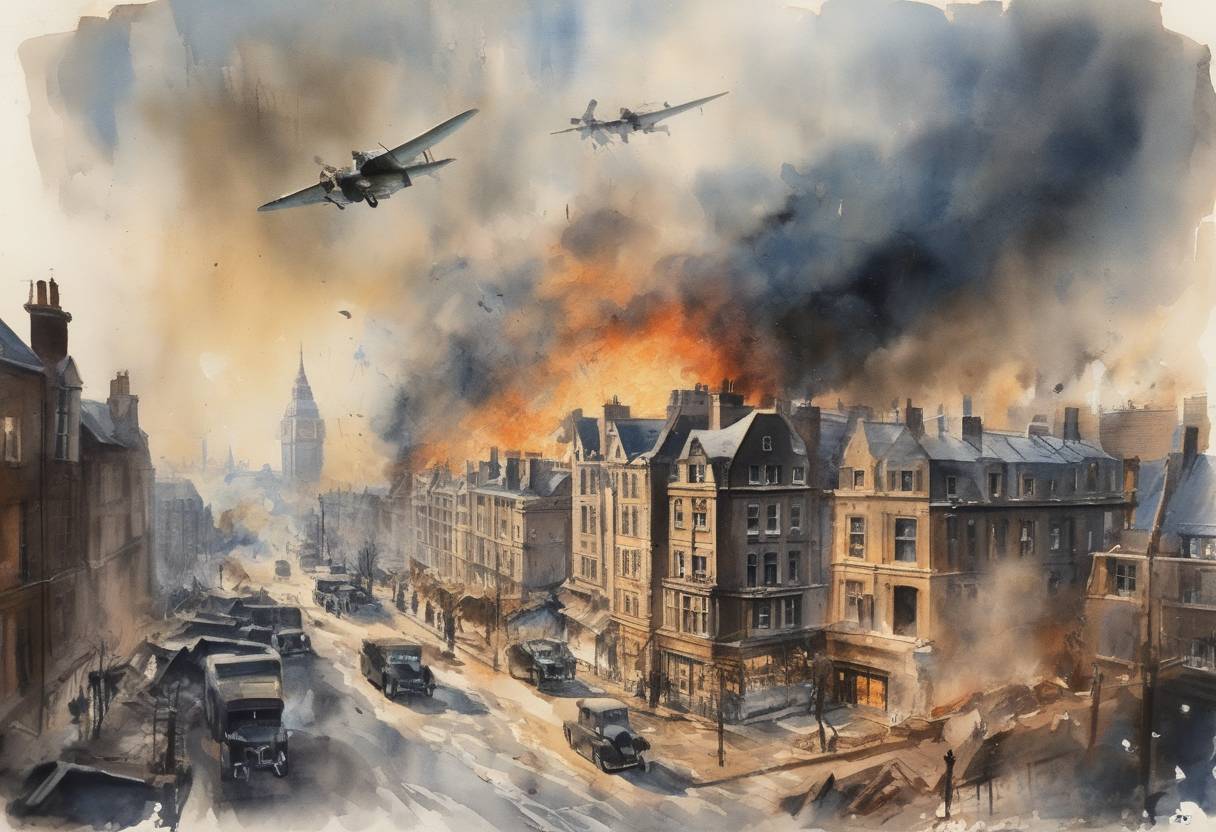
On the night of December 29, 1940, during World War II, the German Luftwaffe launched one of the most devastating air raids on London, an event that became known as the “Second Great Fire of London.” This attack was part of the broader Blitz, a sustained bombing campaign by Nazi Germany against the United Kingdom, which aimed to demoralize the British population and cripple the country’s war effort.
The Blitz: The Blitz began on September 7, 1940, and continued until May 1941. It was characterized by relentless bombing raids on major British cities, with London being a primary target. The aim was to destroy industrial targets and civilian morale.
Strategic Importance: By late 1940, the Luftwaffe had shifted its focus from military targets to civilian areas, intending to break the spirit of the British people and force the government into negotiations.
Timing and Execution: The raid commenced in the late evening and continued into the early hours of December 30. The Luftwaffe deployed over 100 bombers, dropping approximately 100,000 incendiary bombs on the city.
Target and Impact: The attack focused on the historic heart of London, including the City of London. The incendiaries ignited fires that merged into a massive conflagration, reminiscent of the Great Fire of London in 1666.
Destruction: The raid caused extensive damage to numerous historic buildings, including eight Wren churches and the Guildhall. The iconic dome of St. Paul’s Cathedral, however, miraculously survived, becoming a symbol of resilience.
Casualties and Damage: While the exact number of casualties is uncertain, hundreds were killed or injured, and thousands were left homeless. The fires destroyed large swathes of the city, with firefighters struggling to contain the blazes amid low water pressure and high winds.
Symbol of Defiance: The survival of St. Paul’s Cathedral amidst the devastation became a powerful symbol of British endurance and determination. Images of the cathedral standing tall amidst the smoke and ruins were widely circulated, boosting morale.
Historical Impact: The raid underscored the destructive power of aerial bombardment and highlighted the vulnerability of urban centers. It also reinforced the resolve of the British people and government to continue the fight against Nazi Germany.
The Battle of Britain: The Blitz was a continuation of the Battle of Britain, which saw the Royal Air Force successfully defend the UK against the Luftwaffe’s attempts to gain air superiority.
Long-term Effects: The sustained bombing campaign failed to break British morale or significantly disrupt war production. Instead, it galvanized the British public and contributed to the eventual Allied victory.
The Second Great Fire of London remains a poignant reminder of the challenges faced during World War II and the resilience of those who lived through it.
Source: en.wikipedia.org