Economic Growth and Tax Relief Reconciliation Act of 2001
2001 · Washington, D.C., United States
The United States Senate passes the Economic Growth and Tax Relief Reconciliation Act of 2001, which includes significant tax cuts.
September 15, 1981
The Senate Judiciary Committee unanimously approved Sandra Day O'Connor's nomination to the U.S. Supreme Court, making her the first woman to serve on the Court.
Washington, D.C., United States | United States Senate
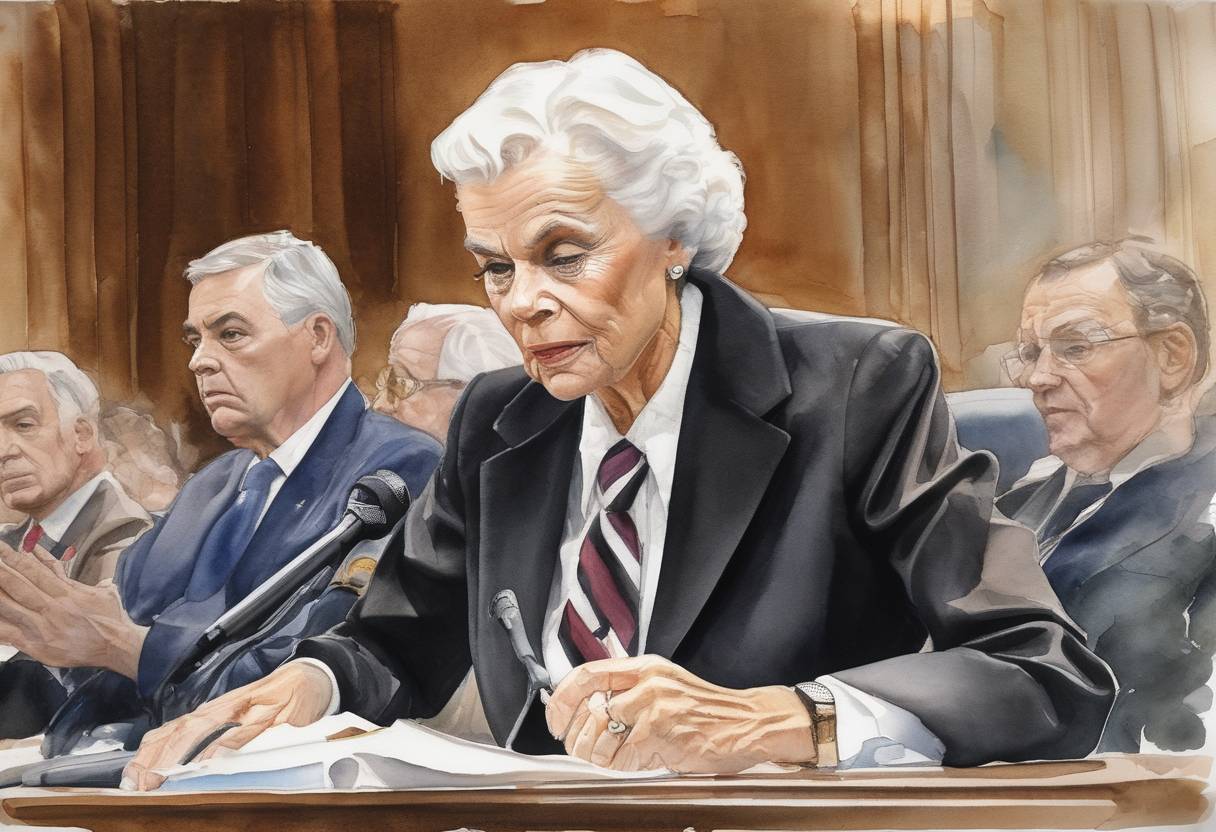
On September 15, 1981, the Senate Judiciary Committee unanimously approved the nomination of Sandra Day O’Connor to the United States Supreme Court. This pivotal moment marked a significant milestone in American history, as O’Connor became the first woman to be nominated and subsequently serve on the nation’s highest court.
Nomination by President Reagan: Sandra Day O’Connor was nominated by President Ronald Reagan on July 7, 1981. Her nomination fulfilled a campaign promise by Reagan to appoint the first woman to the Supreme Court, reflecting a broader societal push towards gender equality and representation.
Professional Background: Before her nomination, O’Connor had an extensive legal career. She graduated from Stanford Law School and served in various legal capacities, including as a state senator in Arizona and a judge on the Arizona Court of Appeals. Her diverse experience and moderate judicial philosophy made her a compelling candidate for the Supreme Court.
Senate Judiciary Hearings: The hearings for O’Connor’s nomination began on September 9, 1981. During these hearings, O’Connor was questioned on a wide range of issues, including her judicial philosophy, views on abortion, and her approach to constitutional interpretation.
Bipartisan Support: O’Connor’s nomination received widespread bipartisan support. Her moderate views and judicial temperament were praised by both Republicans and Democrats, contributing to the unanimous approval by the Senate Judiciary Committee.
Confirmation by the Full Senate: Following the committee’s approval, the full Senate confirmed O’Connor’s nomination on September 21, 1981, with a unanimous vote of 99-0. Her confirmation was a historic moment for the Supreme Court and the United States, breaking a 191-year tradition of an all-male Supreme Court.
Impact on the Supreme Court: Justice O’Connor served on the Supreme Court from 1981 until her retirement in 2006. During her tenure, she was often a crucial swing vote in many important decisions, influencing key rulings on issues such as abortion rights, affirmative action, and the separation of church and state.
Legacy: Sandra Day O’Connor’s appointment paved the way for future generations of women in the judiciary. Her legacy is remembered for her pragmatic approach to the law and her role in shaping the legal landscape of the United States during her time on the bench.
O’Connor’s nomination and subsequent approval by the Senate Judiciary Committee not only represented a significant advancement for gender equality in the United States but also underscored the evolving nature of the Supreme Court in reflecting the diversity of the nation it serves.
Source: www.history.com