1966 · Gaborone, Botswana
The Republic of Botswana gained independence from the United Kingdom.
September 30, 1966
Botswana gains independence from the United Kingdom, with Seretse Khama as its first President.
Gaborone, Botswana | Botswana Government
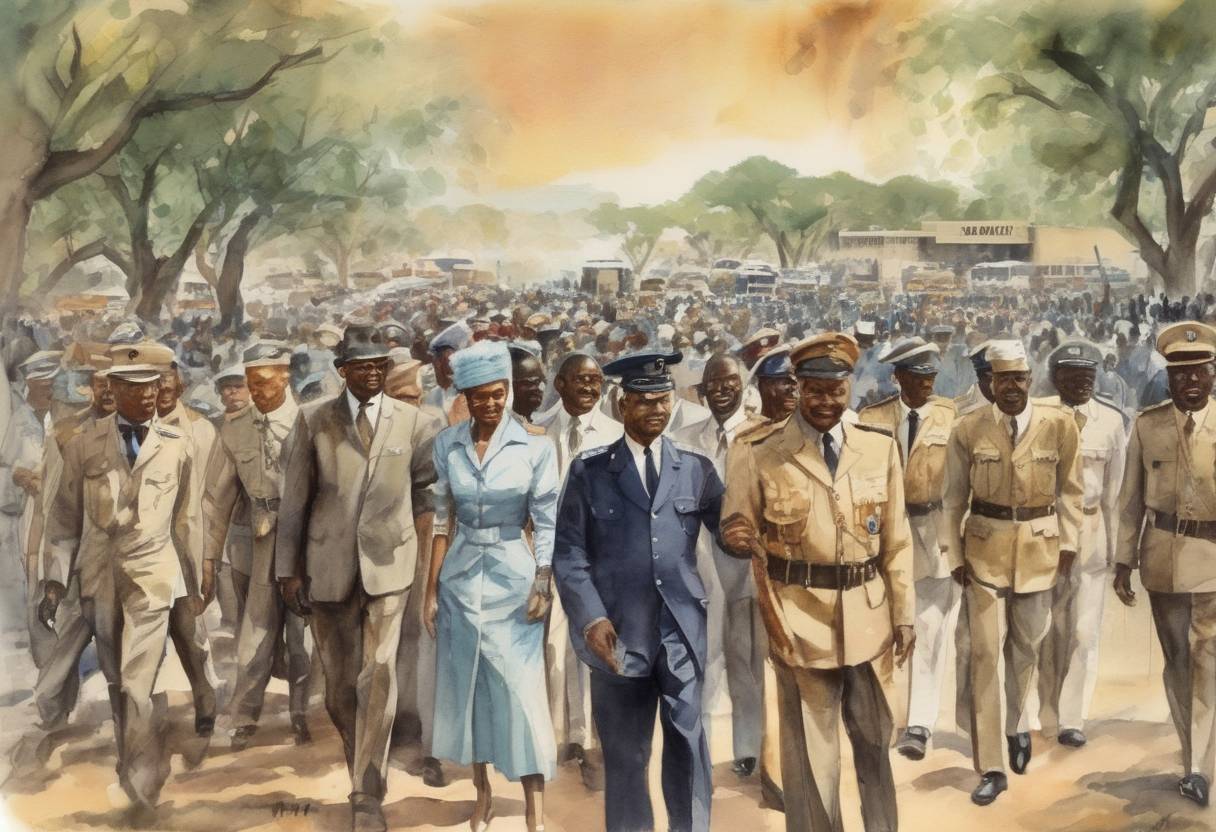
On September 30, 1966, Botswana, then known as the Bechuanaland Protectorate, gained independence from the United Kingdom. This marked a significant turning point in the history of the region, as it transitioned from a British protectorate to a sovereign nation. Seretse Khama became the first President of Botswana, playing a pivotal role in the country’s journey towards independence and its subsequent development.
Colonial Background: Bechuanaland became a British protectorate in 1885, primarily to prevent expansion by the Boer settlers from the Transvaal and to counter German influence in South West Africa (now Namibia). The British administration was largely indirect, with local chiefs retaining significant authority over internal matters.
Path to Independence: The movement towards independence gained momentum in the post-World War II era, as decolonization swept across Africa. In the 1960s, the British government, facing increasing pressure from nationalist movements and international bodies, began to facilitate the transition of its African colonies to self-rule.
Constitutional Developments: In 1961, the British government introduced a new constitution for Bechuanaland, which allowed for greater self-governance. This was followed by the establishment of a legislative council in 1965, which paved the way for democratic elections.
Elections and Leadership: In 1965, the first general elections were held in Bechuanaland. The Botswana Democratic Party (BDP), led by Seretse Khama, won a decisive victory. This set the stage for Khama to lead the country as it prepared for independence.
Declaration of Independence: On September 30, 1966, Bechuanaland officially became the Republic of Botswana. The transition was peaceful, and the new nation was welcomed into the international community.
Seretse Khama as President: Seretse Khama, a key figure in the independence movement, became Botswana’s first President. His leadership was instrumental in shaping the country’s democratic institutions and fostering economic development.
Economic Development: At the time of independence, Botswana was one of the poorest countries in the world. However, under Khama’s leadership, the discovery of diamond deposits and prudent economic management led to significant economic growth.
Political Stability: Botswana has maintained a stable and democratic political system since independence, often cited as a model of good governance in Africa.
Legacy of Seretse Khama: Khama’s presidency laid the foundation for Botswana’s success. His policies emphasized unity, non-racialism, and development, contributing to the country’s reputation as one of Africa’s most stable and prosperous nations.
Botswana’s independence is a testament to the power of peaceful negotiation and effective leadership in the decolonization process. The country’s journey from a protectorate to a thriving democracy remains an inspiring chapter in African history.
Source: en.wikipedia.org