December 16, 1893

Antonín Dvořák's Symphony No. 9, 'From the New World', premieres in Carnegie Hall, New York City, conducted by Anton Seidl.


New York City, United States | Carnegie Hall
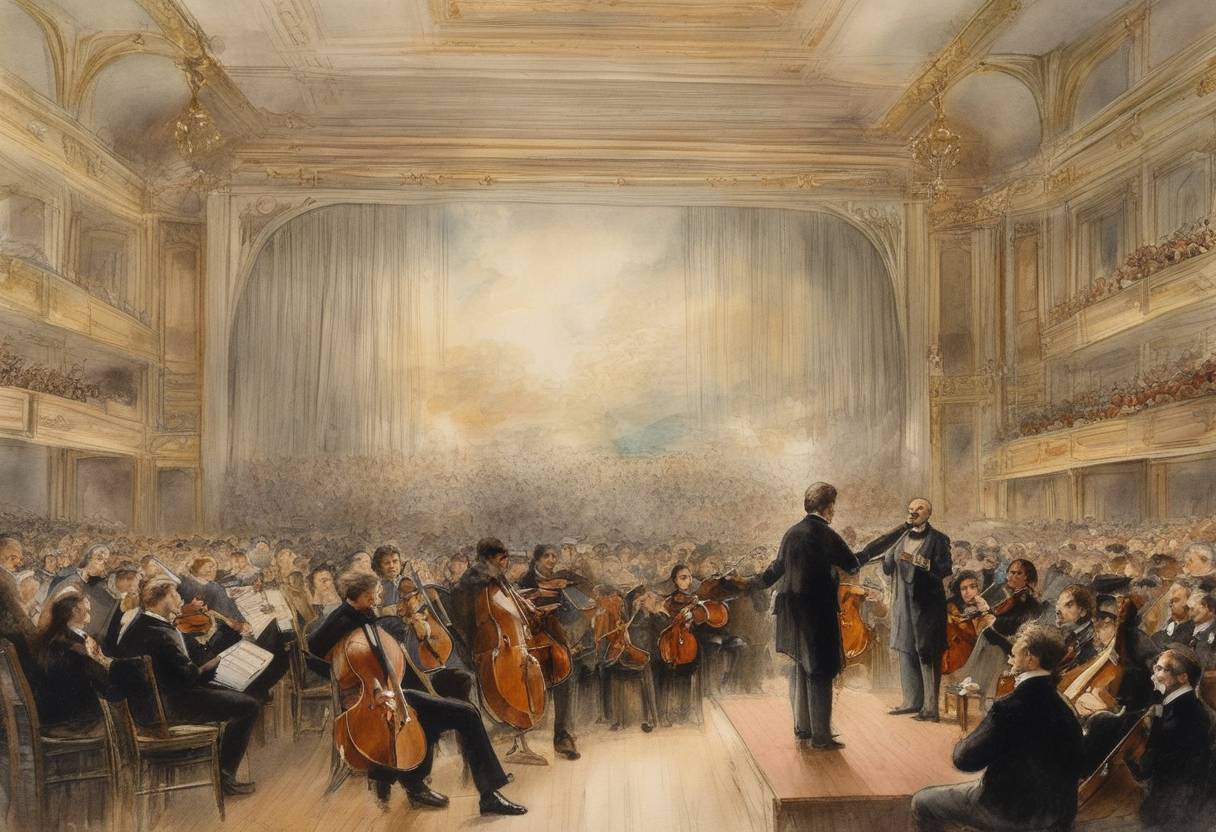
Watercolor painting based depiction of Antonín Dvořák's Symphony No. 9, 'From the New World', premieres in Carnegie Hall, New York City, conducted by Anton Seidl. (1893)

Premier of Antonín Dvořák’s Symphony No. 9

On December 16, 1893, Antonín Dvořák’s Symphony No. 9 in E minor, Op. 95, famously known as “From the New World” or the “New World Symphony,” premiered at Carnegie Hall in New York City. This landmark event was conducted by Anton Seidl with the New York Philharmonic, marking a significant moment in both Dvořák’s career and American cultural history.

Background

Dvořák, a Czech composer, was invited to the United States in 1892 to become the director of the National Conservatory of Music of America in New York City. The symphony was heavily influenced by his time in America, particularly his exposure to African American spirituals and Native American music, which he encountered during his tenure.

Composition Insights

  • Influences: Dvořák integrated elements inspired by the “wide open spaces” of America, and his symphony mirrored his interpretation of American musical expressions. He famously noted the influence of spirituals and Native American melodies on his work.
  • Themes: The symphony’s themes reflect the blend of the Old World and the New World, with melodies that evoke the American landscape while maintaining Dvořák’s Slavic roots.

Premiere Highlights

  • The premiere was met with critical acclaim. Attendees lauded it as a masterpiece that captured the spirit of a burgeoning American identity through the European symphonic tradition.
  • Music critics and audiences alike praised the second movement, “Largo,” for its hauntingly beautiful melody, which is often associated with the song “Goin’ Home,” though the lyrics were added later by one of Dvořák’s pupils.

Cultural and Historical Significance

  • The symphony has since become one of the most popular works in the orchestral repertoire, celebrated for bridging European classical traditions with the early roots of American folk music.
  • It had a lasting influence on future American composers, encouraging the incorporation of native themes and styles into classical music.
  • The symphony’s premiere also marked an important moment in Carnegie Hall’s early history as a preeminent venue for musical innovation and cultural exchange.

The debut of Dvořák’s Symphony No. 9 was a defining cultural event that signaled the growing importance of the United States in the international music scene and underscored the rich potential of blending diverse musical heritages.