Christopher Columbus Departs on His Fourth and Final Voyage
1502 · Cadiz, Spain
Christopher Columbus departs on his fourth and final voyage to the Americas.
August 3, 1492
Christopher Columbus set sail from Palos de la Frontera, Spain, on his first voyage across the Atlantic Ocean, aiming to find a westward route to Asia. Instead, he would eventually reach the Americas, marking the beginning of European exploration and colonization of the continent.
Palos de la Frontera, Spain | Spanish Crown
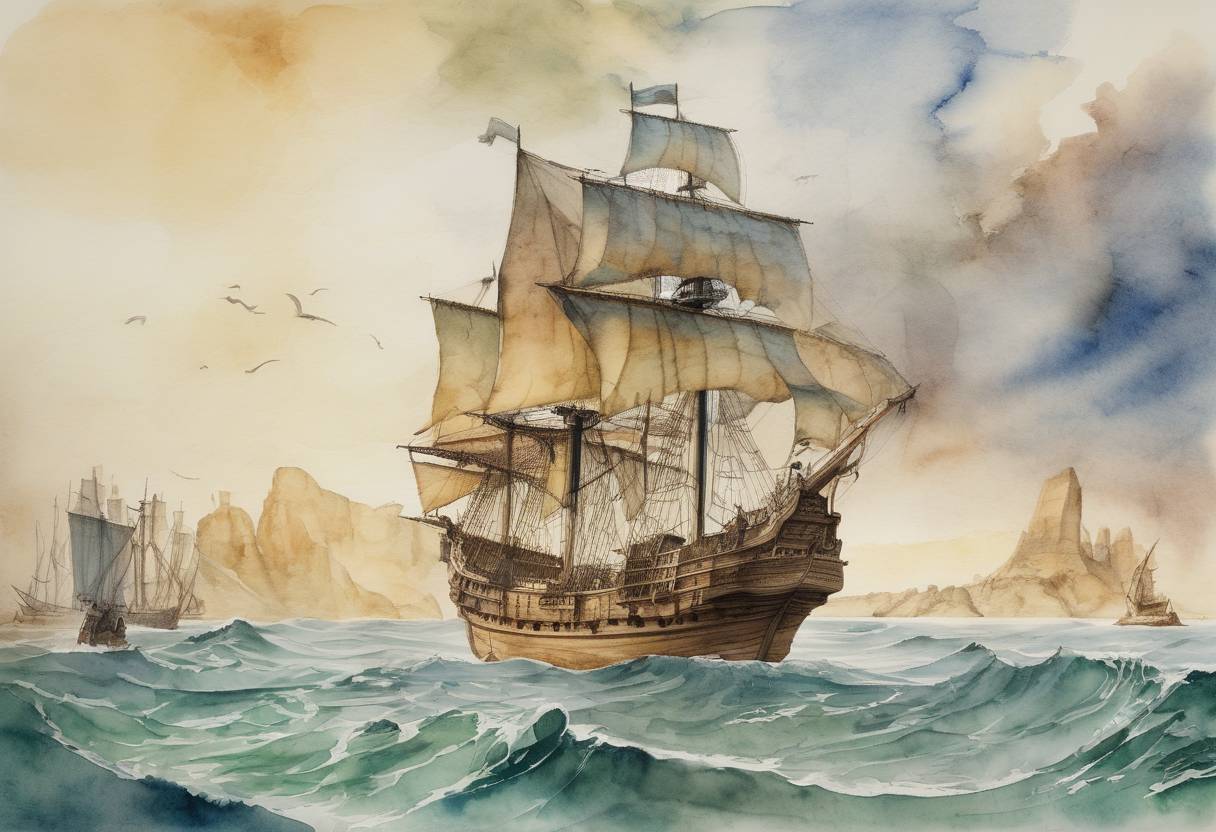
On August 3, 1492, Christopher Columbus embarked on his first voyage across the Atlantic Ocean, a journey that would ultimately lead to the European discovery of the Americas. This expedition marked a pivotal moment in world history, initiating an era of exploration and colonization that would reshape global interactions.
In the late 15th century, European nations were eager to find new trade routes to Asia, driven by the lucrative spice trade. The overland routes were long and perilous, and the Portuguese had already begun exploring a sea route around Africa. Columbus, an Italian navigator, proposed a bold alternative: sailing westward across the Atlantic to reach Asia.
Departure: Columbus set sail from the port of Palos de la Frontera in Spain, under the sponsorship of the Catholic Monarchs, Queen Isabella I and King Ferdinand II. His fleet consisted of three ships: the Santa María, the Pinta, and the Niña.
Objective: The primary goal was to find a direct westward route to Asia, specifically to the Indies, which were rich in spices and other valuable goods.
Crew and Ships: The expedition was manned by approximately 90 crew members. The Santa María was the largest of the three ships and served as the flagship.
Columbus’s voyage was fraught with challenges, including navigational uncertainties and the crew’s fear of the unknown. Despite these difficulties, Columbus maintained his course, driven by his conviction that Asia lay just beyond the horizon.
Landfall: On October 12, 1492, after more than two months at sea, Columbus and his crew sighted land. They had reached an island in the present-day Bahamas, which Columbus named San Salvador. Believing he had reached the outskirts of Asia, Columbus referred to the inhabitants as “Indians.”
Exploration: Columbus continued to explore the Caribbean, visiting other islands such as Cuba and Hispaniola. He established a small settlement on Hispaniola before returning to Spain.
Return to Spain: Columbus returned to Spain in March 1493, bringing with him news of his discoveries. He was celebrated and received further support for additional voyages.
Impact: Columbus’s voyages opened the door to the widespread European exploration and colonization of the Americas. This era of exploration had profound consequences, including the exchange of goods, cultures, and ideas, as well as the devastating impact on indigenous populations.
Legacy: While Columbus is often credited with “discovering” the New World, it is important to acknowledge the complex legacy of his expeditions, which include both the expansion of European influence and the beginning of centuries of colonization and cultural disruption for native peoples.
Columbus’s first voyage remains a landmark event in history, symbolizing the beginning of a new era of global exploration and interaction.
Source: en.wikipedia.org