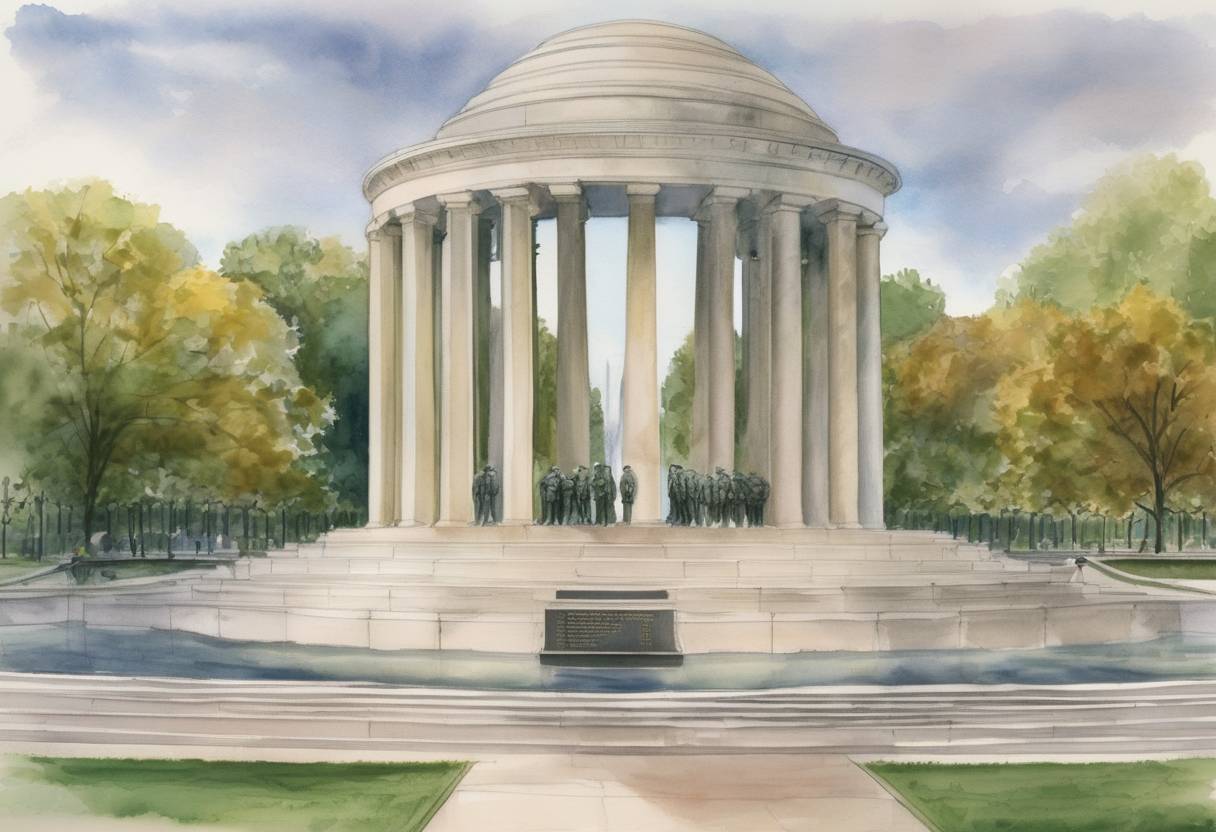
Dedication of the World War II Memorial
On May 29, 2004, the World War II Memorial was officially dedicated in Washington, D.C., in a ceremony that honored the 16 million Americans who served in the armed forces during World War II, the more than 400,000 who died, and the countless individuals who supported the war effort from the home front.
Background and Construction
The idea for a national World War II memorial was first proposed in the early 1980s. However, it wasn’t until 1993 that the project gained significant momentum, when Congress authorized the American Battle Monuments Commission to establish the memorial. The site selected for the memorial is on the National Mall, between the Lincoln Memorial and the Washington Monument, symbolizing the pivotal role World War II played in shaping the 20th century.
The design, created by architect Friedrich St. Florian, features 56 granite pillars arranged in a semicircle around a central plaza with a pool and fountains. Each pillar represents a U.S. state or territory, and two arches symbolize the Atlantic and Pacific theaters of the war.
Construction began in September 2001, and the memorial was completed in 2004, funded largely through private donations, with significant contributions from veterans’ groups and individuals.
Dedication Ceremony
The dedication ceremony on May 29, 2004, was attended by thousands, including many World War II veterans and their families. The event was marked by speeches from prominent figures, including President George W. Bush, who emphasized the sacrifices and heroism of the “Greatest Generation.”
The ceremony also included a flyover by military aircraft, musical performances, and the laying of wreaths to honor those who served and sacrificed. The dedication was a poignant moment of national reflection and gratitude, acknowledging the enduring impact of World War II on American history and the world.
Historical Significance
The World War II Memorial serves as a lasting tribute to the courage, sacrifice, and unity of the American people during one of the most challenging periods in history. It stands as a reminder of the global struggle against tyranny and the collective efforts that led to the Allied victory.
The memorial also plays an educational role, providing visitors with insights into the war’s events and the contributions of those who served. It is a place of remembrance and reflection, ensuring that future generations understand the significance of World War II and the values it defended.
In conclusion, the dedication of the World War II Memorial on May 29, 2004, was a significant event in American history, honoring the legacy of those who fought and contributed to the war effort, and reinforcing the nation’s commitment to remembering their sacrifices.