The Empress Dowager Cixi's Edict During the Boxer Rebellion
1900 · Beijing, China
The Empress Dowager Cixi of China orders all foreigners to be killed during the Boxer Rebellion.
February 12, 1912
The last Emperor of China, Puyi, abdicates the throne, marking the end of the Qing Dynasty and the imperial era in China.
Beijing, China | Qing Dynasty
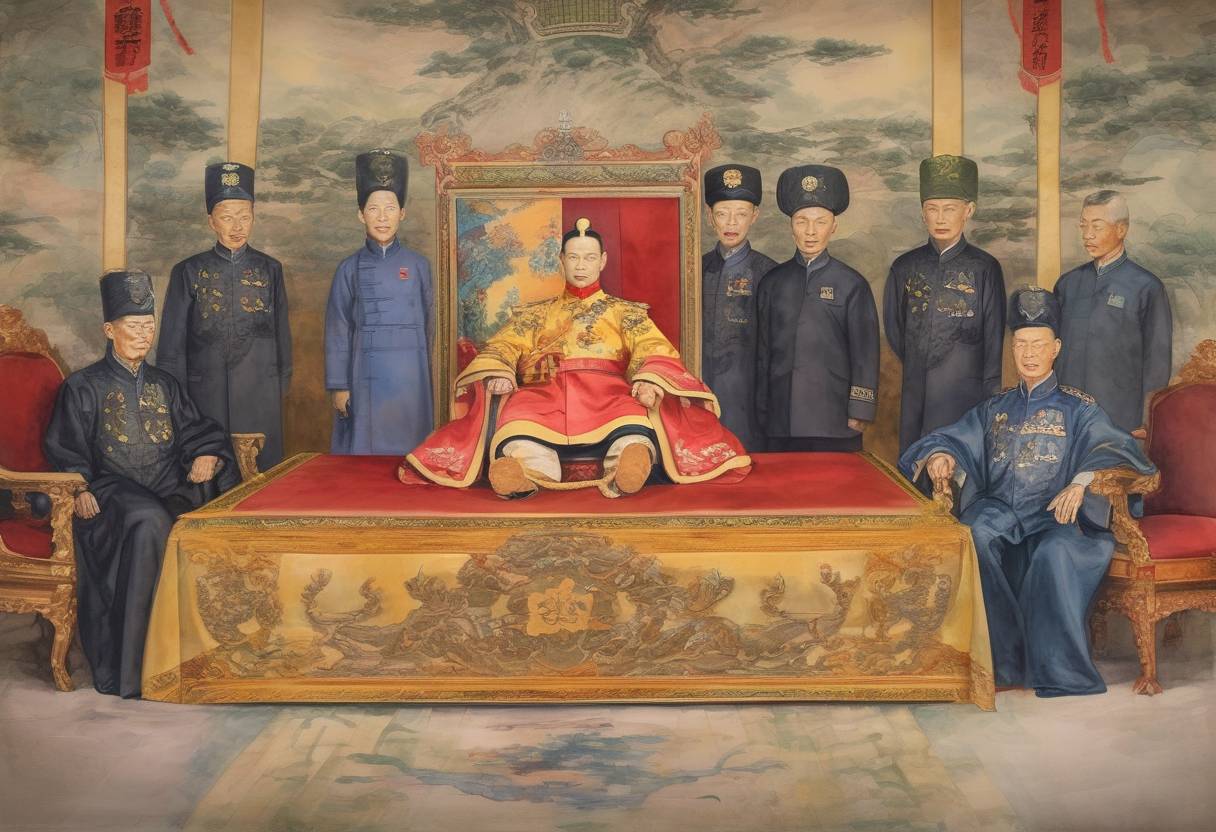
On February 12, 1912, a pivotal moment in Chinese history unfolded as Emperor Puyi, the last emperor of the Qing Dynasty, formally abdicated the throne. This event marked the end of over two millennia of imperial rule in China and the conclusion of the Qing Dynasty, which had been in power since 1644.
The Qing Dynasty, established by the Manchus, had been experiencing internal strife and external pressures for decades leading up to Puyi’s abdication. The 19th and early 20th centuries were particularly tumultuous, characterized by:
The early 20th century saw the rise of revolutionary movements, most notably the efforts led by Sun Yat-sen and the Tongmenghui (United League), which sought to overthrow the Qing and establish a republic.
The immediate catalyst for the abdication was the Xinhai Revolution, which began on October 10, 1911, with the Wuchang Uprising. This revolution quickly spread across China, as provinces declared independence from Qing rule. The revolutionaries, advocating for a republican government, gained significant momentum, and by late 1911, the Qing Dynasty’s control had severely diminished.
Faced with the inevitability of change and the growing power of the revolutionaries, the Qing court, under the regency of Empress Dowager Longyu, negotiated with the revolutionaries. Yuan Shikai, a powerful military leader and former Qing general, played a crucial role in these negotiations.
On February 12, 1912, Empress Dowager Longyu issued an edict on behalf of the six-year-old Emperor Puyi, formally abdicating the throne. The abdication edict allowed Puyi to retain his imperial title and live in the Forbidden City, albeit without political power, under the terms of the “Articles of Favorable Treatment.”
The abdication of Puyi and the fall of the Qing Dynasty were significant turning points in Chinese history, setting the stage for the complex political developments of the 20th century, including the rise of the Chinese Communist Party and the eventual establishment of the People’s Republic of China in 1949.
Source: en.wikipedia.org