Marcus Aurelius Grants Commodus the Title of Imperator
180 · Rome, Roman Empire
The Roman Emperor Marcus Aurelius grants his son Commodus the title of Imperator, marking Commodus's first official recognition as co-emperor.
January 14, 0081
Domitian, the Roman Emperor, is acclaimed as Imperator for the 17th time.
Rome, Roman Empire | Roman Empire
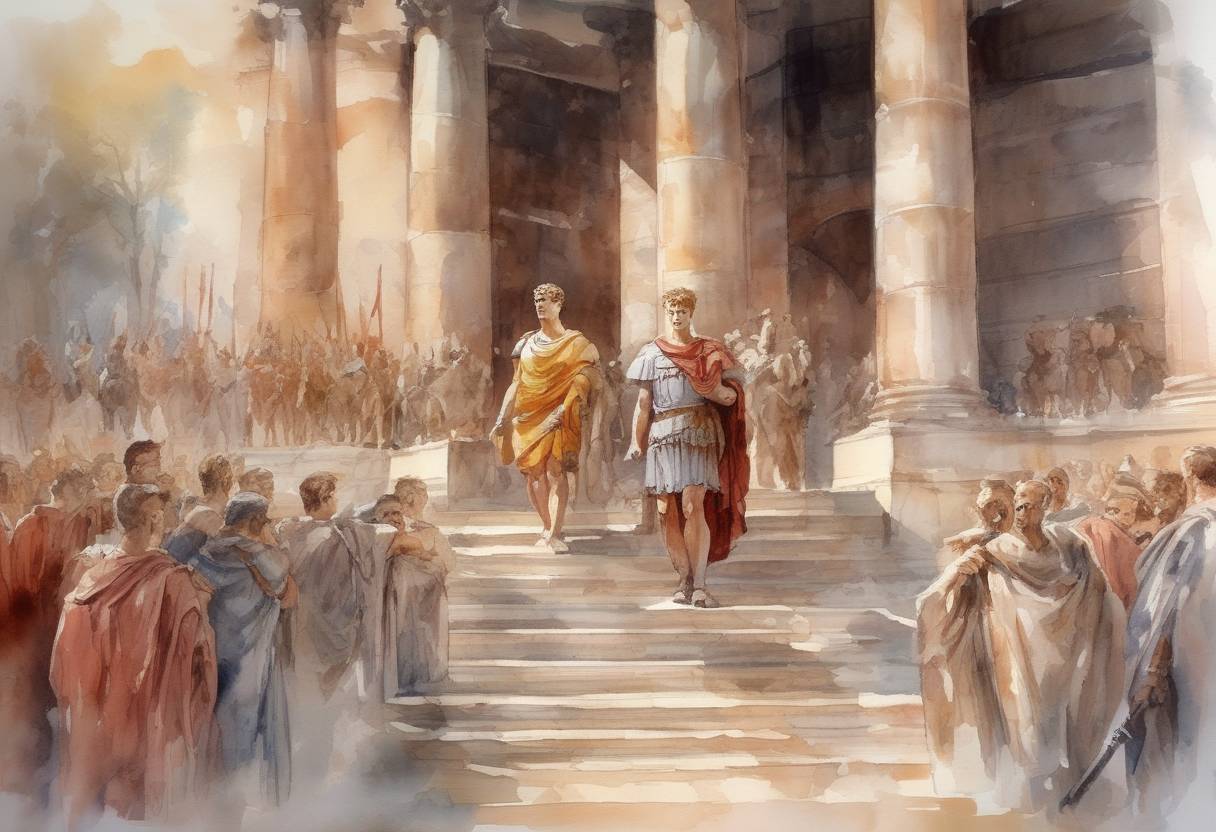
On January 14, 81 AD, the Roman Emperor Domitian was acclaimed as Imperator for the 17th time. This event is a testament to his military achievements and the consolidation of his power during his reign.
Domitian, born Titus Flavius Domitianus on October 24, 51 AD, was the younger son of Vespasian, the founder of the Flavian dynasty. He became emperor following the death of his brother, Titus, in 81 AD. Domitian’s reign lasted until 96 AD, marking a period of significant autocratic rule and extensive building projects.
In Roman tradition, the title “Imperator” was an honorific used by Roman generals who had achieved significant victories. It was often bestowed by the troops as a mark of their leader’s success and prowess in battle. During the Roman Empire, the title became synonymous with the emperor himself, reflecting his supreme command over the military.
Domitian’s acclamation as Imperator for the 17th time highlights his active involvement in military affairs. His reign was marked by several military campaigns, particularly along the Roman frontiers:
Germanic Campaigns: Domitian focused on securing the Roman borders along the Rhine and Danube rivers. He conducted campaigns against the Chatti, a Germanic tribe, which led to temporary stabilization in the region.
Dacian Wars: Although Domitian’s campaigns against the Dacians were less successful, they set the stage for future conquests by his successor, Trajan.
Revolts and Rebellions: Domitian also dealt with various revolts within the empire, including the Saturninus revolt in Germania Superior.
Domitian’s repeated acclamations as Imperator underscore his emphasis on military strength and the expansion of Roman influence. His reign, however, was also characterized by a shift towards autocracy, with increased centralization of power and a focus on the emperor’s divine status.
Despite his military successes, Domitian’s rule ended abruptly when he was assassinated in 96 AD. His death marked the end of the Flavian dynasty, and he was succeeded by Nerva, who initiated the period known as the “Five Good Emperors.”
Domitian’s legacy is complex; he was both a capable administrator and a controversial figure due to his authoritarian rule. His military campaigns and the infrastructure projects he initiated left a lasting impact on the Roman Empire.
In summary, Domitian’s 17th acclamation as Imperator reflects his military achievements and the consolidation of his power, which were central themes of his reign.
Source: en.wikipedia.org