2011 · Hama, Syria
The Syrian government launched an offensive against the city of Hama, which had been a center of protests against President Bashar al-Assad's regime.
March 21, 2011
The Syrian Civil War began with nationwide protests against President Bashar al-Assad's government, part of the wider wave of the Arab Spring.
Daraa, Syria | Syrian Government
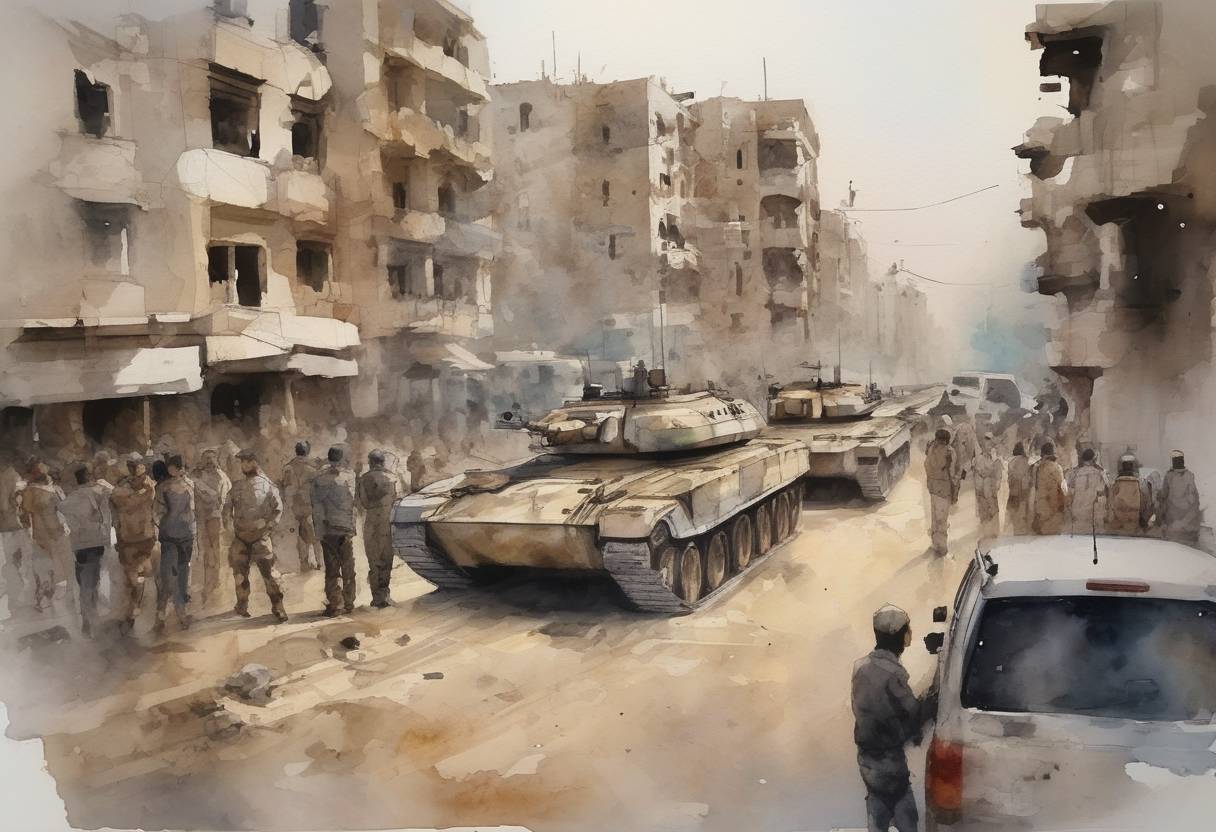
The Syrian Civil War, a devastating conflict that has reshaped the Middle East, began with nationwide protests against President Bashar al-Assad’s government on March 21, 2011. These protests were part of the broader Arab Spring movement, a series of anti-government uprisings that swept across the Arab world starting in late 2010.
Arab Spring: The Arab Spring was a revolutionary wave of demonstrations and protests that began in Tunisia in December 2010. It quickly spread to other countries, including Egypt, Libya, Yemen, and Syria, driven by widespread dissatisfaction with authoritarian regimes, corruption, economic stagnation, and a lack of political freedoms.
Syria’s Political Climate: Prior to the protests, Syria had been under the rule of the Ba’ath Party since 1963, with Bashar al-Assad assuming the presidency in 2000 following the death of his father, Hafez al-Assad. The regime was characterized by its authoritarian nature, with limited political freedoms and a strong security apparatus.
Initial Protests: The first significant protests in Syria began in the southern city of Daraa on March 15, 2011, after the arrest and torture of teenagers who had painted revolutionary slogans on a school wall. The government’s harsh response to these protests, including the use of live ammunition, fueled public anger and led to larger demonstrations.
Escalation: By March 21, protests had spread to other cities, including Damascus, Homs, and Aleppo. Demonstrators called for political reforms, the release of political prisoners, and an end to the state of emergency that had been in place since 1963.
On March 21, 2011, protests erupted across Syria, marking a significant escalation in the anti-government movement. The demonstrations were met with a violent crackdown by security forces, which included arrests, beatings, and the use of live ammunition against protesters. This harsh response only intensified the resolve of the demonstrators and increased international attention on the situation in Syria.
Civil War: The initial protests eventually evolved into a full-scale civil war, as opposition groups took up arms against the Assad regime. The conflict drew in numerous domestic and international actors, including various rebel factions, extremist groups, and foreign powers.
Humanitarian Crisis: The war has resulted in a catastrophic humanitarian crisis, with hundreds of thousands of people killed and millions displaced. The conflict has also led to widespread destruction of infrastructure and a severe impact on the Syrian economy.
International Involvement: The Syrian Civil War has seen significant international involvement, with countries such as Russia, Iran, the United States, and Turkey playing key roles in supporting different factions within the conflict.
The Syrian Civil War has had profound implications for regional and global politics. It has contributed to the rise of extremist groups like ISIS, influenced refugee flows into Europe, and reshaped alliances and power dynamics in the Middle East. The conflict remains unresolved, with ongoing violence and complex geopolitical challenges.
In summary, the protests on March 21, 2011, marked a pivotal moment in Syrian history, setting the stage for a prolonged and devastating conflict that continues to affect millions of lives and the geopolitical landscape of the region.
Source: www.britannica.com