1987 · London, United Kingdom
The Great Storm of 1987 hits France and the southern United Kingdom, causing widespread damage and the loss of 22 lives.
November 27, 1703
The Great Storm of 1703, one of the most severe storms in British history, reached its peak, causing extensive damage and loss of life.
London, England | none
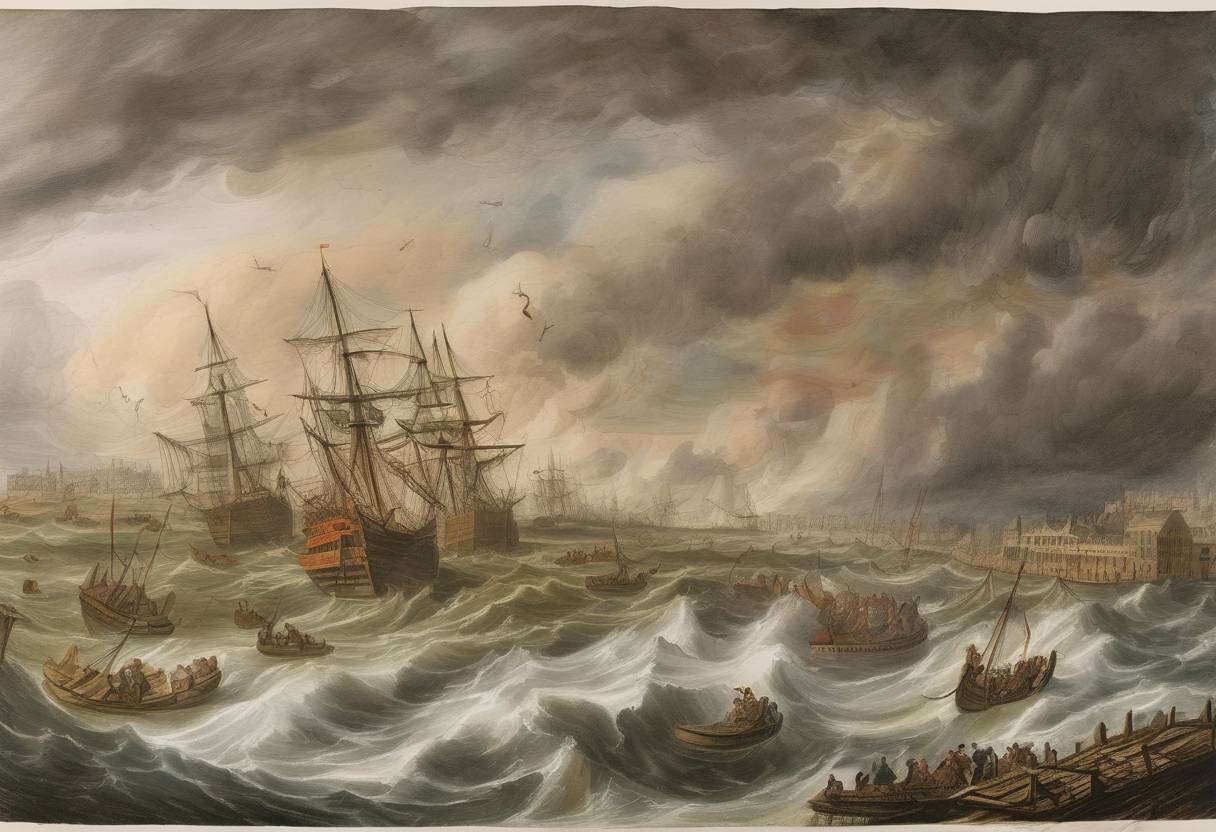
The Great Storm of 1703, which reached its peak on November 27, 1703, is remembered as one of the most severe storms in British history. This catastrophic weather event caused widespread destruction across southern England and claimed the lives of thousands.
The storm was part of a series of severe weather events that began in late November 1703. The conditions leading up to the storm were marked by heavy rains and strong winds, which had already caused significant damage and flooding in various parts of England.
On the night of November 26 and into the early hours of November 27, the storm intensified dramatically. The winds reached hurricane force, with estimates suggesting gusts of up to 120 mph. The storm’s ferocity was unprecedented, and it affected a vast area, from the Welsh borders to the east coast of England.
Human Casualties: The storm resulted in the deaths of an estimated 8,000 to 15,000 people. Many of these casualties were sailors, as the storm wreaked havoc on the English Channel and the North Sea, sinking numerous ships.
Property Damage: Thousands of homes were destroyed or severely damaged. The storm also uprooted countless trees, leading to further destruction and blocking roads.
Economic Consequences: The damage to infrastructure and the loss of ships and cargo had a significant economic impact. The storm disrupted trade and caused shortages of goods.
Cultural and Religious Impact: The storm was seen by many as a divine punishment or a sign from God, reflecting the religious sentiments of the time. It was widely reported in pamphlets and literature, including a detailed account by the writer Daniel Defoe, who documented the storm’s effects in “The Storm” (1704).
In the aftermath of the storm, there was a significant effort to rebuild and recover. The event prompted discussions about the need for better weather forecasting and disaster preparedness, although such advancements would take many years to develop.
The Great Storm of 1703 remains a significant event in British history due to its scale and impact. It highlighted the vulnerability of human settlements to natural disasters and influenced both contemporary and future approaches to disaster management and response.
The storm is often referenced in historical studies of meteorology and is considered a benchmark for understanding the potential severity of natural weather phenomena in the British Isles.
Source: en.wikipedia.org