September 25, 1978

The Pacific Southwest Airlines Flight 182 collided with a private Cessna aircraft over San Diego, California, resulting in the deaths of 144 people in one of the deadliest air disasters in U.S. history.


San Diego, United States | Pacific Southwest Airlines
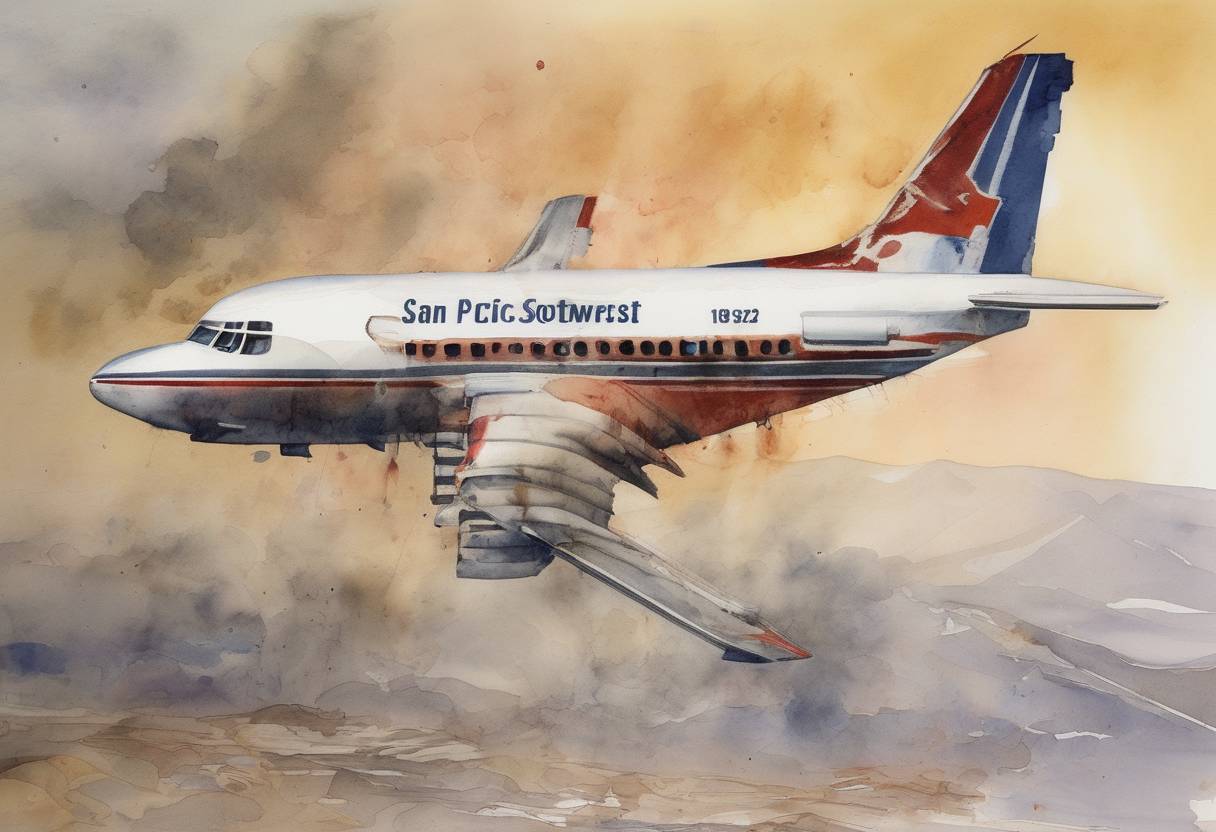
Watercolor painting based depiction of The Pacific Southwest Airlines Flight 182 collided with a private Cessna aircraft over San Diego, California, resulting in the deaths of 144 people in one of the deadliest air disasters in U.S. history. (1978)

Pacific Southwest Airlines Flight 182 Collision

Overview

On September 25, 1978, a tragic mid-air collision occurred over San Diego, California, involving Pacific Southwest Airlines (PSA) Flight 182 and a private Cessna 172 aircraft. This disaster resulted in the deaths of 144 people, marking it as one of the deadliest air accidents in United States history at the time.

Background

PSA Flight 182

  • Aircraft: Boeing 727-214
  • Operator: Pacific Southwest Airlines
  • Route: Sacramento to San Diego, with a stopover in Los Angeles
  • Occupants: 135 passengers and 7 crew members

Cessna 172

  • Aircraft: Cessna 172
  • Operator: Gibbs Flite Center
  • Occupants: 2 pilots (a student pilot and an instructor)

Sequence of Events

  1. Approach to San Diego: PSA Flight 182 was on its final approach to San Diego’s Lindbergh Field. At the same time, the Cessna 172 was conducting a training flight in the same airspace.

  2. Collision: At approximately 9:01 AM, the two aircraft collided at an altitude of about 2,600 feet. The collision occurred in clear weather conditions, with both aircraft under visual flight rules.

  3. Impact and Aftermath:

    • The Boeing 727 suffered severe damage to its right wing, leading to a loss of control. It crashed into the North Park neighborhood of San Diego, causing widespread destruction on the ground.
    • The Cessna also crashed, with both occupants killed instantly.
  4. Casualties: All 137 people aboard the PSA flight and the two occupants of the Cessna perished. Additionally, seven people on the ground were killed, and nine others were injured.

Investigation and Findings

  • National Transportation Safety Board (NTSB) Investigation: The NTSB conducted a thorough investigation into the collision.
  • Primary Cause: The investigation concluded that the primary cause was the failure of both flight crews to maintain adequate visual separation, compounded by inadequate air traffic control procedures.
  • Contributing Factors: Miscommunication between the PSA crew and air traffic control, as well as the complexity of the airspace, were identified as contributing factors.

Aftermath and Impact

  • Regulatory Changes: The disaster prompted significant changes in air traffic control procedures and regulations, particularly concerning the management of airspace around busy airports.
  • Technological Advancements: The collision underscored the need for improved collision avoidance systems, leading to the development and implementation of the Traffic Collision Avoidance System (TCAS) in commercial aircraft.

Legacy

The collision of PSA Flight 182 and the Cessna 172 remains a somber reminder of the importance of air traffic safety and the continuous need for advancements in aviation technology and procedures to prevent such tragedies in the future.