Excommunication of Martin Luther by Pope Leo X
1521 · Rome, Papal States
Pope Leo X excommunicated Martin Luther with the papal bull Decet Romanum Pontificem.
February 9, 1621
Gregory XV became Pope, known for his efforts to reform the Catholic Church and for founding the Congregation for the Propagation of the Faith.
Rome, Papal States | Catholic Church
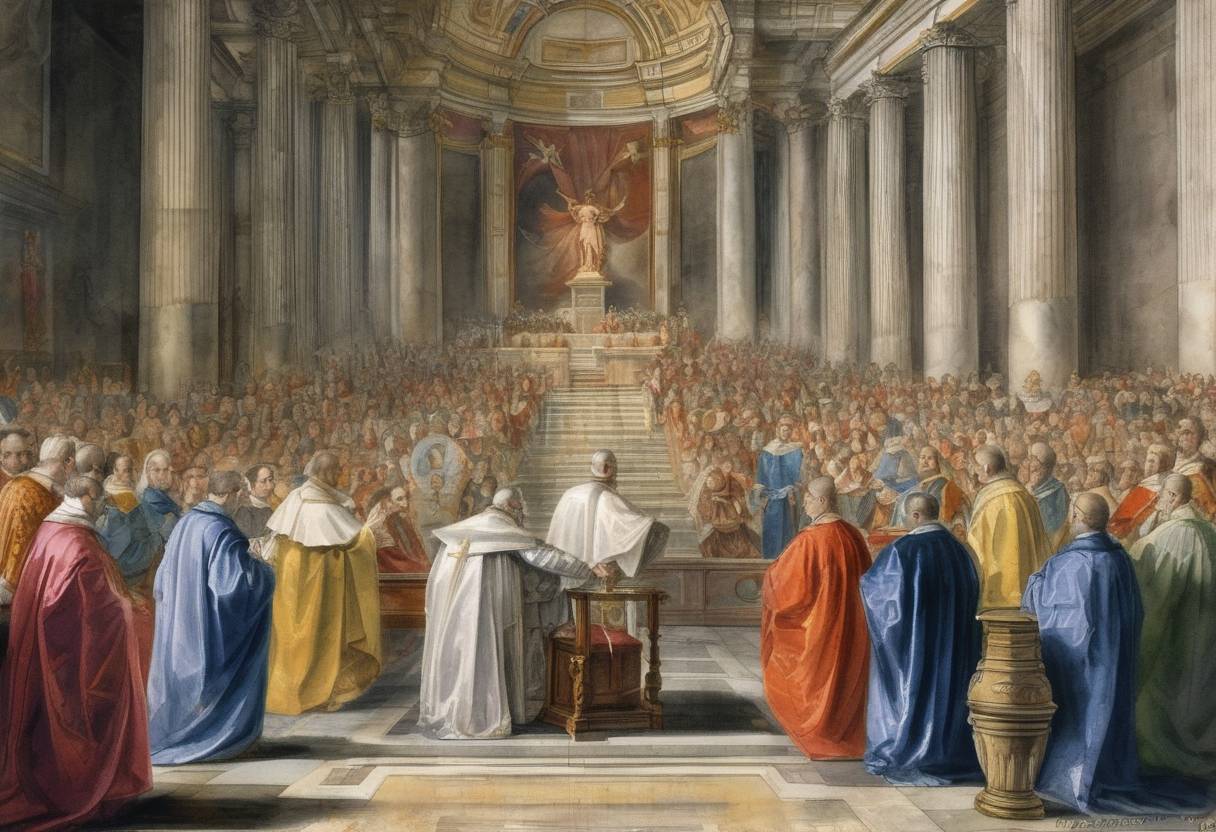
On February 9, 1621, Cardinal Alessandro Ludovisi was elected as Pope Gregory XV. His papacy, though brief, lasting until his death in 1623, was marked by significant contributions to the Catholic Church, particularly in the realms of church reform and missionary work.
Before his election, Alessandro Ludovisi was a well-respected cardinal known for his legal expertise and diplomatic skills. Born in Bologna in 1554, he was educated at the Roman College and the University of Bologna, where he earned a doctorate in canon and civil law. His ecclesiastical career was distinguished by various roles, including serving as the Archbishop of Bologna.
One of Gregory XV’s most enduring legacies was the establishment of the Congregation for the Propagation of the Faith (Congregatio de Propaganda Fide) in 1622. This institution was created to coordinate and oversee Catholic missionary activities worldwide, reflecting the Church’s response to the Protestant Reformation and the need to spread Catholicism globally. The Congregation played a crucial role in organizing missionary work, training missionaries, and ensuring the propagation of the faith in non-Christian lands.
Gregory XV also implemented reforms in the papal election process. He issued the papal bull Aeterni Patris Filius in 1621, which introduced the secret ballot system for the election of popes, aiming to reduce external influences and ensure a more spiritual and less politically motivated selection process. This reform was significant in shaping the conclave procedures that are still in use today.
Gregory XV’s papacy occurred during a tumultuous period in European history, marked by the Thirty Years’ War (1618-1648), a conflict that had profound religious and political implications across the continent. His efforts to strengthen the Catholic Church’s structure and outreach were part of the broader Counter-Reformation movement, which sought to reaffirm Catholic doctrine and counter the spread of Protestantism.
Despite his short tenure, Pope Gregory XV’s initiatives had a lasting impact on the Catholic Church. His establishment of the Congregation for the Propagation of the Faith laid the groundwork for the Church’s modern missionary activities, and his reforms in the papal election process contributed to the integrity and independence of future papal conclaves. Gregory XV’s papacy exemplifies a period of significant transition and adaptation within the Catholic Church during the early 17th century.
Source: en.wikipedia.org