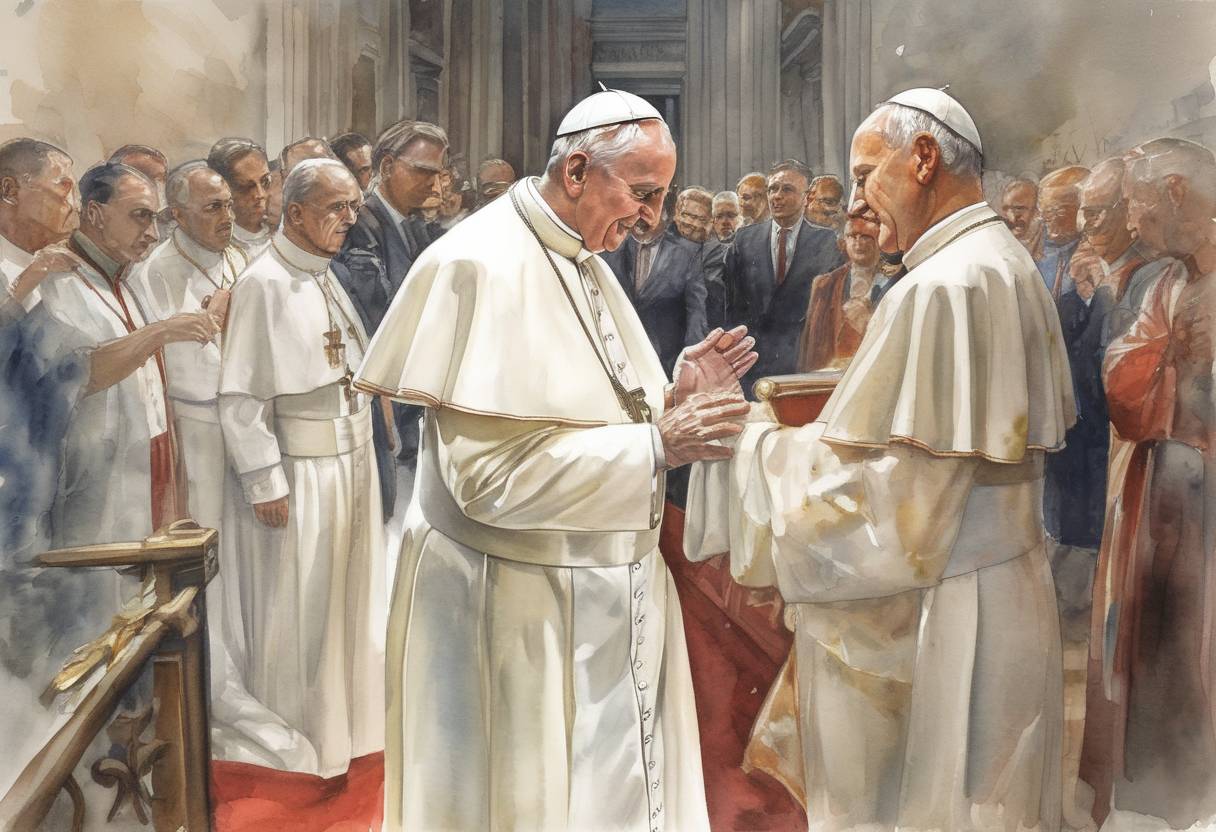
The Sudden Death of Pope John Paul I and the Election of Pope John Paul II
Context and Background
Pope John Paul I, born Albino Luciani, was elected as the 263rd pope of the Roman Catholic Church on August 26, 1978. His papacy was notably brief, lasting only 33 days. Luciani was known for his humility, warmth, and pastoral approach, earning him the nickname “The Smiling Pope.” His unexpected death on September 28, 1978, shocked the world and led to widespread speculation and conspiracy theories, although the Vatican attributed his death to a heart attack.
Key Events Leading to His Papacy
- Conclave of August 1978: Following the death of Pope Paul VI, the conclave convened to elect a new pope. Albino Luciani was elected on the fourth ballot, taking the name John Paul I in honor of his two immediate predecessors, John XXIII and Paul VI.
- Reformist Intentions: During his short tenure, John Paul I expressed intentions to continue the reforms of the Second Vatican Council, focusing on making the Church more accessible and understandable to the laity.
The Death of Pope John Paul I
- Date and Circumstances: On the morning of September 28, 1978, Pope John Paul I was found dead in his bed. The Vatican announced that he had died of a heart attack, although no autopsy was performed, leading to various conspiracy theories.
- Impact: His sudden death created a sense of uncertainty and urgency within the Church, as it had to convene another conclave to elect a new pope in less than two months.
Election of Pope John Paul II
- Conclave of October 1978: The College of Cardinals gathered once again, and after eight ballots, Cardinal Karol Józef Wojtyła of Poland was elected as the new pope on October 16, 1978. He took the name John Paul II.
- Significance: John Paul II was the first non-Italian pope in 455 years, marking a significant shift in the Church’s history. His election was seen as a move towards a more global Church, reflecting the growing importance of Catholic communities outside Europe.
Broader Historical Significance
- Papal Influence: Pope John Paul II went on to become one of the most influential popes in modern history, serving for over 26 years. His papacy was marked by efforts to improve the Church’s relations with Judaism, Islam, and the Eastern Orthodox Church, as well as his role in the fall of communism in Eastern Europe.
- Legacy of John Paul I: Despite his brief papacy, John Paul I left a lasting impression due to his approachable demeanor and commitment to pastoral care. His life and sudden death continue to be subjects of interest and reflection within the Church.
The events of 1978, with the rapid succession of two papal elections, underscored a period of transition and transformation within the Catholic Church, setting the stage for significant developments in the decades that followed.