The Human Be-In: Prelude to the Summer of Love
1967 · San Francisco, United States
The Human Be-In, a prelude to San Francisco's Summer of Love, takes place in Golden Gate Park, San Francisco.
August 15, 1969
The Woodstock Music & Art Fair opened in Bethel, New York, becoming a symbol of the 1960s counterculture movement.
Bethel, United States
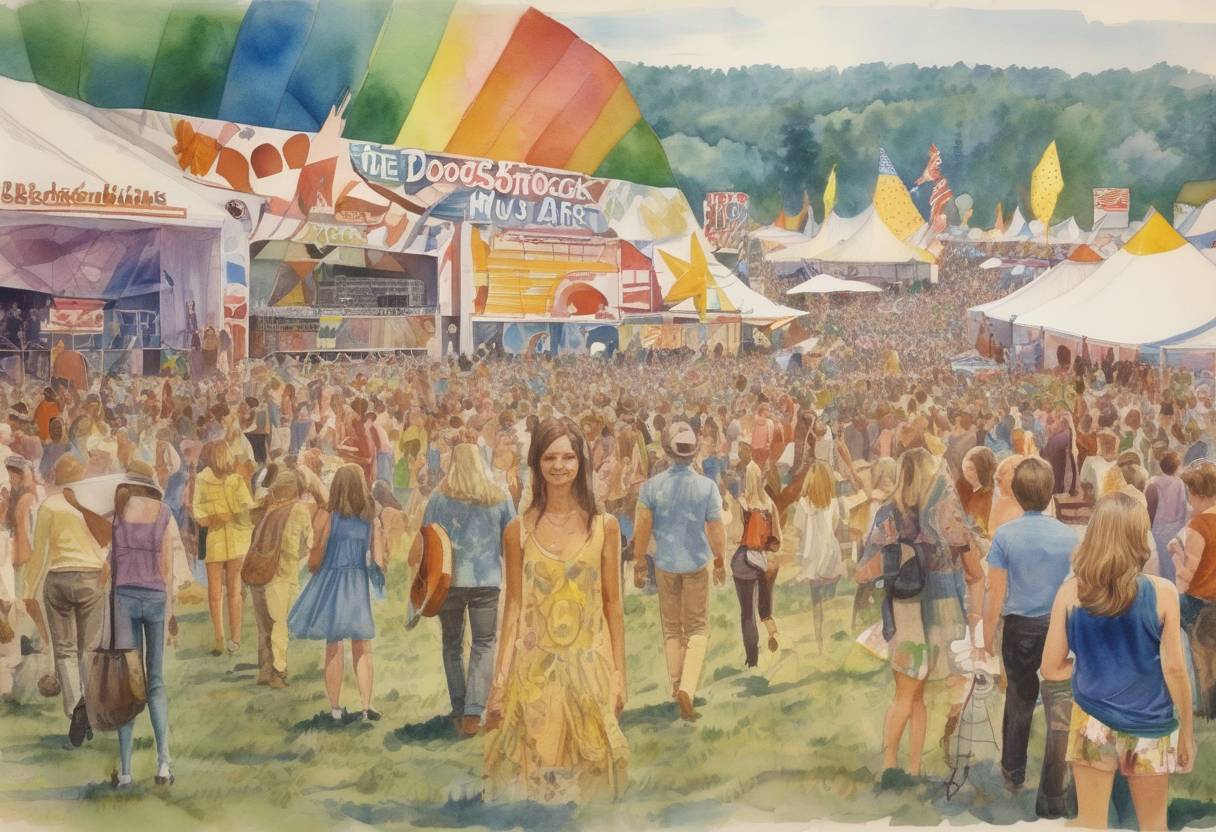
The Woodstock Music & Art Fair, commonly referred to simply as “Woodstock,” opened on August 15, 1969, in Bethel, New York. This iconic event became a defining symbol of the 1960s counterculture movement, encapsulating the era’s spirit of peace, love, and music.
The festival was the brainchild of four young men: Michael Lang, Artie Kornfeld, Joel Rosenman, and John P. Roberts. Initially planned as a profit-making venture, it was intended to be a small festival with an audience of about 50,000 people. However, the event quickly grew beyond their expectations.
Location: Originally, the festival was to be held in Wallkill, New York. However, the town’s residents opposed the event, leading organizers to find a new location just a month before the festival. Max Yasgur, a dairy farmer in Bethel, offered his 600-acre farm as the venue.
Logistics: The rapid change of location and the overwhelming number of attendees posed significant logistical challenges. Infrastructure for food, water, sanitation, and medical care was insufficient for the massive crowd that gathered.
Attendance: Despite the expectation of 50,000 attendees, the festival drew an estimated 400,000 people. The sheer volume of attendees led to traffic jams and logistical chaos, effectively turning the event into a free concert as fences were torn down.
Performances: The festival featured 32 acts over four days, including legendary performances by artists such as Jimi Hendrix, Janis Joplin, The Who, and Santana. Richie Havens opened the festival with a memorable set, and Jimi Hendrix closed it with his iconic rendition of “The Star-Spangled Banner.”
Counterculture Symbol: Woodstock became emblematic of the 1960s counterculture, promoting ideals of peace, love, and communal living. It was a peaceful gathering despite the challenges, with no significant incidents of violence reported.
Media Coverage: The festival received extensive media coverage, further cementing its place in cultural history. The 1970 documentary film “Woodstock” and its accompanying soundtrack album helped immortalize the event.
Cultural Shift: Woodstock is often seen as the pinnacle of the 1960s counterculture movement. It highlighted the power of music as a unifying force and demonstrated the potential for peaceful mass gatherings.
Enduring Influence: The festival’s legacy endures in popular culture, influencing music festivals and movements worldwide. It remains a symbol of the era’s idealism and the transformative power of music.
In summary, the Woodstock Music & Art Fair was more than just a music festival; it was a cultural phenomenon that captured the zeitgeist of a generation and left an indelible mark on history.
Source: en.wikipedia.org