Anne Frank and Her Family Go into Hiding
1942 · Amsterdam, Netherlands
Anne Frank and her family went into hiding in the Secret Annex above her father's office in Amsterdam to escape Nazi persecution.
June 12, 1942
Anne Frank received a diary as a gift for her thirteenth birthday, which she would later use to document her life in hiding during the German occupation of the Netherlands.
Amsterdam, Netherlands | N/A
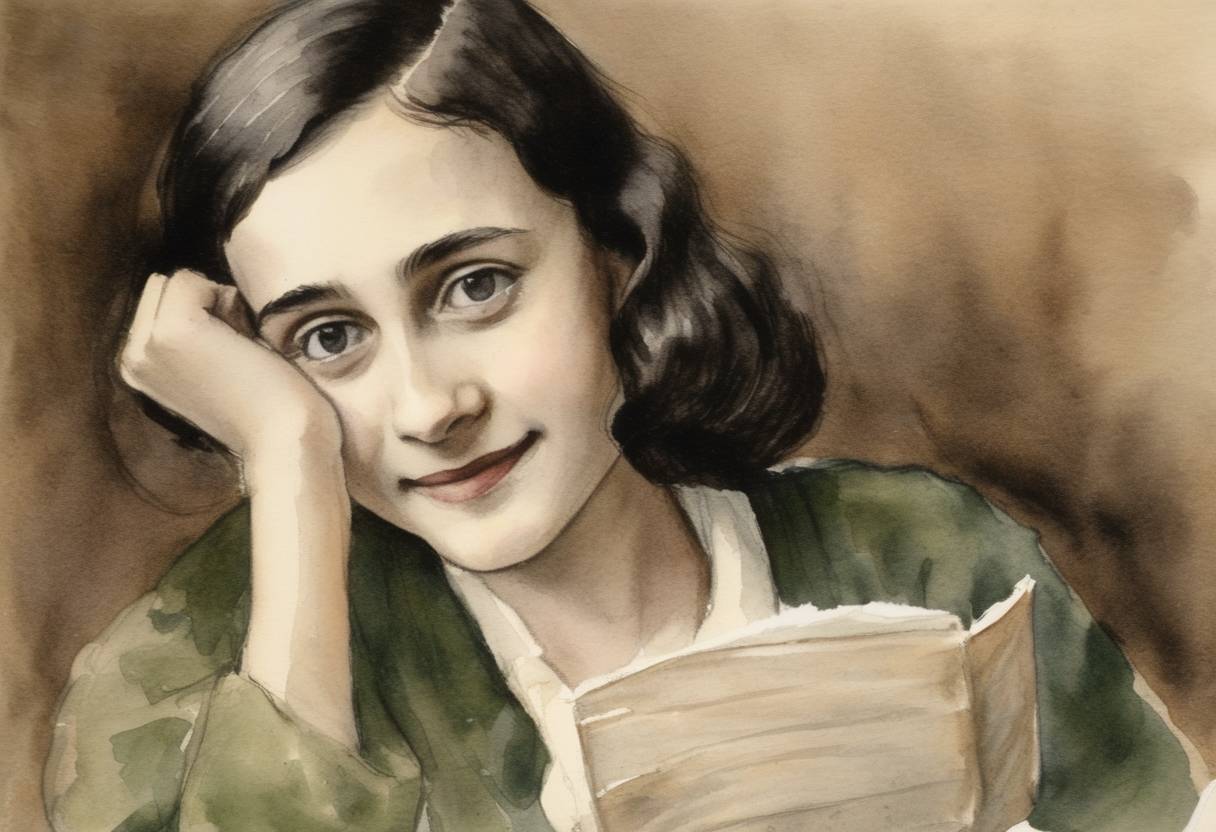
On June 12, 1942, Anne Frank received a red-and-white checkered diary as a gift for her thirteenth birthday. This day marked the beginning of her journey as a diarist, during which she documented her thoughts, experiences, and the harsh realities of living in hiding during the German occupation of the Netherlands in World War II.
Anne Frank was born on June 12, 1929, in Frankfurt, Germany, to Otto and Edith Frank. As antisemitic sentiments and actions intensified with the rise of Adolf Hitler, the Frank family sought refuge from Nazi persecution. They moved to Amsterdam, Netherlands, in 1933, hoping to find safety. However, by May 1940, the Germans occupied the Netherlands, imposing anti-Jewish laws, which greatly affected the lives of the Jewish community, including the Franks.
Anne’s diary, initially a simple notebook given to her on her birthday, became an intimate account of her thoughts and the two years she spent in hiding. The Frank family, along with four others, concealed themselves in the “Secret Annex” — a hidden section of Otto Frank’s business premises. Anne named her diary “Kitty,” addressing her entries to this imaginary friend.
In her writings, Anne detailed daily life in the annex, the fear of discovery, and her adolescent reflections and growing insight in a world torn by war and hatred. Her accounts are not only personal but also serve as a poignant reflection of the broader human experience during the Holocaust.
The diary provides a first-hand account of the Holocaust’s impact on individuals and families. After the occupants of the annex were betrayed in August 1944 and deported to concentration camps, Anne’s diary was found by Miep Gies, one of the helpers who had aided the family in hiding.
Anne died of typhus in the Bergen-Belsen concentration camp in early 1945, shortly before it was liberated. Otto Frank, the sole survivor from the annex, returned to Amsterdam and, upon receiving Anne’s writings, was instrumental in getting them published. The diary was first published as “Het Achterhuis” (The Secret Annex) in 1947 in Dutch and has since been translated into numerous languages, reaching millions worldwide.
Anne Frank’s diary endures as a testament to her spirit and resilience and serves as an enduring reminder of the horrors of the Holocaust and the innocent lives affected.
Source: www.annefrank.org