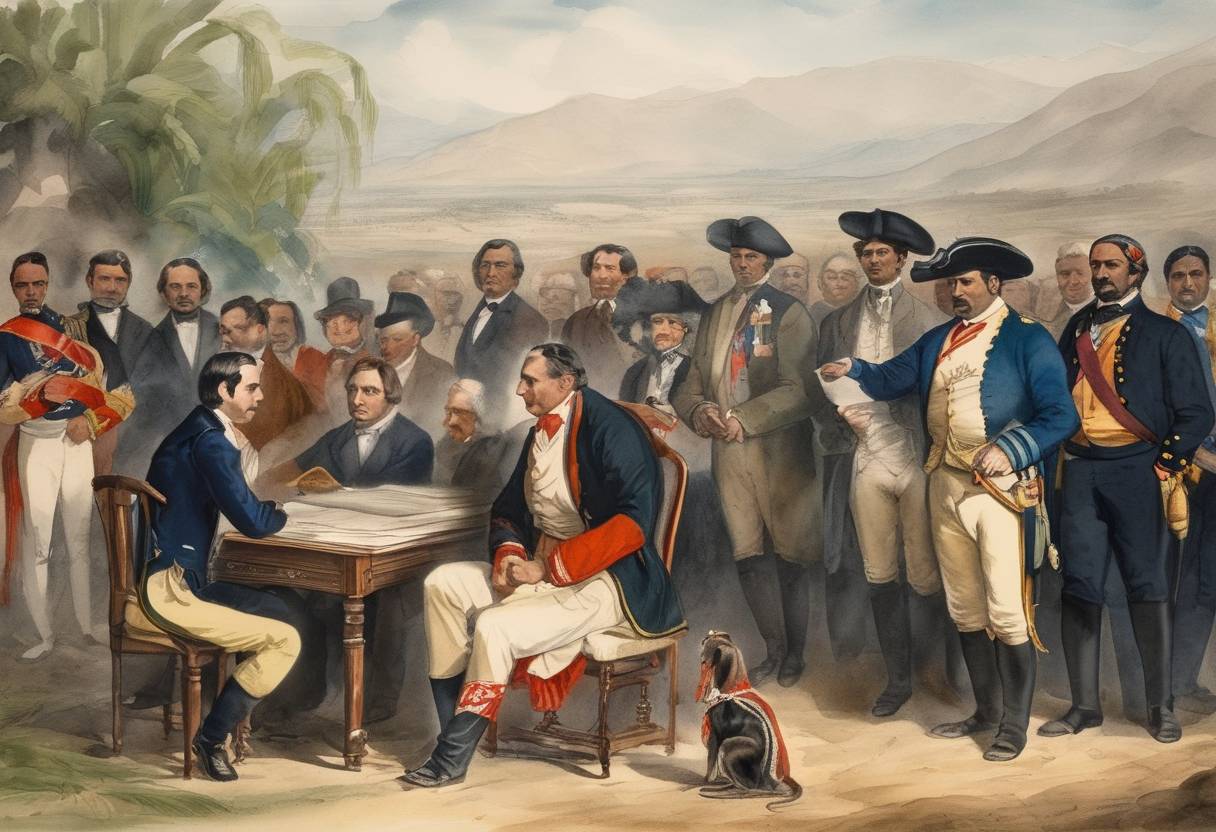
The Treaty of Cahuenga
The Treaty of Cahuenga, also known as the Capitulation of Cahuenga, was not ratified on April 19, 1847, but rather on January 13, 1847. The treaty effectively ended the hostilities in California during the Mexican–American War.
Context
The Mexican–American War, which began in 1846, was a conflict between the United States and Mexico primarily over the annexation of Texas and territorial expansion. California, which was then part of Mexico, became a focal point of the conflict in the western United States.
Key Events Leading to the Treaty
- Battle of San Pasqual: On December 6-7, 1846, this clash between Californio lancers and U.S. forces near San Diego highlighted the ongoing hostilities in California.
- Battle of Rio San Gabriel and La Mesa: Occurring in January 1847, U.S. forces led by Commodore Robert F. Stockton and General Stephen W. Kearny decisively defeated Mexican troops near Los Angeles, further weakening resistance.
- Capture of Los Angeles: U.S. forces regained control of Los Angeles shortly before the treaty.
Details and Significance of the Treaty
- Signatories: The agreement was signed by Lieutenant Colonel John C. Frémont on behalf of the United States and General Andrés Pico for the Californios.
- Terms: The treaty allowed Californios to surrender peacefully, promising them the same rights as other American citizens and permitting them to return to their homes, keep their private property, including firearms, and promise to continue in peace.
- Impact: The treaty successfully ended all military conflict in California, paving the way for the full incorporation of California into the United States.
Aftermath
The successful negotiation of the Treaty of Cahuenga set a precedent for other regions under Mexican control during the Mexican-American War. Over the next year and a half, further victories by U.S. forces led to the conclusion of the Mexican-American War with the Treaty of Guadalupe Hidalgo in February 1848, which resulted in the United States acquiring significant territories including California.
Historical Significance
The Treaty of Cahuenga represented a meaningful step in the broader context of American expansionism and its doctrine of Manifest Destiny. It also underscored the effective use of diplomatic means to conclude regional hostilities and integrate new territories. The peaceful resolution facilitated California’s transition from Mexican to American rule, which would later catalyze events like the California Gold Rush, profoundly impacting both California’s and the United States’ history.