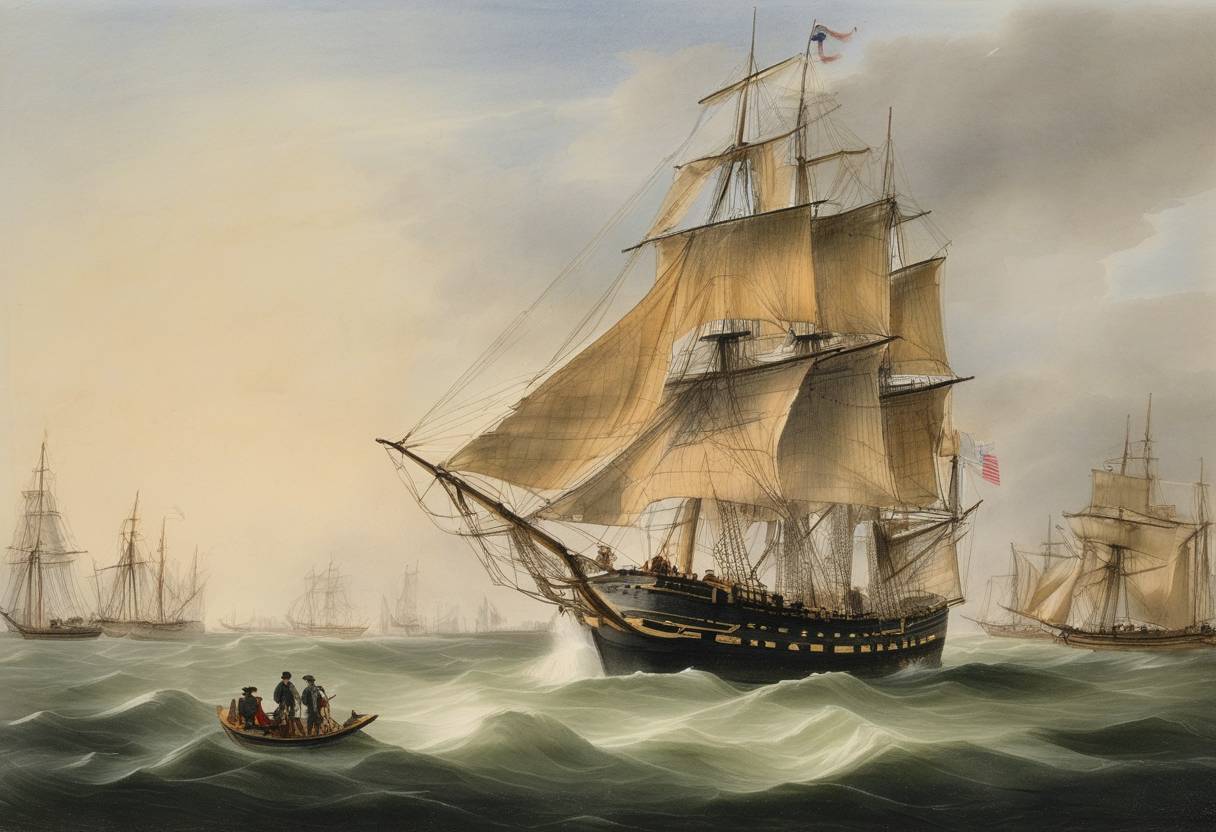
John Hancock’s Sloop ‘Liberty’ and the Prelude to Revolution
On April 10, 1768, John Hancock’s sloop, ‘Liberty,’ returned to Boston, marking a pivotal moment in the escalating tensions between the American colonies and British authorities. The events surrounding the ‘Liberty’ played a significant role in fueling the dissatisfaction that would eventually lead to the American Revolution.
Context and Background
In the mid-18th century, British colonial policy aimed to enforce stricter regulation and taxation of the American colonies. The imposition of the Sugar Act (1764) and the Townshend Acts (1767) sought to tighten control over colonial trade and raise revenue for Britain, exacerbating colonial resentment. Merchants like John Hancock, a prominent figure in Boston, often found themselves in conflict with these laws.
The Incident
The ‘Liberty’ returned to Boston amidst this backdrop of growing unrest. Prior to its arrival, it had allegedly engaged in illegal smuggling by unlawfully unloading wines from Madeira without paying duties, an accusation often aimed at colonial traders by British customs officials. Hancock’s activities drew intense scrutiny from these officials, who were determined to enforce the new trade regulations.
British Customs Enforcement
The arrival of the ‘Liberty’ in Boston prompted British customs officials to target Hancock. They seized the sloop, claiming violations of the customs laws, which led to heightened tensions. Hancock’s influential status and his defiance against the British measures made the incident highly publicized and symbolic of broader issues related to autonomy and taxation without representation.
Consequences and Significance
The seizure of the ‘Liberty’ sparked outrage among Boston’s residents. It was perceived as an unjust exercise of British power and fueled anger that had been simmering over increasingly intrusive British policies. The incident contributed to the rise of organized resistance movements, such as the Sons of Liberty, advocating for colonial rights and opposing British authority.
Hancock’s predicament and the ‘Liberty’ affair became emblematic of colonial grievances, helping to galvanize support for the burgeoning movement towards Independence. This event, among others, set the stage for subsequent acts of defiance, including the Boston Tea Party and ultimately, the American Revolution.