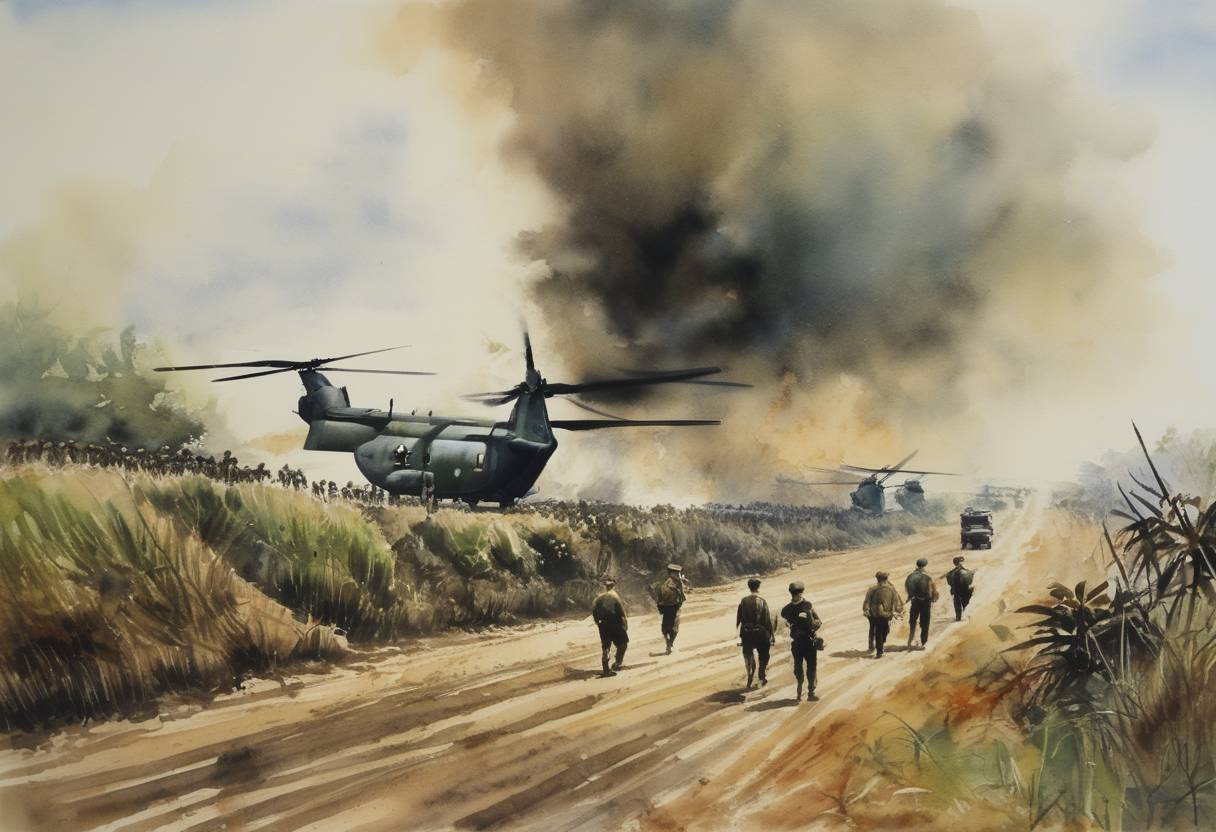
Operation Homecoming Begins: February 12, 1973
On February 12, 1973, Operation Homecoming marked a pivotal moment in the Vietnam War as the first group of American prisoners of war (POWs) were released by North Vietnam. This significant event was a part of the broader Paris Peace Accords, which aimed to end direct U.S. military involvement in Vietnam and restore peace in the region.
Context
- Paris Peace Accords: Signed on January 27, 1973, these accords were intended to establish a ceasefire and facilitate the withdrawal of U.S. forces, as well as the release of prisoners held by both sides. A key provision was that both sides would begin releasing POWs within 15 days of the signing.
- Vietnam Conflict: By 1973, anti-war sentiment in the United States had risen significantly, and there was growing pressure to resolve the Vietnam War, which had resulted in tens of thousands of American casualties and deep national division.
The Release Event
- First Release Site: The initial transfer took place at Gia Lam Airport, near Hanoi, the capital of North Vietnam.
- Number of POWs: On that first day of Operation Homecoming, 116 American prisoners were released and flown to Clark Air Base in the Philippines.
- Notable Individuals: Among those released were high-profile POWs such as Lieutenant Colonel Floyd James Thompson, the longest-held POW in American history at that time.
Significance
- Psychological Impact: The return of American POWs provided a morale boost to the United States and its armed forces, offering a sense of closure to families who had long awaited reunion with their loved ones.
- Media Coverage: The operation received extensive media attention, symbolizing a turning point in the war’s narrative and capturing global interest.
- Final Tally: By the conclusion of Operation Homecoming on March 29, 1973, a total of 591 American POWs had been repatriated.
Aftermath
- End of U.S. Involvement: The final withdrawal of U.S. troops from South Vietnam followed shortly after the conclusion of Operation Homecoming.
- Legacy: The operation remains a significant moment in U.S. military history, often cited as a critical step towards the eventual end of the Vietnam War.
Operation Homecoming is remembered as a moment of relief and jubilation for many Americans, symbolizing the resilience of the human spirit and the complex nature of wartime diplomacy.