Discovery of Eris: A Dwarf Planet in the Scattered Disc
2005 · San Diego, United States
Eris, a dwarf planet in the scattered disc region of the Solar System, was discovered by a team led by Mike Brown at the Palomar Observatory.
June 27, 2000
Tiankeng or 'Heavenly Pit' was discovered in the Fengjie County, Chongqing, China. The Xiaozhai Tiankeng is one of the world's largest sinkholes.
Fengjie County, China | scientific community
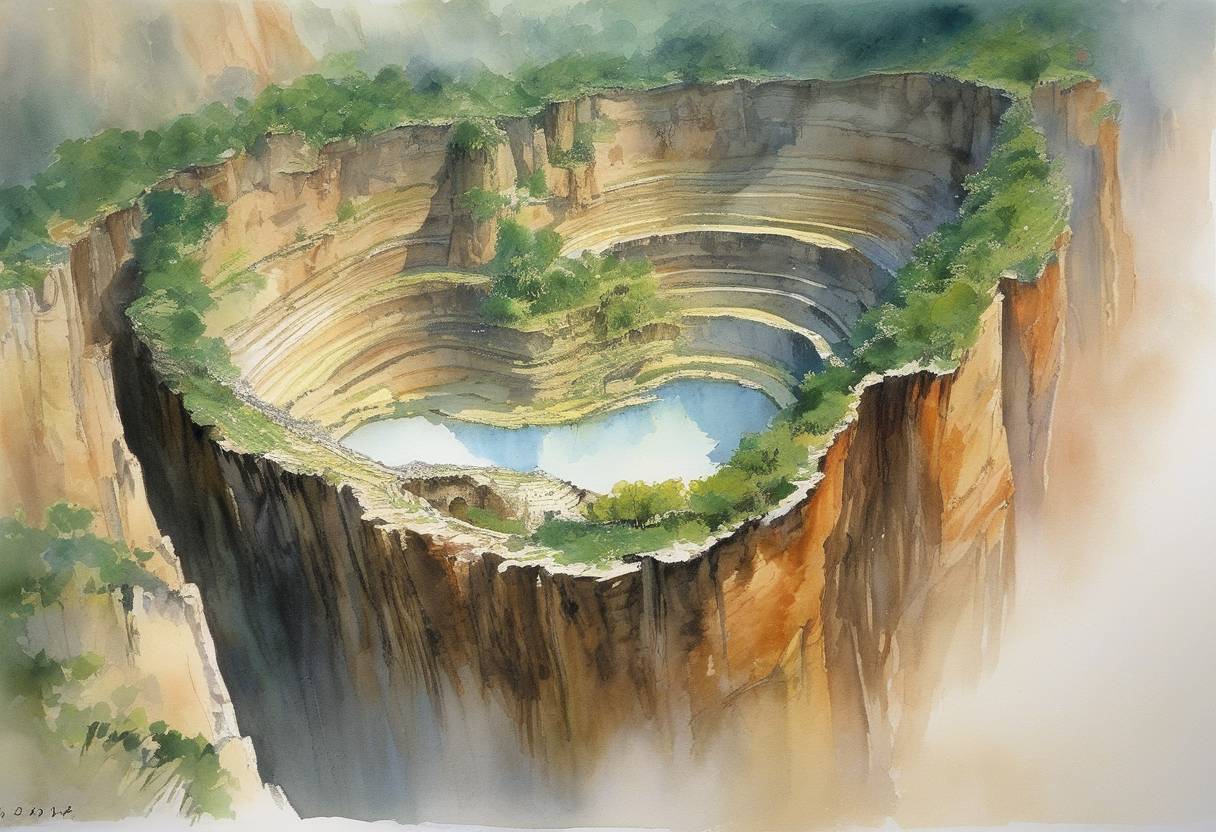
On June 27, 2000, the Xiaozhai Tiankeng, also known as the ‘Heavenly Pit’, was discovered in Fengjie County, Chongqing, China. This geological marvel is recognized as one of the world’s largest sinkholes.
The Xiaozhai Tiankeng boasts an impressive size, measuring approximately 626 meters long, 511 meters wide, and plunging to a depth of roughly 662 meters. It covers an area of about 120,000 square meters and presents a unique double-nested form, making it both an awe-inspiring and scientifically intriguing natural formation.
These titanic sinkholes, including the Xiaozhai Tiankeng, are typically formed by the collapse of limestone bedrock due to the natural processes of erosion and dissolution by water. Over millennia, underground rivers can carve extensive cave systems. When the ceiling of these caves can no longer support its own weight, it collapses, creating a sinkhole. In the case of the Xiaozhai Tiankeng, it was formed in a karst region known for its soluble rock foundation, fostering the creation of such dramatic earth forms.
The Xiaozhai Tiankeng serves as a unique ecosystem with its own microclimate and biodiversity. The steep walls of the sinkhole foster diverse flora and fauna, some of which are rare or endemic. Over time, the site has become a natural laboratory for geologists and ecologists studying karst formations and their ecosystems.
Additionally, its discovery captured the public imagination and contributed to China’s burgeoning tourism industry. Fengjie County and the surrounding area have since attracted numerous tourists, scientists, and nature enthusiasts, eager to witness the subsurface world opened by this gargantuan pit.
The announcement of the Xiaozhai Tiankeng’s discovery highlighted the remarkable karst landscapes of China, promoting further exploration and revelation of other similar geological phenomena in the region. Its recognition helped bolster global interest in China’s natural wonders, contributing to a more comprehensive understanding of the planet’s geological and ecological diversities.
The sinkhole continues to be a symbol of the incredible and often hidden natural processes that shape the Earth’s surface, reflecting on the dynamic and ever-changing nature of geological formations.
Source: www.chinadaily.com.cn