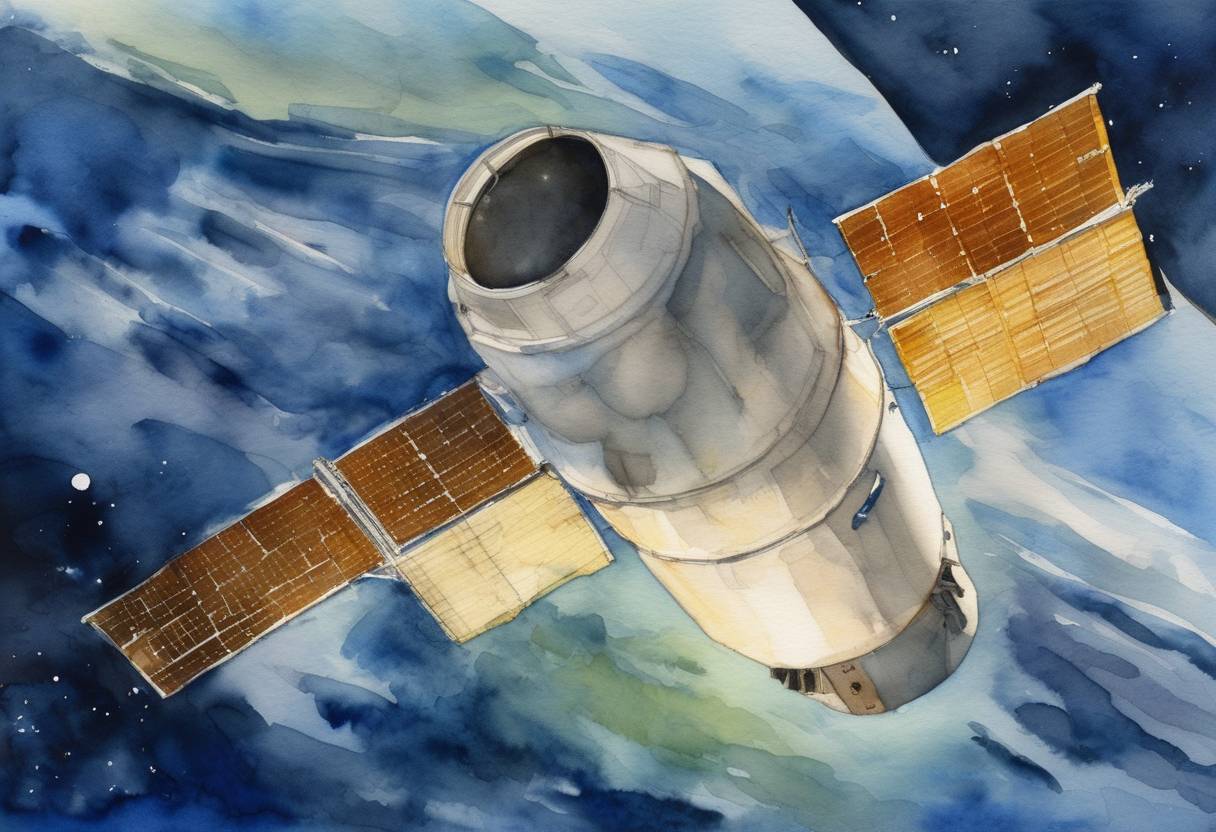
SpaceX Dragon’s Historic Mission to the ISS
On May 23, 2012, SpaceX’s Dragon spacecraft made history by becoming the first commercial vehicle to launch and dock with the International Space Station (ISS). This achievement marked a significant milestone in commercial space exploration and demonstrated the potential of private companies in pioneering space travel.
Context and Background
Space Exploration Technologies Corp., known as SpaceX, was founded in 2002 by Elon Musk with the goal of reducing space transportation costs to enable the colonization of Mars. Prior to the Dragon mission, only government space agencies had sent spacecraft to the ISS. The mission was part of NASA’s Commercial Orbital Transportation Services (COTS) program, which was established to develop reliable and cost-effective cargo transportation to the ISS.
The Launch
The Dragon spacecraft was launched aboard the Falcon 9 rocket from Cape Canaveral, Florida. The launch took place on May 22, 2012, at 3:44 AM EDT. (Note: The docking event on May 23, 2012, is the focus here.)
Docking and Operations
On May 23, 2012, Dragon conducted a series of intricate maneuvers and tests designed to ensure it could safely approach and dock with the ISS. These tests included closing on the space station and demonstrating its ability to hold position and retreat safely. After these were successfully completed, the spacecraft was allowed to approach, and astronauts aboard the ISS used the station’s robotic arm to capture Dragon and berth it to the Harmony module.
Significance and Aftermath
The successful docking of Dragon not only fulfilled SpaceX’s COTS contract with NASA but also showcased the feasibility of commercial space transport services. It was a crucial step in NASA’s strategy to outsource routine transport services, enabling the agency to focus its efforts on deep space exploration.
Additionally, this event catalyzed increased investment and interest in the commercial space sector, paving the way for future missions and innovations. Shortly after, Dragon returned safely to Earth, carrying scientific samples and equipment from the ISS.
Conclusion
SpaceX’s Dragon docking at the ISS was a transformative moment for space exploration, demonstrating the capability and potential of the private sector in contributing to humanity’s endeavors in space. It laid the groundwork for subsequent missions and the broader collaboration between governmental and private entities in space travel.