Acquittal of President Donald Trump: February 6, 2020
2020 · Washington D.C., United States
The United States Senate acquitted President Donald Trump on charges of abuse of power and obstruction of Congress, concluding the impeachment trial.
November 9, 2016
Donald Trump is elected as the 45th President of the United States, defeating the Democratic candidate Hillary Clinton, in a major political upset.
Washington D.C., United States | U.S. Electoral College
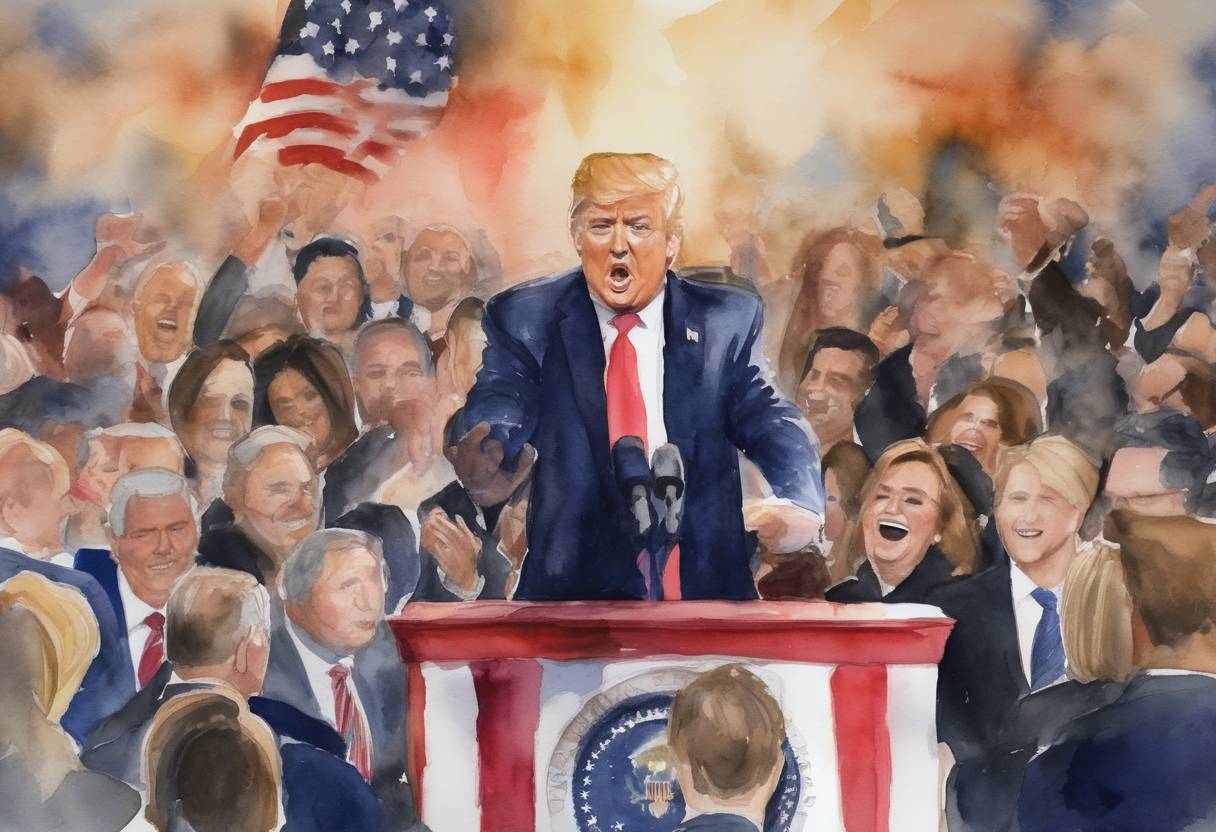
On November 9, 2016, in a landmark and surprising political upset, the Republican candidate Donald J. Trump was elected as the 45th President of the United States, defeating the Democratic candidate Hillary Clinton. This election marked a significant shift in the American political landscape, drawing widespread domestic and international attention.
The 2016 presidential election was one of the most contentious and polarizing campaigns in modern U.S. history. Donald Trump, a billionaire businessman and television personality, announced his candidacy in June 2015. Running on a platform focused on issues such as immigration reform, economic nationalism, and a promise to “Make America Great Again,” Trump captured the attention of a significant portion of the American electorate dissatisfied with the establishment.
Hillary Clinton, the former Secretary of State, Senator, and First Lady, became the Democratic nominee after a protracted primary battle against Senator Bernie Sanders. Clinton’s campaign emphasized her extensive political experience and proposed continuity and expansion of the policies enacted under President Barack Obama.
Primary Battles: Trump’s unorthodox and often controversial approach enabled him to defeat 16 other Republican candidates in the primaries. Clinton, despite facing strong grassroots support for Sanders, secured the Democratic nomination.
General Election Campaign: The general election campaign was marked by intense debates, with key issues including economic polices, healthcare, and national security. Both candidates faced significant controversies; Trump with allegations regarding his business practices and personal conduct, and Clinton facing scrutiny over her use of a private email server while Secretary of State.
Debates and Media Influence: Media coverage played a critical role in shaping public perception, as Trump used social media effectively to communicate directly with voters. Meanwhile, traditional media outlets were both criticized for focusing heavily on Trump and praised for uncovering critical information.
On November 8, Americans headed to the polls, with major polling organizations forecasting a strong probability of a Clinton victory. However, as results began to come in, it became clear that Trump was outperforming expectations in key battleground states.
Electoral College: Trump secured 304 electoral votes compared to Clinton’s 227. Key swing states such as Florida, Pennsylvania, Michigan, and Wisconsin all went to Trump, contributing significantly to his victory.
Popular Vote: Despite her loss in the Electoral College, Clinton won the popular vote by nearly 3 million votes, leading to discussions about the role and future of the Electoral College system.
Trump’s election signified a dramatic shift in American political dynamics, reflecting deep divisions within the country on cultural, economic, and political lines. It prompted vigorous debates about the future of both major political parties, election integrity, and emerging populist movements around the globe.
Transition and Inauguration: Trump’s transition team focused on assembling an administration with notable figures from business, military, and conservative politics. His inauguration on January 20, 2017, was marked by significant protests and widespread public demonstration.
Global Reactions and Policies: International reaction was mixed, with some foreign leaders expressing concern over Trump’s foreign policy outlook. Domestically, Trump’s presidency sparked significant policy changes and national debates on issues such as immigration, healthcare, and environmental regulations.
The 2016 election remains a pivotal moment in U.S. history, illustrating the enduring complexity of American democracy and its electoral processes.
Source: www.britannica.com