December 13, 1862

The Battle of Fredericksburg took place during the American Civil War. General Robert E. Lee's Confederate Army achieved a significant victory against the Union Army led by Major General Ambrose Burnside.


Fredericksburg, United States | Confederate Army
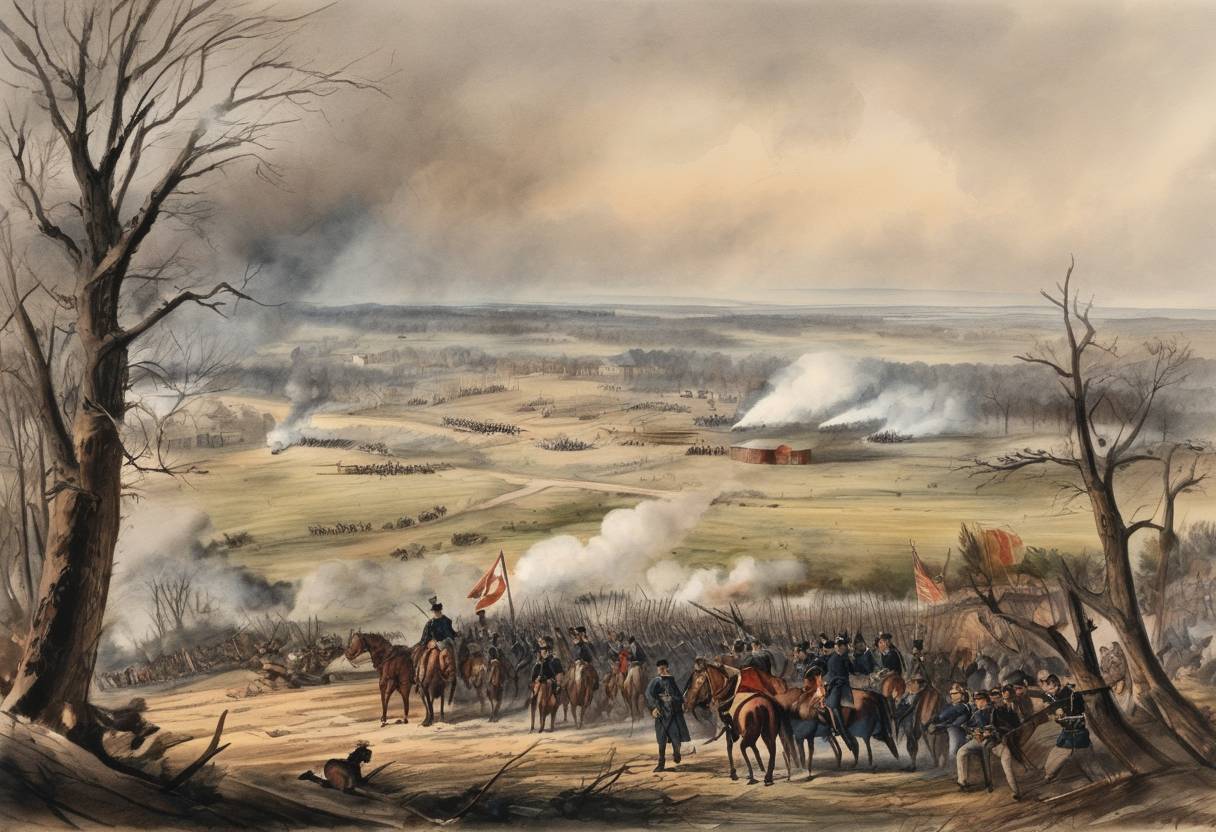
Watercolor painting based depiction of The Battle of Fredericksburg took place during the American Civil War. General Robert E. Lee's Confederate Army achieved a significant victory against the Union Army led by Major General Ambrose Burnside. (1862)

The Battle of Fredericksburg: December 13, 1862

Overview

The Battle of Fredericksburg occurred on December 13, 1862, during the American Civil War, and was a significant Confederate victory. It saw the forces of Confederate General Robert E. Lee’s Army of Northern Virginia decisively defeat the Union Army of the Potomac, led by Major General Ambrose Burnside. The battle was part of the Union’s attempt to capture the Confederate capital of Richmond, Virginia.

Background

  • Strategic Objectives: General Burnside, newly appointed as the commander of the Army of the Potomac, aimed to make a rapid advance towards Richmond, hoping to advance before Confederate forces could organize a strong defense.
  • Geographical Importance: Fredericksburg, Virginia, was strategically located on the Rappahannock River, making it a critical point for controlling access to Richmond.
  • Delays and Defensive Preparations: Delays in securing pontoon bridges slowed Burnside’s crossing of the river, allowing Lee to fortify his positions on the heights above Fredericksburg.

The Battle

  • Union Assaults: On December 13, Union forces launched multiple frontal assaults on well-fortified Confederate positions located on Marye’s Heights and along a stone wall near the Sunken Road. The Confederate forces held advantageous high ground.
  • Confederate Defense: Lee’s forces, under the command of generals such as James Longstreet and Thomas “Stonewall” Jackson, had entrenched positions providing effective defense. Lee’s strategy was to use the natural terrain to repel Union forces.
  • Outcome: The Union attacks, particularly on Marye’s Heights, resulted in heavy casualties without breaching the Confederate lines, leading to a devastating defeat for Union forces.

Aftermath

  • Casualties: The Union suffered approximately 12,600 casualties, while Confederate casualties were around 5,300. This disparity underscored the Union’s tactical failures.
  • Impact on Union Leadership: The defeat resulted in severe criticism of Burnside, leading to his eventual replacement as the commander of the Army of the Potomac by Major General Joseph Hooker.
  • Confederate Morale: The victory bolstered Confederate morale and solidified Lee’s reputation as a formidable military leader.

Historical Significance

The Battle of Fredericksburg was emblematic of the challenges the Union faced in overcoming well-prepared Confederate defenses during the Civil War. It highlighted issues of leadership, coordination, and terrain disadvantage that plagued Union military efforts. This battle further prolonged the war, as decisive Union success in the eastern theater would not occur until later campaigns. Fredericksburg remains a poignant example of the heavy human cost of Civil War battles and the complexities of conducting offensive operations against fortified positions.