The Establishment of the Tetrarchy: March 1, 293
293 · Nicomedia, Roman Empire
Diocletian and Maximian appoint Constantius Chlorus and Galerius as Caesars, marking the beginning of the Tetrarchy in the Roman Empire.
November 17, 0284
Diocletian is proclaimed Roman Emperor after the death of the Emperor Numerian.
Nicomedia, Roman Empire | Roman Empire
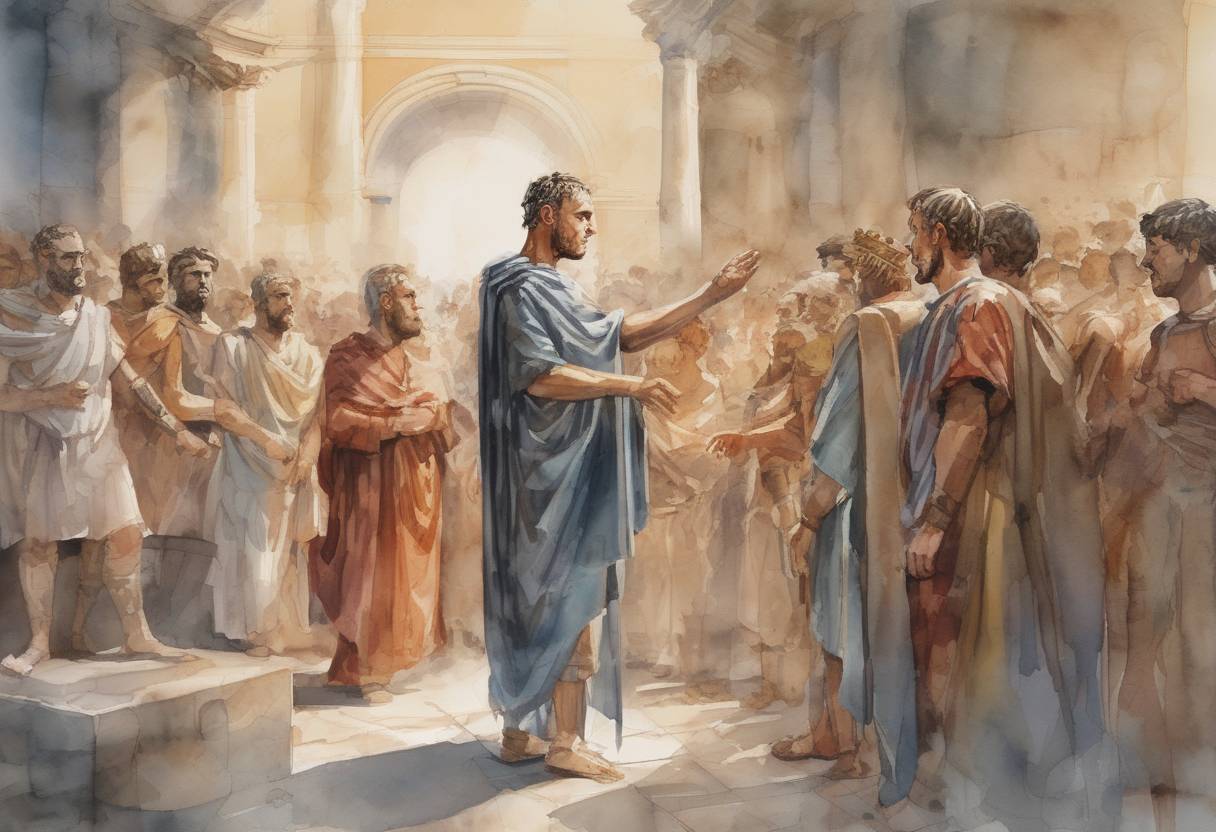
On November 17, 284, Gaius Aurelius Valerius Diocletianus, commonly known as Diocletian, was proclaimed Roman Emperor. This event marked a significant turning point in Roman history, leading to substantial reforms that would shape the future of the Roman Empire.
The period leading up to Diocletian’s rise was characterized by instability and crisis within the Roman Empire, often referred to as the “Crisis of the Third Century” (235–284 AD). This era was marked by frequent changes in leadership, economic turmoil, military defeats, and internal strife. The Roman Empire was plagued by civil wars, invasions, and a rapidly changing roster of emperors, many of whom were military leaders elevated by their troops.
Numerian, the Roman Emperor preceding Diocletian, was part of the short-lived dynasty of the Emperor Carus. Numerian co-ruled with his brother Carinus after the death of their father, Carus, in 283 AD. Numerian’s reign was brief and ended under mysterious circumstances. While returning from a campaign in the East, Numerian was found dead in his litter under suspicious conditions. His death was initially concealed by his praetorian prefect, Aper, who claimed Numerian was merely ill.
Diocletian, a commander of the imperial bodyguard, was proclaimed emperor by his troops in the aftermath of Numerian’s death. Upon his ascension, Diocletian accused Aper of murdering Numerian and executed him in front of the assembled army, thereby consolidating his position and eliminating a potential rival.
Diocletian’s reign (284–305 AD) is noted for its comprehensive reforms aimed at stabilizing and strengthening the Roman Empire:
Tetrarchy System: Diocletian introduced the Tetrarchy, dividing the empire into four regions, each ruled by a co-emperor. This system was designed to provide more efficient governance and defense across the vast empire.
Administrative Reforms: He reorganized the empire’s administrative structure, increasing the number of provinces and creating dioceses to improve local governance.
Economic Reforms: Diocletian attempted to curb inflation and stabilize the economy through measures such as the Edict on Maximum Prices, which set price controls on goods and services.
Military Reforms: He strengthened the Roman military by increasing its size and fortifying the empire’s borders.
Religious Policies: Diocletian is also known for his persecution of Christians, which was part of his broader policy to restore traditional Roman religious practices.
Diocletian’s reforms laid the groundwork for the later stability of the Roman Empire, particularly during the reign of Constantine the Great. Although the Tetrarchy eventually collapsed, Diocletian’s efforts to address the empire’s systemic issues had a lasting impact on its governance and structure.
In summary, Diocletian’s proclamation as emperor on November 17, 284, set in motion a series of transformative changes that helped stabilize the Roman Empire during a period of significant crisis. His legacy is marked by both his administrative innovations and his controversial religious policies.
Source: en.wikipedia.org