The Public Release of the Dead Sea Scrolls - September 22, 1991
1991 · New York City, United States
The Dead Sea Scrolls are made available to the public for the first time.
September 19, 1991
Ötzi the Iceman, a well-preserved natural mummy from about 3300 BCE, was discovered in the Ötztal Alps on the border between Austria and Italy.
Ötztal Alps, Austria/Italy | Archaeological Discovery
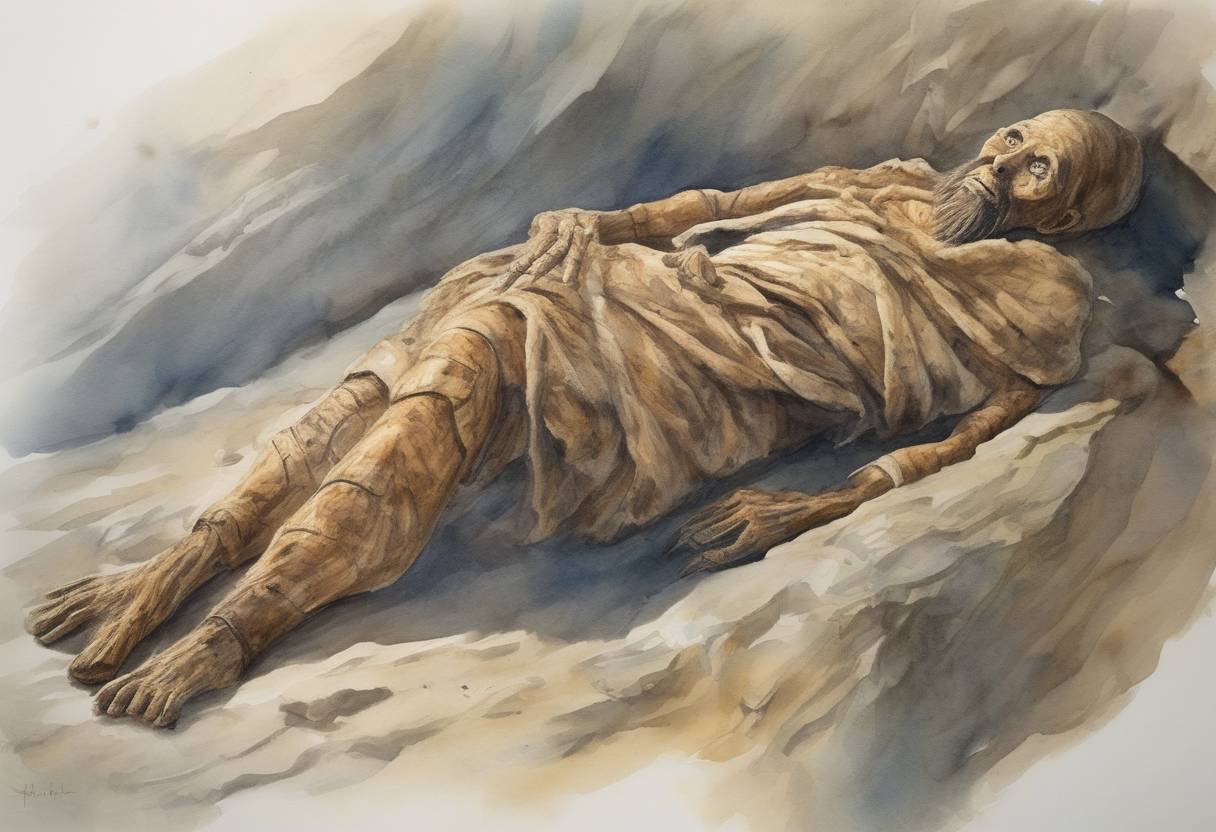
Ötzi the Iceman is one of the most significant archaeological discoveries of the late 20th century. His remarkably well-preserved natural mummy was found on September 19, 1991, in the Ötztal Alps, near the border between Austria and Italy. This discovery has provided invaluable insights into the life and times of people living during the Copper Age, around 3300 BCE.
Ötzi was discovered by German tourists Helmut and Erika Simon, who stumbled upon the mummy while hiking. Initially, it was believed to be a modern corpse, but further examination revealed its ancient origins. The body was found at an altitude of 3,210 meters (10,530 feet) in a melting glacier, which had preserved it for millennia.
The cold and dry conditions of the glacier played a crucial role in the preservation of Ötzi’s body, clothing, and tools. This preservation allowed scientists to conduct extensive studies, including DNA analysis, radiocarbon dating, and CT scans, providing a detailed picture of his life and death.
Ötzi lived during the Copper Age, a period marked by the transition from stone to metal tools. Analysis of his belongings, including a copper axe, a flint knife, and a quiver of arrows, suggests he was well-equipped for survival in his environment. His clothing, made from animal skins and grasses, indicates advanced knowledge of materials and tailoring.
Examinations of Ötzi’s remains revealed a wealth of information about his health and diet. He suffered from arthritis, dental issues, and had several tattoos, which some researchers believe may have been therapeutic. Analysis of his stomach contents showed he had consumed a meal of grains and meat shortly before his death.
Ötzi’s death has been the subject of much research and debate. Initially thought to have died from exposure, later studies revealed an arrowhead lodged in his shoulder, suggesting he may have been involved in a violent conflict. Additional injuries, including a deep cut on his hand, support the theory of a violent encounter.
Ötzi’s discovery has provided a unique window into prehistoric Europe, offering insights into the daily life, health, and technology of people living over 5,000 years ago. His well-preserved state has allowed scientists to make groundbreaking discoveries about ancient human life, including migration patterns, diet, and health.
Ötzi the Iceman continues to be a subject of fascination and study. He is housed at the South Tyrol Museum of Archaeology in Bolzano, Italy, where he remains a popular exhibit. His discovery has inspired numerous studies, documentaries, and even fictional works, highlighting his enduring impact on both science and popular culture.
In summary, Ötzi the Iceman is not just a remarkable archaeological find but a crucial link to understanding the prehistoric past, offering a tangible connection to the lives of our ancient ancestors.
Source: en.wikipedia.org