Giles Corey and the Salem Witch Trials
1692 · Salem, United States
Giles Corey, accused of witchcraft, dies after being pressed with heavy stones during the Salem witch trials.
October 12, 1692
The Salem witch trials are ended by a letter from Massachusetts Governor William Phips.
Salem, United States | Massachusetts Bay Colony
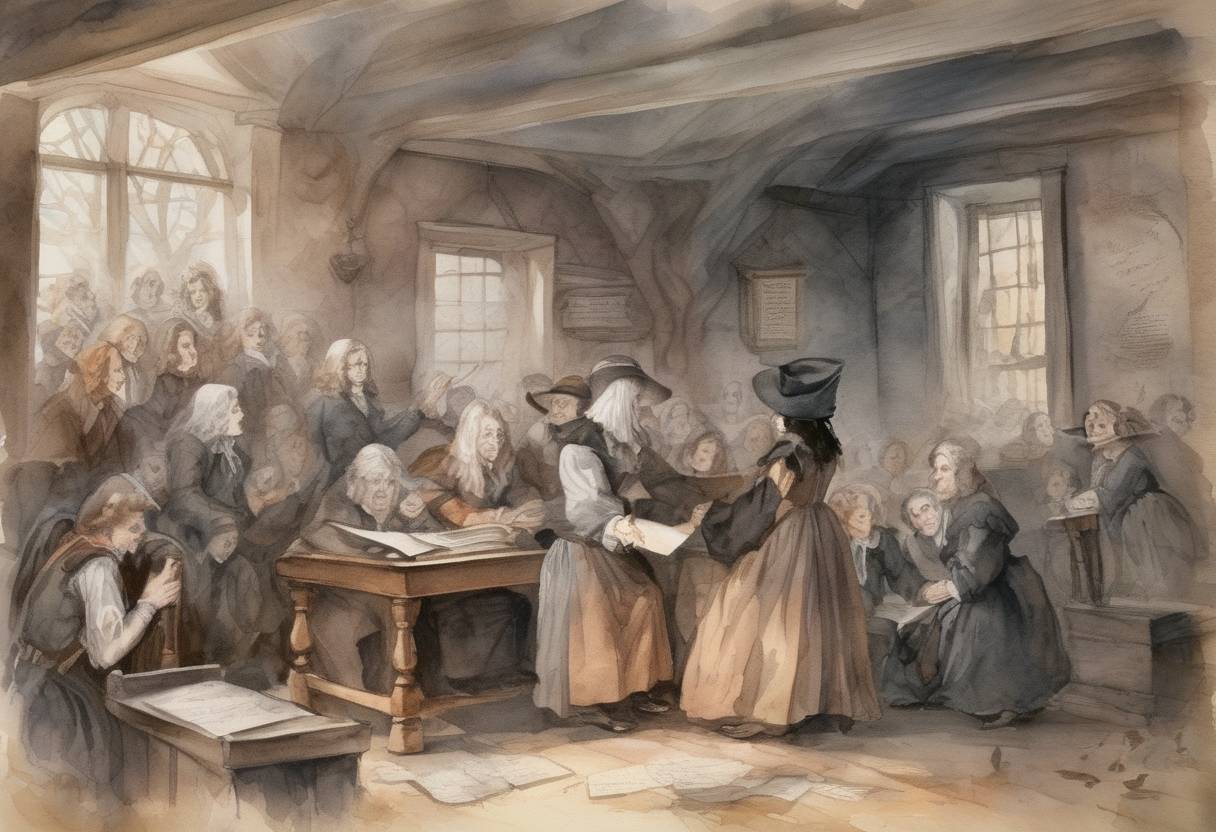
On October 12, 1692, a significant turning point occurred in the infamous Salem witch trials when Massachusetts Governor William Phips intervened to halt the proceedings. This action marked the beginning of the end for one of the most notorious episodes of mass hysteria and injustice in colonial American history.
The Salem witch trials began in early 1692 in the Puritan settlement of Salem Village, Massachusetts. A group of young girls claimed to be possessed by the devil and accused several local women of witchcraft. The ensuing panic led to a series of trials and executions. By the fall of 1692, the hysteria had resulted in the execution of 20 individuals, with many others imprisoned.
The trials were characterized by a lack of concrete evidence, reliance on spectral evidence (testimony that the spirit or specter of the accused was seen committing witchcraft), and a climate of fear and suspicion. The legal proceedings were overseen by the Court of Oyer and Terminer, which was established specifically to handle the witchcraft cases.
Governor William Phips, who had been appointed as the royal governor of the Massachusetts Bay Colony earlier in 1692, was initially supportive of the trials. However, as the number of accusations grew and the legitimacy of the trials came under scrutiny, public opinion began to shift. Influential figures, including Increase Mather, a prominent minister, and others began to criticize the use of spectral evidence and the conduct of the trials.
On October 12, 1692, Governor Phips wrote a letter to the Court of Oyer and Terminer, effectively suspending its activities. He expressed concern over the validity of the evidence being used and the fairness of the trials. Phips’ decision was influenced by the growing public outcry and the realization that the trials were spiraling out of control.
Following Phips’ intervention, the Court of Oyer and Terminer was dissolved, and the remaining witchcraft cases were transferred to the Superior Court of Judicature. This court did not allow spectral evidence, leading to the acquittal or dismissal of many cases. By May 1693, the witch trials had effectively ended, and those still imprisoned were released.
In the years that followed, the Salem witch trials became a cautionary tale about the dangers of mass hysteria, the importance of due process, and the need for a fair and just legal system. The events of 1692 have been extensively studied and remain a significant part of American cultural and historical discourse.
Governor Phips’ decision to halt the trials was a crucial step in restoring order and justice in the colony, and it underscored the importance of rationality and skepticism in the face of fear and superstition.
Source: en.wikipedia.org