The Capture of Rangoon by Japanese Forces: March 8, 1942
1942 · Rangoon, Burma (now Myanmar)
The Japanese captured Rangoon, Burma, during World War II.
March 5, 1824
The First Anglo-Burmese War began, marking the start of hostilities between the British East India Company and the Kingdom of Burma. This conflict was part of the British expansion in Southeast Asia.
Rangoon, Burma (now Myanmar) | British East India Company
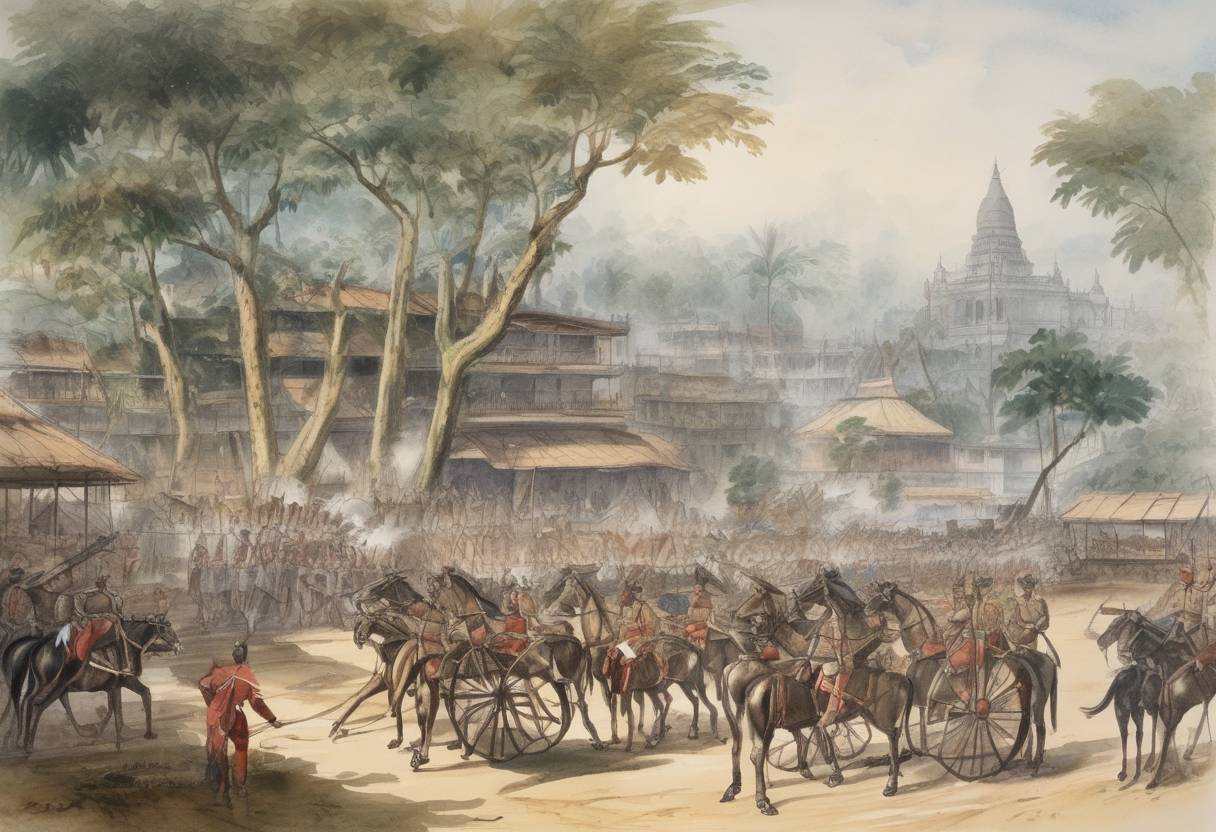
The First Anglo-Burmese War, which began on March 5, 1824, marked the start of a significant conflict between the British East India Company and the Kingdom of Burma (now Myanmar). This war was a pivotal event in the British expansion into Southeast Asia, driven by both strategic and economic interests.
Expansionist Policies: The British East India Company, having established control over much of India, sought to expand its influence further eastward. The Kingdom of Burma, under the Konbaung Dynasty, was also expanding its territory, leading to increased tensions along the borders.
Border Disputes: The immediate cause of the war was a series of border disputes. The Burmese had annexed the kingdom of Arakan and were threatening the British-held territories of Assam and Manipur. The British perceived these actions as a direct threat to their interests in the region.
Trade and Economic Interests: The British were also motivated by the desire to secure trade routes and access to the rich resources of Southeast Asia. The Burmese control of the region was seen as an obstacle to these economic ambitions.
On March 5, 1824, hostilities officially commenced when the British declared war on Burma. The conflict was characterized by a series of battles fought in challenging terrains, including dense jungles and riverine environments.
The British forces, led by General Sir Archibald Campbell, launched a campaign that involved both land and naval operations. The British aimed to capture key Burmese territories and force the kingdom into submission.
Treaty of Yandabo: The war concluded in 1826 with the signing of the Treaty of Yandabo. Under the terms of the treaty, Burma ceded significant territories, including Arakan and Tenasserim, to the British. Additionally, Burma agreed to pay a substantial indemnity and accept a British resident in its court.
Impact on Burma: The war marked the beginning of the end for the Burmese monarchy’s independence. It weakened the kingdom significantly, leading to further British incursions and eventual colonization.
British Expansion: The victory solidified British control over strategic regions in Southeast Asia, paving the way for further expansion and consolidation of British colonial rule in the region.
The First Anglo-Burmese War was a crucial moment in the history of British imperialism in Asia. It demonstrated the British Empire’s growing power and its willingness to use military force to achieve its geopolitical and economic objectives. The conflict also set the stage for subsequent Anglo-Burmese wars, ultimately leading to the complete annexation of Burma by the British in 1885.
This war is a significant example of the complex interplay between colonial ambitions and regional politics in the 19th century, highlighting the transformative impact of European imperialism on Southeast Asia.
Source: www.britannica.com