The Malmedy Massacre: December 17, 1944
1944 · Malmedy, Belgium
The Malmedy massacre occurred during the Battle of the Bulge in World War II, where German troops killed American prisoners of war.
December 16, 1944
The Battle of the Bulge begins as German forces launch a surprise attack against Allied forces in the Ardennes region.
Ardennes, Belgium | German Army
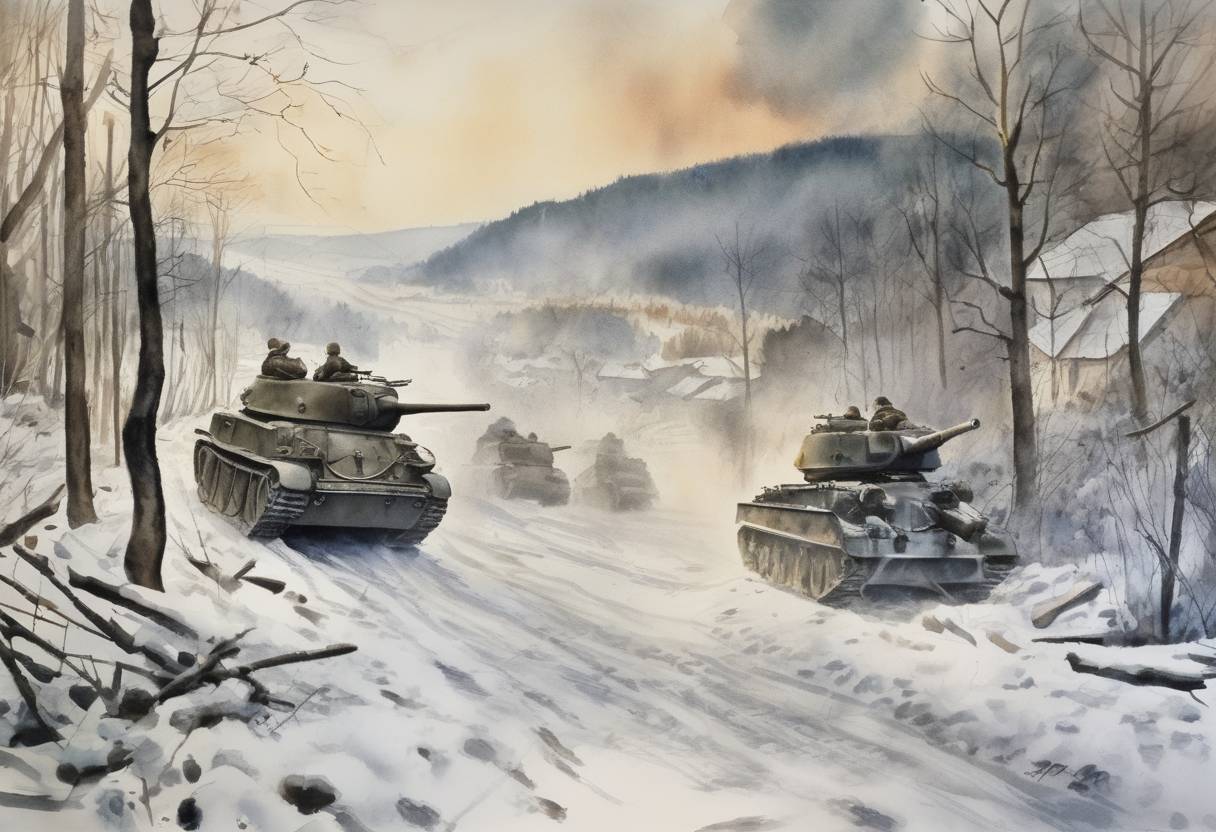
On December 16, 1944, the German military launched a surprise offensive against Allied forces in the Ardennes region of Belgium, Luxembourg, and France. This marked the beginning of the Battle of the Bulge, one of the largest and bloodiest battles fought by the United States during World War II.
Strategic Situation: By late 1944, the Allies had successfully liberated much of Western Europe following the D-Day landings in June. However, the German forces were not yet defeated, and Adolf Hitler sought to split the Allied lines, capture the vital Belgian port of Antwerp, and encircle and destroy four Allied armies, hoping to force a negotiated peace on the Western Front.
German Planning: The offensive, codenamed “Operation Watch on the Rhine” (Unternehmen Wacht am Rhein), was meticulously planned in secrecy. The Germans amassed a force of approximately 200,000 troops, 1,000 tanks, and significant artillery, taking advantage of the dense Ardennes forest to conceal their movements.
Surprise Attack: The attack began in the early hours of December 16, 1944, under the cover of fog and snow, which grounded Allied air support. The Germans achieved complete surprise, initially overwhelming the thinly spread and inexperienced American forces.
Initial Success: German forces made significant advances, creating a “bulge” in the Allied front lines, which gave the battle its name. Key towns such as Bastogne became focal points of intense fighting.
American Response: Despite initial setbacks, American forces, including the 101st Airborne Division, famously held Bastogne under siege. General George S. Patton’s Third Army executed a rapid and decisive counter-movement to relieve the besieged town.
Turning Point: The battle lasted until January 25, 1945, when Allied forces successfully pushed back the German offensive. The failure of the German attack depleted their reserves and weakened their ability to defend against the subsequent Allied advances into Germany.
Casualties: The Battle of the Bulge was the costliest battle for the United States in terms of casualties, with approximately 19,000 American soldiers killed, 47,500 wounded, and 23,000 missing.
Historical Impact: The battle demonstrated the resilience and determination of Allied forces and marked the last major German offensive on the Western Front. It set the stage for the final Allied push into Germany and the eventual defeat of Nazi Germany in May 1945.
The Battle of the Bulge remains a significant event in World War II history, illustrating the challenges of winter warfare, the importance of intelligence and preparation, and the resilience of Allied forces in the face of adversity.
Source: en.wikipedia.org