Emperor Haile Selassie I of Ethiopia
1910 · Ejersa Goro, Ethiopia
Emperor Haile Selassie I of Ethiopia is born, who would later become a significant figure in Ethiopian history and a symbol of African independence and unity.
January 12, 1872
Yohannes IV is crowned Emperor of Ethiopia in Axum, marking a significant period in Ethiopian history.
Axum, Ethiopia | Ethiopian Empire
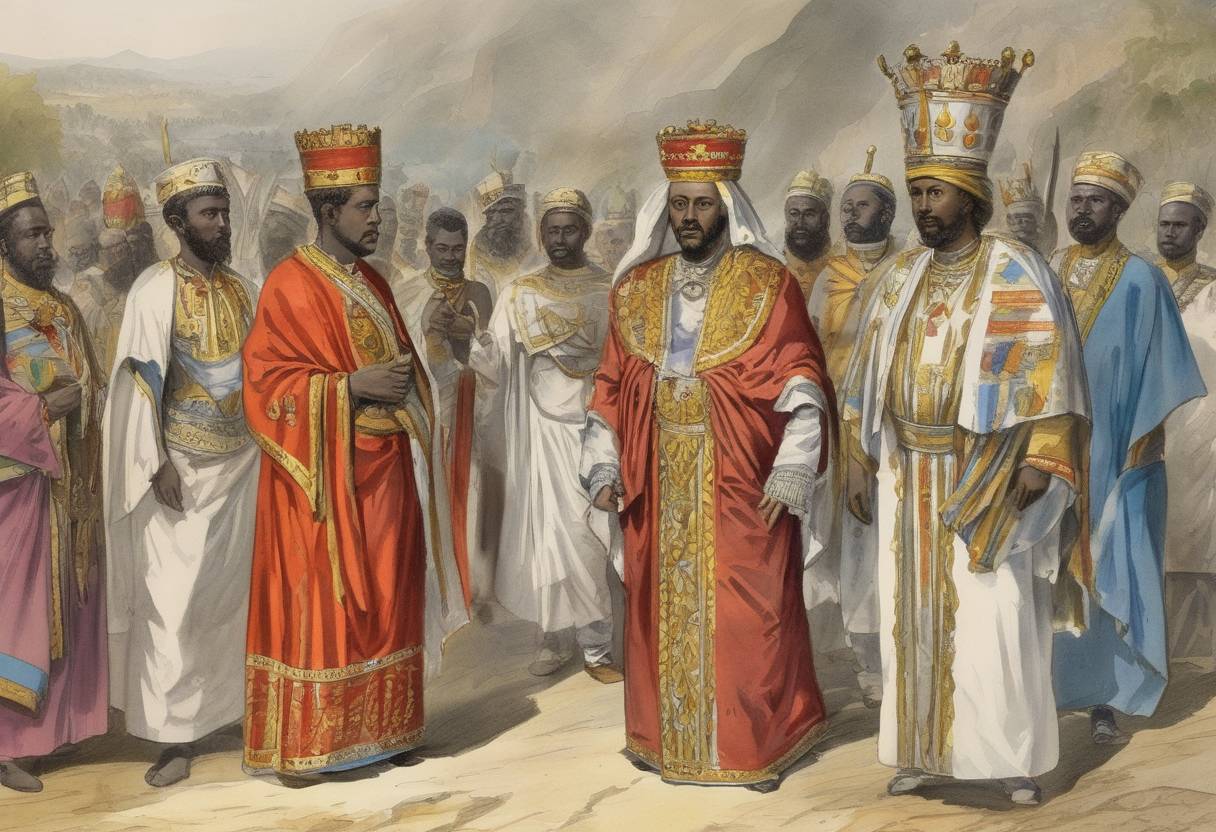
On January 12, 1872, Kassa Mercha was crowned as Emperor Yohannes IV of Ethiopia in the historic city of Axum. This event marked the beginning of a significant era in Ethiopian history, characterized by efforts to unify the country and resist foreign encroachments.
Before Yohannes IV’s ascension, Ethiopia was fragmented, with regional lords wielding significant power. The Zemene Mesafint, or “Era of the Princes,” was a period marked by decentralization and internal strife. Kassa Mercha, a regional leader from Tigray, emerged as a unifying figure capable of consolidating power and restoring central authority.
The coronation took place in Axum, a city of immense historical and religious significance in Ethiopia. Axum was the heart of the ancient Aksumite Empire and is traditionally considered the site where Ethiopian emperors were crowned. The choice of Axum underscored Yohannes IV’s intent to legitimize his rule through historical and religious symbolism.
Yohannes IV’s reign (1872-1889) was marked by several key initiatives and challenges:
Centralization and Reform: Yohannes worked to centralize authority and reduce the power of regional nobility. He implemented administrative reforms to strengthen the imperial government.
Religious Policies: As a devout Christian, Yohannes IV sought to unify the Ethiopian Orthodox Church and enforce religious orthodoxy. He faced challenges from Muslim regions and other Christian sects within Ethiopia.
Foreign Relations and Conflicts: Yohannes IV’s reign was characterized by significant foreign threats. He successfully defended Ethiopia against Egyptian invasions in the 1870s and 1880s. His reign also saw tensions with European powers, particularly Italy and Britain, as they sought to expand their influence in the Horn of Africa.
Battle of Metemma: Yohannes IV died in 1889 at the Battle of Metemma, fighting against Mahdist forces from Sudan. His death marked the end of his efforts to maintain Ethiopian sovereignty and unity.
Yohannes IV is remembered for his efforts to unify Ethiopia and resist colonial encroachment. His reign laid the groundwork for subsequent leaders, including Emperor Menelik II, who continued the struggle against European imperialism and achieved a significant victory at the Battle of Adwa in 1896.
Yohannes IV’s coronation and reign are pivotal in understanding the resilience and continuity of Ethiopian sovereignty during a period when much of Africa was being colonized by European powers. His leadership helped preserve Ethiopia’s independence, making it one of the few African nations to successfully resist colonization during the Scramble for Africa.
Source: en.wikipedia.org