The Treaty of Venice: February 21, 1177
1177 · Venice, Italy
The Treaty of Venice was signed between Pope Alexander III and Emperor Frederick I Barbarossa, leading to the end of the schism and the recognition of Alexander as the legitimate pope.
September 8, 1157
The Treaty of Benevento was concluded between Pope Adrian IV and the King of Sicily, William I, establishing peace between the Papal States and the Kingdom of Sicily.
Benevento, Italy | Papal States and Kingdom of Sicily
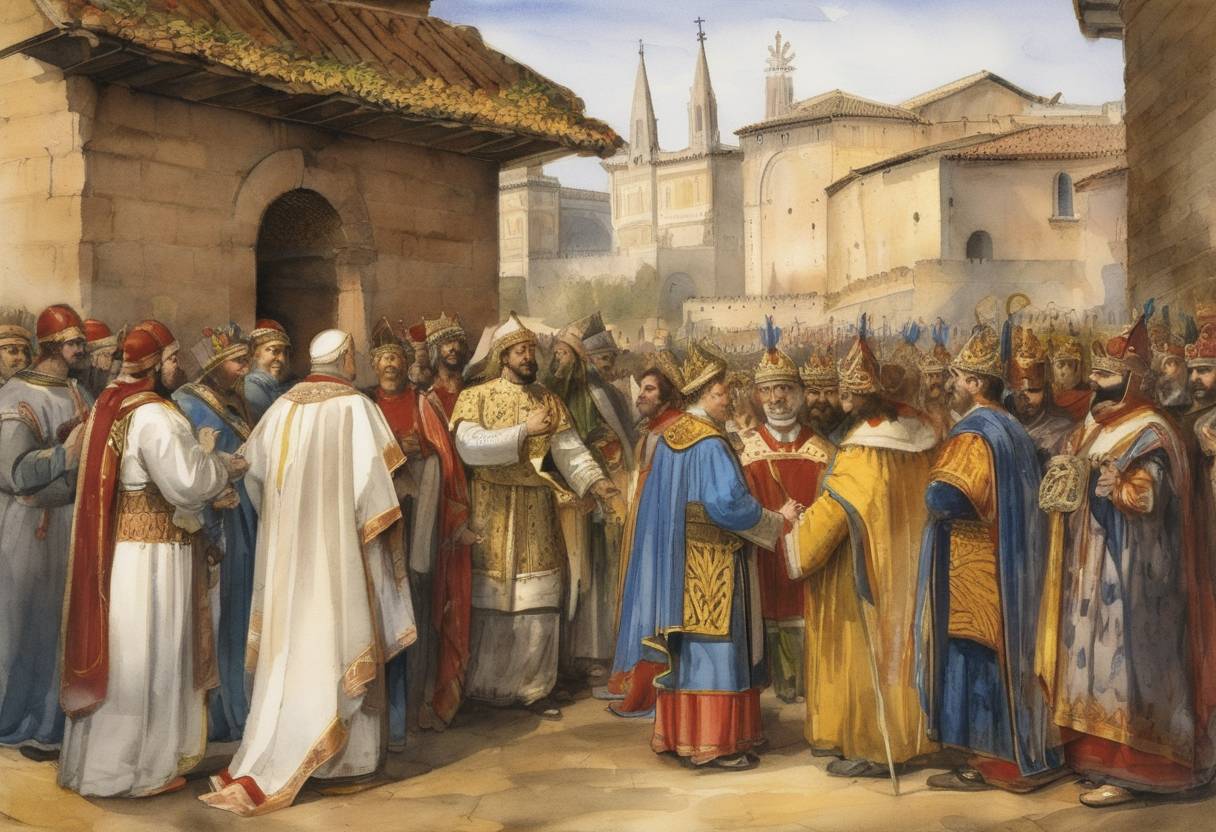
On September 8, 1156, the Treaty of Benevento was concluded between Pope Adrian IV and William I of Sicily. This significant diplomatic accord sought to establish peace between the Papal States and the Kingdom of Sicily.
During the mid-12th century, Italy was a patchwork of competing states and territories. The Papal States aimed to maintain their authority and influence across central Italy, while the Kingdom of Sicily, under the rule of the Norman king, William I, sought to defend and extend its territories.
Hostilities had been ongoing between the Papal States and the Kingdom of Sicily due to territorial disputes and power struggles within the Italian Peninsula. William I, known as “William the Bad” by his critics, faced internal revolts and external threats, underscoring the necessity for stability in his relationship with the Papacy.
Recognition of Territories: The treaty recognized the sovereignty of William I over Sicily and parts of southern Italy, effectively conceding the extensive lands he controlled to the south of the Papal States.
Church Rights and Privileges: In return for papal recognition, William I agreed to uphold certain privileges for the Church within his territories, ensuring protection and rights for ecclesiastical authorities.
Papal Sovereignty: The accord included reaffirmation of the Pope’s authority in the broader ecclesiastical hierarchy, positioning the Papal States as a power balanced against secular forces.
Stabilization of Relations: The treaty marked a temporary stabilization in the relationship between the Papal States and the Kingdom of Sicily, allowing both entities to focus on internal challenges and diplomatic maneuvers with other neighboring powers.
Strategic Benefits: For William I, the treaty provided strategic breathing room from papal antagonism, enabling him to fortify his rule amidst various regional challenges.
Papal Influence: For Pope Adrian IV, the treaty underscored the Papal States’ continuing influence in secular affairs, asserting its diplomatic prowess to mediate and negotiate peace.
The Treaty of Benevento had lasting implications for the balance of power within Italy. Although peace agreements like these were often tenuous, the possibility of diplomatic resolutions between secular and ecclesiastical authorities set a precedent for later negotiations impacting the region’s medieval political landscape.
Overall, the treaty marked a significant moment in the ongoing saga of power and politics in Medieval Italy, exemplifying the complex interdependencies of church and state during this tumultuous period.
Source: en.wikipedia.org