The Enactment of the Nuremberg Laws on September 15, 1935
1935 · Nuremberg, Germany
The Nuremberg Laws were enacted in Nazi Germany, institutionalizing racial discrimination against Jews and laying the groundwork for the Holocaust.
November 9, 1938
Kristallnacht, also known as the Night of Broken Glass, took place. This pogrom against Jews was carried out by SA paramilitary forces and civilians throughout Nazi Germany, marking a significant escalation in the Nazi regime's persecution of Jews.
Various, Germany | Nazi Party
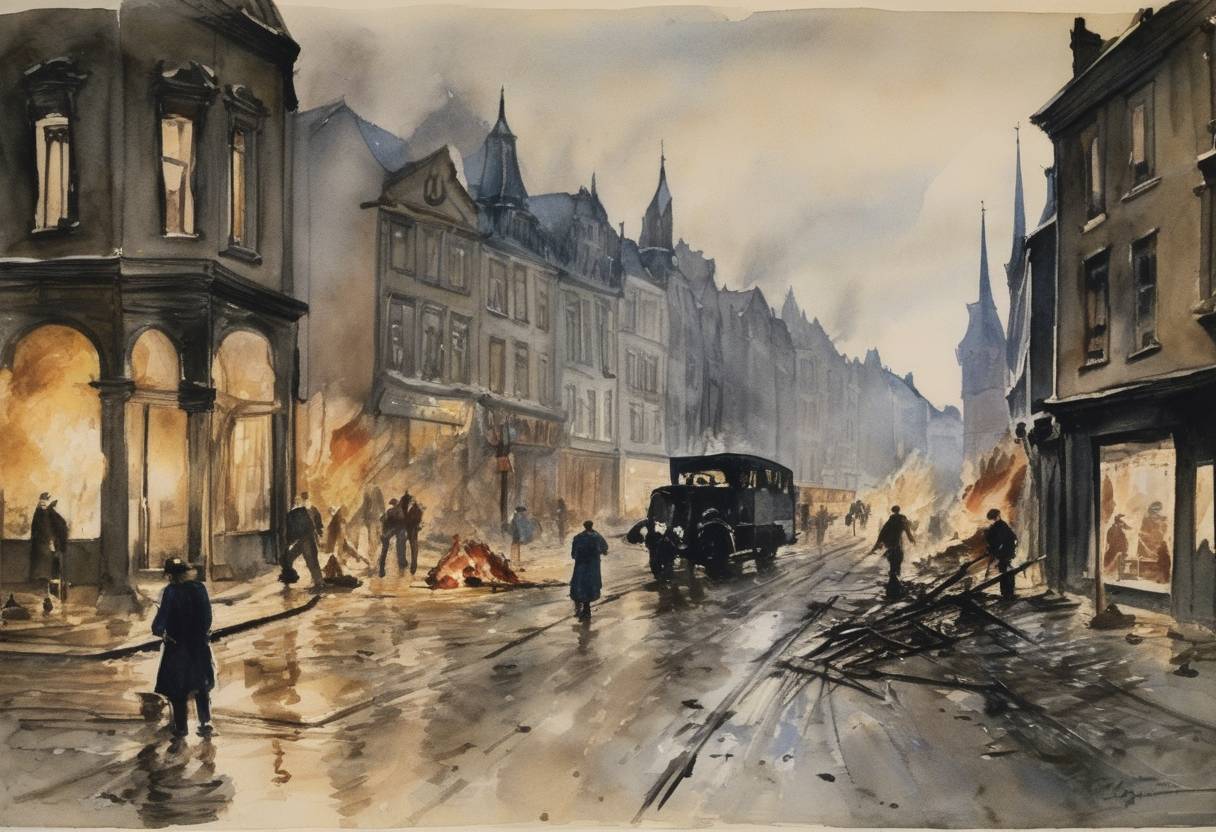
Kristallnacht, or the Night of Broken Glass, refers to a coordinated attack on Jewish communities throughout Nazi Germany and parts of Austria on the night of November 9, 1938, and extending into the following day, November 10. This pogrom represented a pivotal escalation in the Nazi regime’s increasingly violent campaign against Jews, setting in motion a series of events that would lead to the Holocaust.
Leading up to Kristallnacht, anti-Semitic sentiment had been intensifying under Adolf Hitler’s regime. Jews faced increasing social, legal, and economic discrimination, notably through measures such as the Nuremberg Laws of 1935, which stripped German Jews of their citizenship and prohibited them from marrying or having sexual relations with persons of “German or related blood.”
The immediate catalyst for the pogrom was the assassination of Ernst vom Rath, a German diplomat in Paris, by Herschel Grynszpan, a young Polish Jew. Grynszpan’s action on November 7, 1938, was motivated by the expulsion of Jews of Polish origin from Germany, including his own family.
During Kristallnacht, SA paramilitary forces and civilians unleashed a wave of violence, encouraged by Nazi officials. The term “Kristallnacht” alludes to the shattered glass that littered the streets after windows of Jewish-owned stores, buildings, and synagogues were broken.
Kristallnacht marked a significant turning point in Nazi anti-Jewish policy, demonstrating that the regime was prepared to employ brutal violence to achieve its goals. This event effectively ended Jewish participation in German economic life and normalized public violent anti-Semitism. Following the pogrom, new anti-Jewish legislation accelerated, further marginalizing Jews in German society.
The international reaction was one of shock and condemnation, but concrete actions to assist Jewish refugees remained insufficient. As such, Kristallnacht foreshadowed the more systemic and deadly measures that would culminate in the Holocaust, tragically realized during World War II.
Source: encyclopedia.ushmm.org