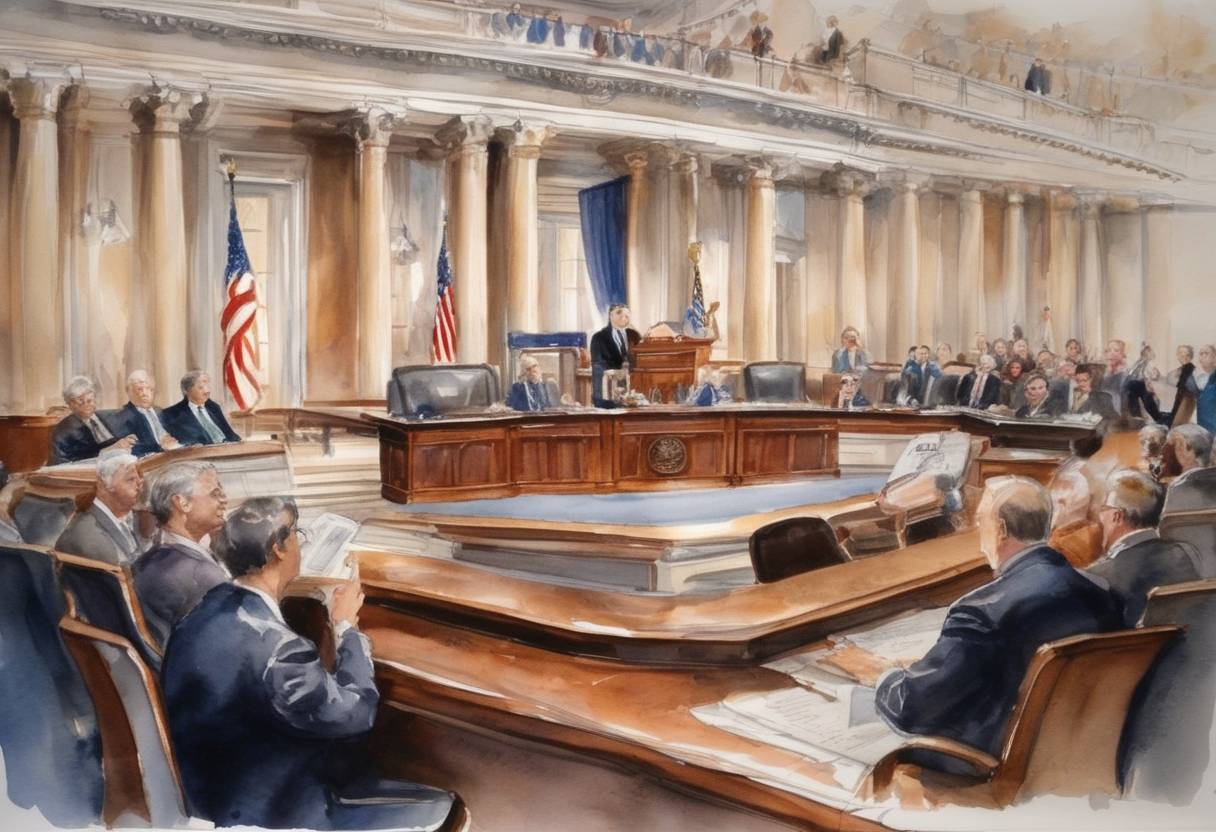
The Passage of NAFTA by the U.S. House of Representatives on November 17, 1993
On November 17, 1993, the United States House of Representatives passed the North American Free Trade Agreement (NAFTA), marking a pivotal moment in the treaty’s ratification process. This agreement was part of a trilateral effort to create a trade bloc and was negotiated between the United States, Canada, and Mexico. The approval by the House was a critical step towards the agreement’s full implementation.
Background
NAFTA aimed to eliminate most tariffs on products traded among the United States, Canada, and Mexico, with additional provisions to protect intellectual property, establish dispute resolution mechanisms, and address environmental and labor concerns. The idea was to foster economic integration and facilitate cross-border commerce, capitalizing on the comparative advantages of each member nation.
Negotiations for NAFTA began under President George H. W. Bush, who saw the agreement as a way to promote free trade and improve economic ties in the Western Hemisphere. However, its passage through the U.S. legislative process occurred under President Bill Clinton, who, although initially a skeptic, became a strong advocate for the agreement, citing potential economic and job benefits.
The Vote
The vote in the House of Representatives was a contentious one, reflecting a significant debate over the potential economic impacts of the agreement. Proponents argued that NAFTA would create jobs in the United States by opening foreign markets to American goods and services and improve consumer choices through lower-cost imports. Opponents, however, warned of potential job losses in certain industries due to cheaper imports and the relocation of manufacturing to Mexico.
The House approved NAFTA with a vote of 234 to 200, crossing traditional party lines and drawing support primarily from Republicans and a portion of moderate Democrats. The vote was considered a significant political victory for President Clinton, who had to negotiate vocally and actively with legislators to secure the necessary support.
Aftermath and Significance
With the House’s approval, NAFTA moved to the Senate, where it passed easily the following week. The agreement came into force on January 1, 1994, shaping North American trade for decades. NAFTA was instrumental in increasing trade volume among the three countries and has been credited with economic growth, although it also faced criticism for affecting certain labor markets within the United States and issues related to environmental impacts.
In years following NAFTA’s implementation, it underwent scrutiny and was revisited in official negotiations, culminating in the United States–Mexico–Canada Agreement (USMCA) in 2020, which sought to modernize trade relations in light of technological advancements and evolving economic landscapes. Nonetheless, the passage of NAFTA in 1993 by the House remains a landmark in the history of trade agreements and economic policy.