The Theft of the Mona Lisa: August 21, 1911
1911 · Paris, France
The Mona Lisa is stolen from the Louvre by a museum employee.
August 12, 1793
The Louvre Museum in Paris is officially opened as a public museum, with an exhibition of 537 paintings.
Paris, France | Musée du Louvre
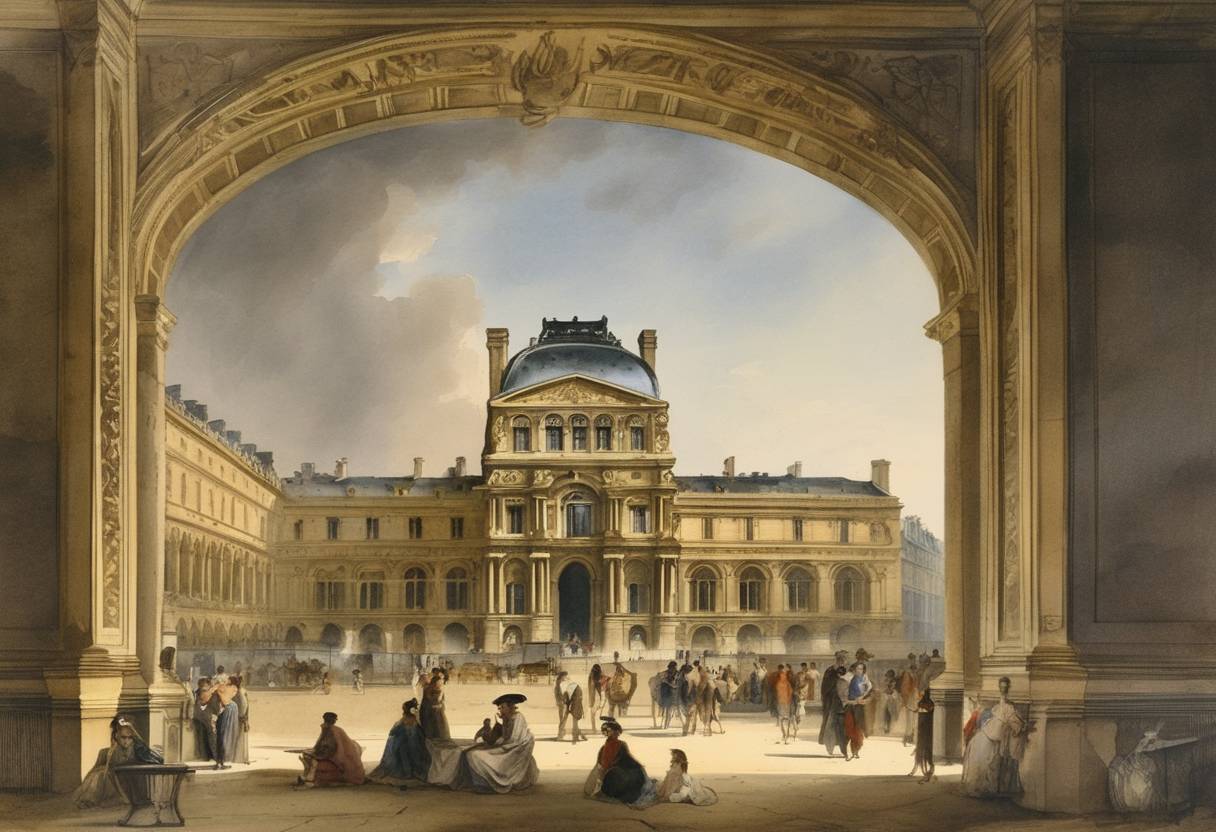
The Louvre Museum in Paris, one of the most iconic and largest art museums in the world, officially opened to the public on August 10, 1793. This marked a pivotal moment in the history of art as the museum served as a showcase for the artworks previously confined to the royal collections. Initially, the museum’s collection featured 537 paintings alongside sculptures and other works of art.
The opening of the Louvre as a public museum came amidst the turbulent times of the French Revolution. Previously a royal palace, the Louvre’s transformation into a public museum was proposed as a gesture towards promoting knowledge and education among citizens, reflecting the revolutionary ideals of equality and the democratization of culture.
On its official opening date, the Louvre featured artworks that were predominantly French and from the former royal collections. Notable was the emphasis on pieces that reflected the nation’s culture and history, allowing broader public access to works that had been reserved for the aristocracy.
The opening of the Louvre as a public institution was emblematic of the sweeping social changes wrought by the French Revolution. It represented a shift in the relationship between the state and its citizens, where art and culture were tools for education and personal growth, available to individuals from all walks of life.
In the years following the opening, the collection at the Louvre continued to expand dramatically, fueled by art confiscated during the Napoleonic Wars and various acquisitions over the subsequent centuries.
Today, the Louvre stands as a testament to its revolutionary roots, housing one of the world’s most extensive and revered art collections, attracting millions of visitors from across the globe each year.
Source: en.wikipedia.org