Establishment of Hobart as a Penal Colony
1804 · Hobart, Australia
Hobart was established as a penal colony.
May 13, 1787
The First Fleet of ships carrying convicted criminals from England to establish a penal colony in Australia, set sail from Portsmouth.
Portsmouth, England | British Government
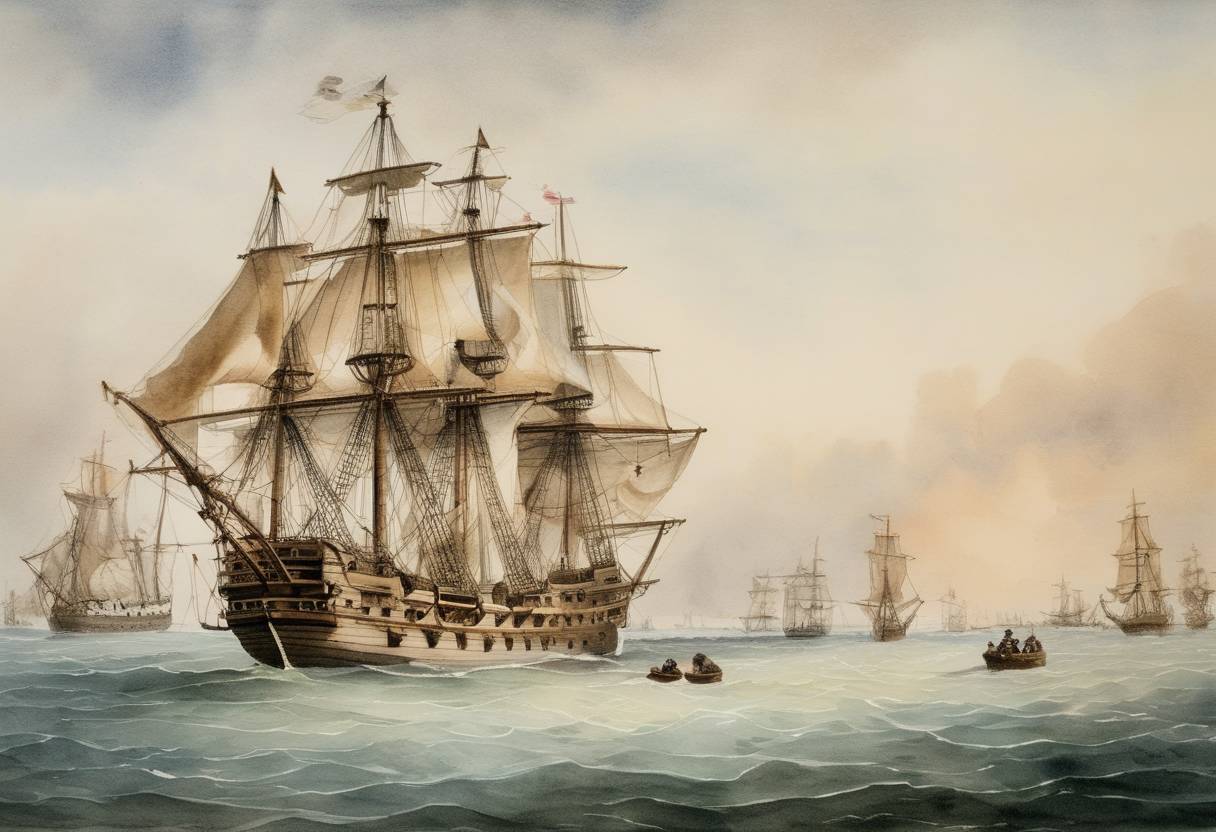
On May 13, 1787, the First Fleet set sail from Portsmouth, England, marking the beginning of a pivotal chapter in the history of Australia and the British Empire. This expedition was a direct result of Britain’s efforts to find a solution to its overcrowded prison system following the loss of the American colonies, which had previously served as a destination for transported convicts.
The First Fleet consisted of 11 ships carrying over 1,400 individuals, including convicted criminals, marines, and their families. Specifically, the fleet comprised:
Captain Arthur Phillip was appointed as the commander of the fleet and the first Governor of the proposed penal colony in New South Wales. Under his leadership, preparations were made to ensure the survival and establishment of the colony, including sourcing government provisions and supplies deemed necessary for the long voyage and subsequent settlement.
The primary objective of the First Fleet was to establish a secure British presence in New South Wales, which had been claimed by James Cook in 1770. This endeavor served multiple purposes:
The transportation of convicts became a pressing issue in England following the American War of Independence. Jails and hulks became overcrowded with petty criminals, a situation that spurred the British government to explore new territories for establishing penal colonies.
The decision to establish a penal colony in Australia had significant long-term effects. It laid the foundation for modern-day Australia, leading to the development of Sydney and eventual European settlement across the continent. The voyage arrived at Botany Bay on January 18, 1788, eventually leading to the founding of the Port Jackson settlement, known today as Sydney.
The departure of the First Fleet represents a significant event in British colonial history and marks the beginning of a complex narrative involving the indigenous populations and the new settlers that continues to be explored and understood today.