Swearing in of Chief Justice John G. Roberts Jr.
2005 · Washington, D.C., United States
John G. Roberts Jr. was sworn in as Chief Justice of the United States, becoming the 17th person to hold the position.
June 5, 1916
Louis Brandeis is sworn in as a Justice of the United States Supreme Court, making history as the first Jewish person to hold this position.
Washington, D.C., United States | United States Supreme Court
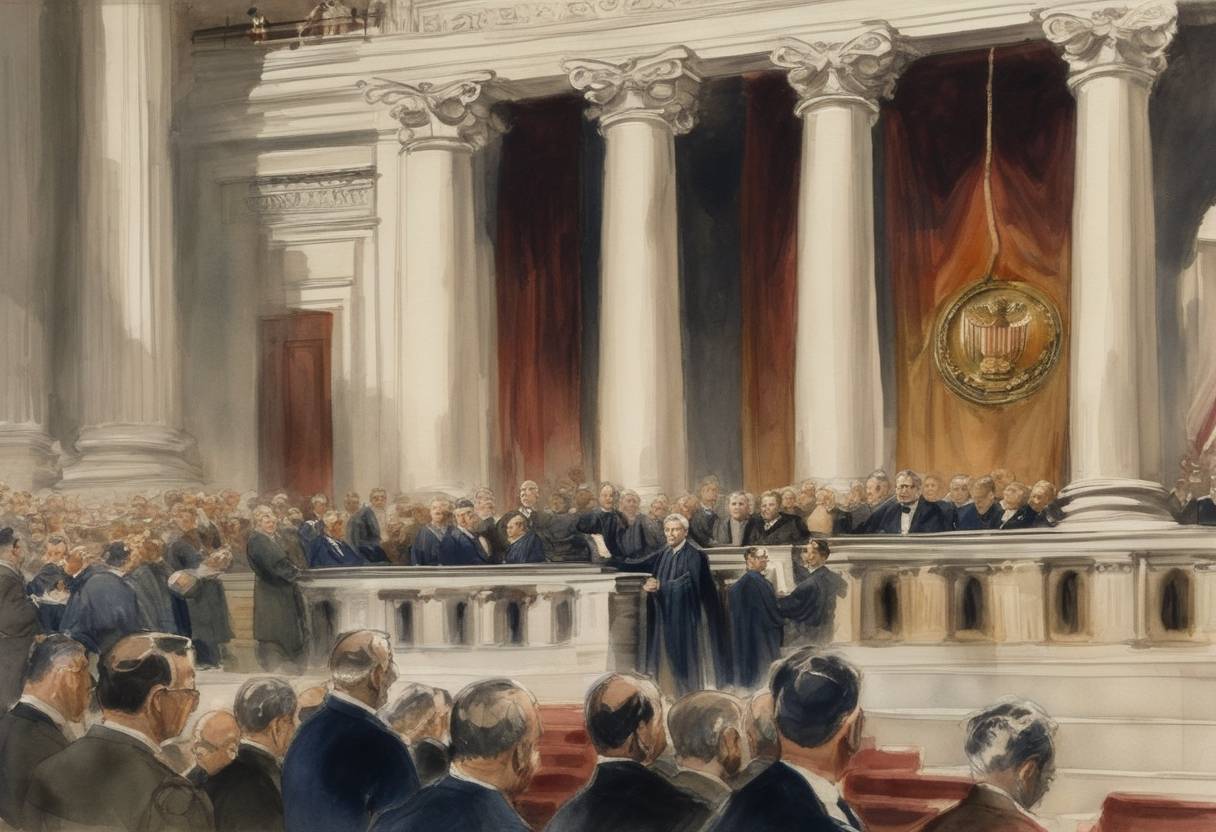
On June 5, 1916, Louis Dembitz Brandeis was officially sworn in as an Associate Justice of the United States Supreme Court, marking a significant milestone in American history as the first Jewish person to hold this distinguished position. His appointment represented a breakthrough moment in the inclusion of diverse religious and cultural backgrounds within the highest levels of American government.
Louis Brandeis was born on November 13, 1856, in Louisville, Kentucky, to Jewish immigrant parents who had come to the United States from Bohemia. A brilliant student, Brandeis attended Harvard Law School, where he graduated with the highest average in the school’s history at that time. Renowned for his legal acumen and commitment to social justice, Brandeis became known as the “People’s Lawyer” for his advocacy work on behalf of workers, consumers, and progressive causes.
President Woodrow Wilson nominated Brandeis to the Supreme Court on January 28, 1916. The nomination was met with significant opposition from various sectors, including anti-Semitic sentiments, skepticism about his progressive views, and resistance from some members of the legal and business communities. Despite this, Brandeis’s reputation for integrity and intellectual prowess helped him secure a place on the Court after a protracted confirmation process lasting four months — the longest in Supreme Court history at that time.
Brandeis served on the Supreme Court until his retirement in 1939. Known for his eloquent and often prescient opinions, he was a staunch defender of individual privacy, freedom of speech, and government accountability. His influential dissenting and concurring opinions, such as those in Whitney v. California and Olmstead v. United States, laid the groundwork for future legal standards, especially concerning civil liberties and the right to privacy.
Brandeis’s appointment not only shattered religious barriers in American governmental institutions but also underscored a growing acceptance and recognition of diverse contributions to American society. His tenure is remembered for both its intellectual rigor and its moral and ethical clarity, setting a standard for future justices.
Source: www.history.com