The Treaty of Tordesillas: June 7, 1494
1494 · Tordesillas, Spain
The Treaty of Tordesillas was signed, dividing the newly discovered lands outside Europe between Portugal and Spain along a meridian 370 leagues west of the Cape Verde islands.
April 22, 1529
The Treaty of Zaragoza is signed, dividing the eastern hemisphere between Spain and Portugal along a meridian 297.5 leagues east of the Moluccas.
Zaragoza, Spain | Spanish Empire, Portuguese Empire
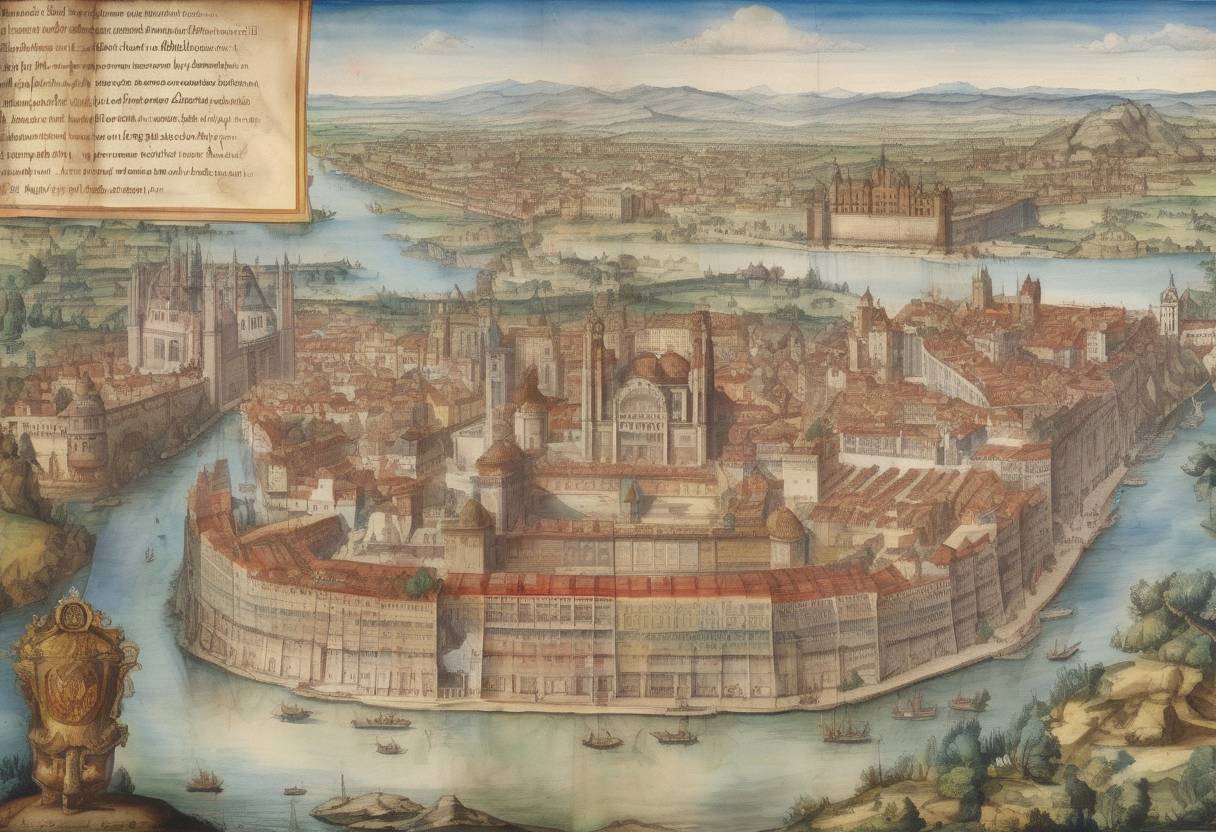
The Treaty of Zaragoza, signed on April 22, 1529, was a significant agreement between the Spanish Empire and the Kingdom of Portugal. This treaty aimed to resolve disputes over territorial claims in the Eastern Hemisphere, specifically concerning the lucrative spice trade in the Moluccas, also known as the Spice Islands.
Age of Exploration: During the 15th and 16th centuries, European powers were fervently exploring new trade routes and territories. The Treaty of Tordesillas in 1494 had previously divided the world outside Europe between Spain and Portugal along a meridian 370 leagues west of the Cape Verde islands. However, this treaty did not account for the division of territories in the Eastern Hemisphere.
The Spice Trade: The Moluccas were highly coveted for their valuable spices, such as cloves and nutmeg. Both Spain and Portugal sought control over these islands, leading to conflicts over their rightful ownership.
Division Line: The Treaty of Zaragoza established a demarcation line 297.5 leagues east of the Moluccas. This line was intended to delineate Spanish and Portuguese spheres of influence in the Eastern Hemisphere.
Territorial Claims: Under the treaty, Spain agreed to relinquish its claims to the Moluccas in exchange for a monetary compensation of 350,000 ducats from Portugal. This effectively granted Portugal control over the Spice Islands.
Resolution of Conflicts: The treaty successfully resolved the immediate territorial disputes between Spain and Portugal, allowing both nations to focus on expanding their respective empires without further conflict over the Moluccas.
Impact on Global Trade: By securing control over the Spice Islands, Portugal strengthened its position in the global spice trade, which was a major economic driver during this period.
Long-term Effects: The Treaty of Zaragoza, along with the Treaty of Tordesillas, played a crucial role in shaping the colonial boundaries and influence of Spain and Portugal, impacting the geopolitical landscape of the time.
In summary, the Treaty of Zaragoza was a pivotal agreement that helped define the territorial boundaries between two of the most powerful maritime empires of the 16th century, influencing the course of global exploration and trade.
Source: en.wikipedia.org