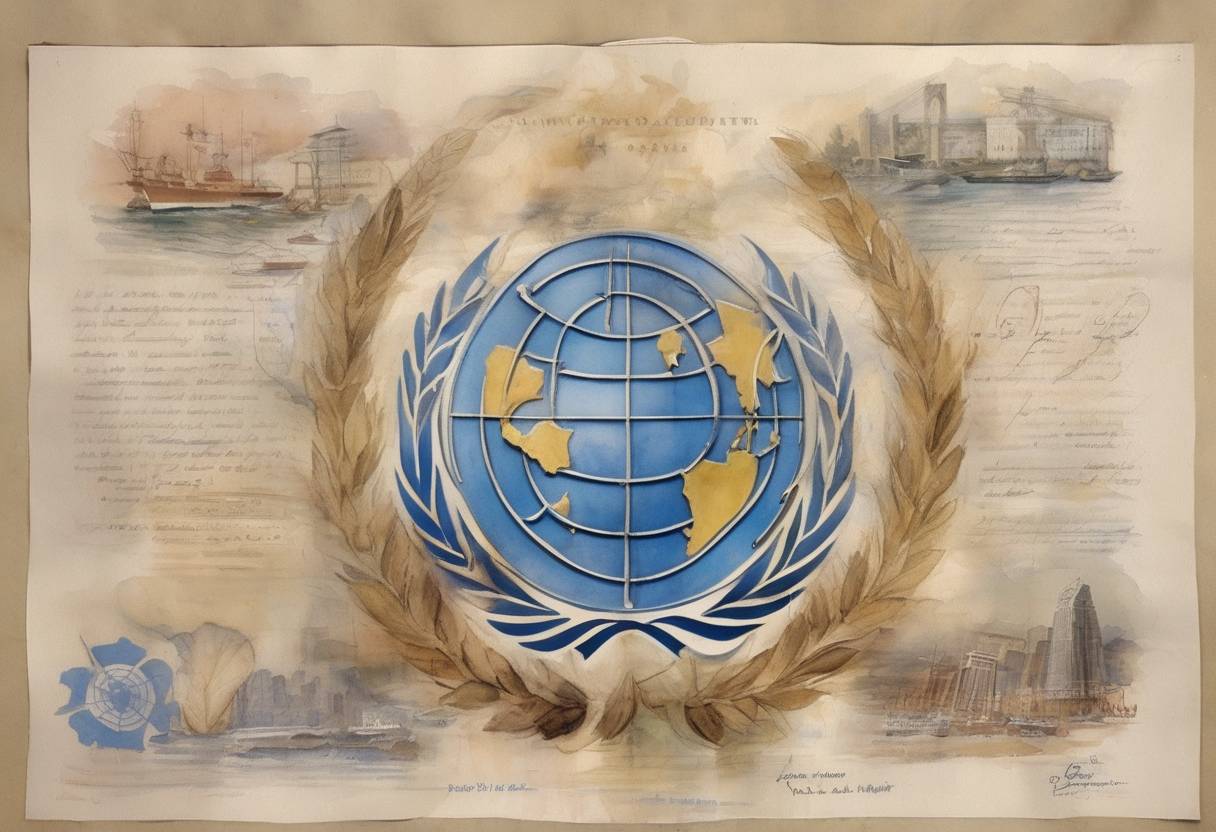
Signing of the United Nations Charter
Date: June 26, 1945
Overview
On June 26, 1945, the United Nations Charter was signed in San Francisco, marking the establishment of the United Nations (UN) as an international organization. This pivotal event laid the foundation for a new era of international cooperation aimed at preventing future conflicts and fostering peace and security worldwide.
Context
- World War II Aftermath: The devastation of World War II highlighted the need for a new international body to replace the ineffective League of Nations and to prevent further global conflicts.
- Allied Conferences: The idea for the UN was developed through a series of conferences among the Allied powers, including the Moscow Conference (1943), the Tehran Conference (1943), the Dumbarton Oaks Conference (1944), and the Yalta Conference (1945).
Key Events Leading Up to the Signing
- Dumbarton Oaks Conference (1944): Representatives from China, the Soviet Union, the United Kingdom, and the United States met to draft proposals for the structure and function of the UN.
- Yalta Conference (February 1945): The “Big Three” leaders—Franklin D. Roosevelt, Winston Churchill, and Joseph Stalin—agreed on the voting structure of the UN Security Council.
- San Francisco Conference (April 25 - June 26, 1945): Officially known as the United Nations Conference on International Organization, delegates from 50 countries gathered to finalize the UN Charter.
The Signing Ceremony
- Location: The signing took place at the Herbst Theatre auditorium in the War Memorial Opera House in San Francisco, California.
- Signatories: Representatives from 50 countries signed the Charter, with Poland signing later to become the 51st founding member.
- Key Figures: U.S. President Harry S. Truman delivered a speech emphasizing the importance of the UN in maintaining peace.
Charter Provisions
- Purpose: The Charter outlined the UN’s primary objectives, including maintaining international peace and security, promoting social progress, and fostering human rights.
- Structure: The UN was structured with six main organs: the General Assembly, the Security Council, the Economic and Social Council, the International Court of Justice, the Trusteeship Council, and the Secretariat.
Aftermath and Significance
- Ratification: The Charter came into force on October 24, 1945, after being ratified by the five permanent members of the Security Council (China, France, the Soviet Union, the United Kingdom, and the United States) and a majority of other signatory states.
- Legacy: The UN has since played a crucial role in international diplomacy, peacekeeping, and humanitarian efforts. It has grown to include 193 member states as of 2023.
Conclusion
The signing of the United Nations Charter was a landmark event in 20th-century history, establishing a framework for international collaboration and conflict resolution. It represented a collective commitment to a more peaceful and cooperative world order following the horrors of World War II.