Robert Fulton Patents the Steamboat - February 11, 1809
1809 · New York City, United States
Robert Fulton patents the steamboat.
August 17, 1807
The Clermont, Robert Fulton's first American steamboat, begins its first successful trip up the Hudson River from New York City to Albany.
New York City, United States | None
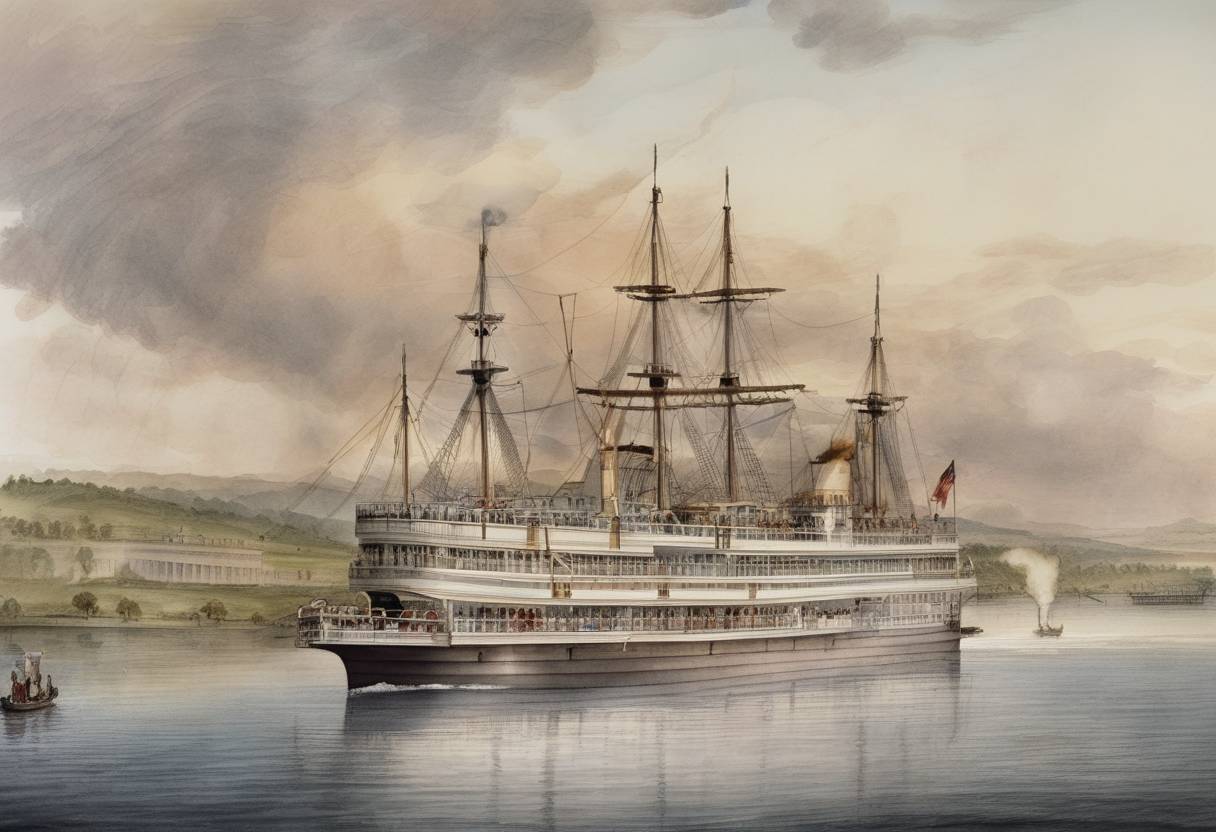
On August 17, 1807, Robert Fulton’s steamboat, known as the Clermont, embarked on its maiden successful voyage up the Hudson River from New York City to Albany. This event marked a pivotal moment in the history of transportation and the Industrial Revolution.
Robert Fulton: An American engineer and inventor, Fulton was inspired by earlier experiments with steam-powered vessels. He collaborated with Robert R. Livingston, a prominent American statesman and diplomat, who provided financial backing and secured exclusive rights to navigate the waters of New York with steam-powered vessels.
The Clermont: Originally named the “North River Steamboat,” the vessel was later popularly known as the Clermont, after Livingston’s estate. It was a 150-foot-long steamboat equipped with a Boulton and Watt steam engine, which Fulton had imported from England.
Departure: The Clermont departed from New York City on August 17, 1807. It was a significant technological achievement, as it demonstrated the practicality of steam-powered navigation.
Journey Details: The trip to Albany covered approximately 150 miles and took about 32 hours, including an overnight stop. The vessel traveled at an average speed of about 5 miles per hour, which was impressive for the time.
Arrival: The Clermont reached Albany on August 19, 1807, successfully completing its journey and proving the viability of steam-powered river travel.
Transportation Revolution: The successful voyage of the Clermont heralded a new era in transportation. It demonstrated that steam power could be used effectively for commercial and passenger travel, leading to the rapid expansion of steamboat services on American rivers.
Economic Impact: The introduction of steamboats revolutionized trade and commerce by significantly reducing travel time and costs. It facilitated the movement of goods and people, contributing to the economic growth of the United States.
Technological Advancement: Fulton’s success with the Clermont spurred further innovations in steam technology and shipbuilding, influencing the development of steam-powered transportation worldwide.
Following the Clermont’s successful voyage, steamboats became a common sight on American rivers, particularly the Mississippi and Ohio Rivers. Fulton’s work laid the foundation for future advancements in steam navigation and transportation infrastructure, shaping the course of the 19th-century industrial landscape.
The Clermont’s journey remains a landmark event in the history of engineering and transportation, symbolizing the transformative power of innovation and the dawn of a new age in travel and commerce.
Source: www.history.com