Election of Pope Nicholas I on April 24, 858
858 · Rome, Italy
Pope Nicholas I is elected as the 105th pope of the Catholic Church.
June 12, 0816
Pope Stephen IV (V) was elected as the 97th pope of the Roman Catholic Church.
Rome, Italy | Roman Catholic Church
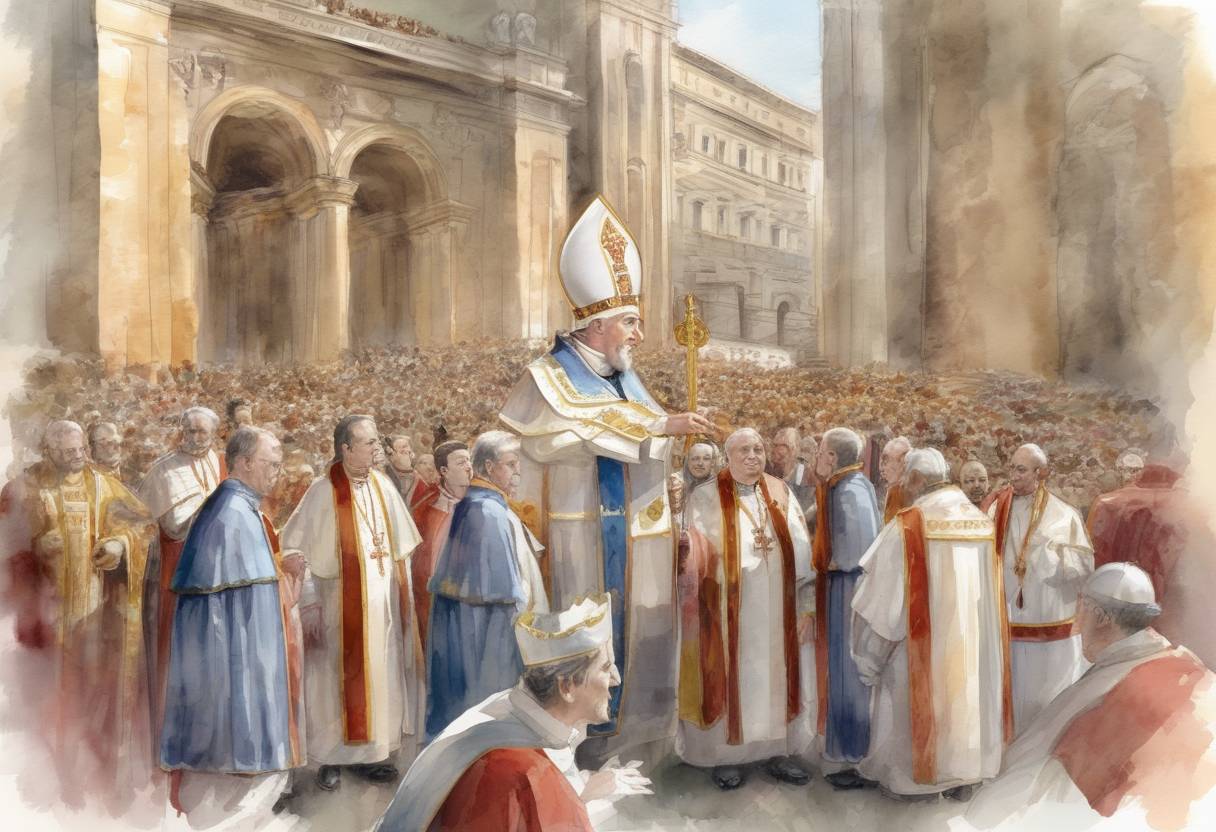
On June 12, 816, Stephen IV (also known as Stephen V) was elected as the 97th pope of the Roman Catholic Church. His papacy, though brief, was marked by significant events that underscored the relationship between the papacy and the Carolingian Empire.
Stephen IV was born into a noble Roman family, which provided him with the connections and influence necessary to ascend to the papacy. His election followed the death of Pope Leo III, who had been a pivotal figure in strengthening the ties between the papacy and the Frankish rulers, particularly with Charlemagne.
Coronation of Louis the Pious: One of Stephen IV’s first significant acts as pope was to travel to Reims to crown Louis the Pious, Charlemagne’s son, as the Holy Roman Emperor. This event took place in October 816 and was a continuation of the papal policy of aligning closely with the Carolingian dynasty. The coronation reinforced the alliance between the papacy and the Frankish empire, which was crucial for the political and military support of the papal states.
Strengthening Papal Authority: Stephen IV worked to consolidate papal authority both within Rome and in the broader Christian world. His actions were part of a broader trend during this period, where the papacy sought to assert its influence over secular rulers and church matters.
Diplomatic Relations: Stephen IV maintained diplomatic relations with various European powers, ensuring the papacy’s role as a central spiritual and political authority in medieval Europe.
Stephen IV’s papacy lasted only a few months, as he died on January 24, 817. Despite its brevity, his reign was significant for reinforcing the bond between the papacy and the Carolingian Empire, a relationship that would shape the political landscape of medieval Europe for years to come.
The coronation of Louis the Pious by Stephen IV was particularly important as it symbolized the continuation of the Holy Roman Empire, a political entity that would play a crucial role in European history. This act also underscored the pope’s role as a kingmaker, a position that would become increasingly important in the centuries to follow.
Stephen IV’s election and actions as pope illustrate the intricate interplay between religious and secular powers during the early Middle Ages, setting precedents for the papal involvement in European politics.
Source: en.wikipedia.org