The Siege of Masada and its Conclusion on April 14, 73 CE
73 · Masada, Roman Empire (modern-day Israel)
The Siege of Masada culminated in a mass suicide, ending the First Jewish–Roman War.
May 10, 0070
The Siege of Jerusalem by the Roman Empire began, marking a significant event in the First Jewish–Roman War. Roman forces, led by future Emperor Titus, laid siege to the city, which would eventually lead to the destruction of the Second Temple.
Jerusalem, Roman Empire (modern-day Israel) | Roman Empire
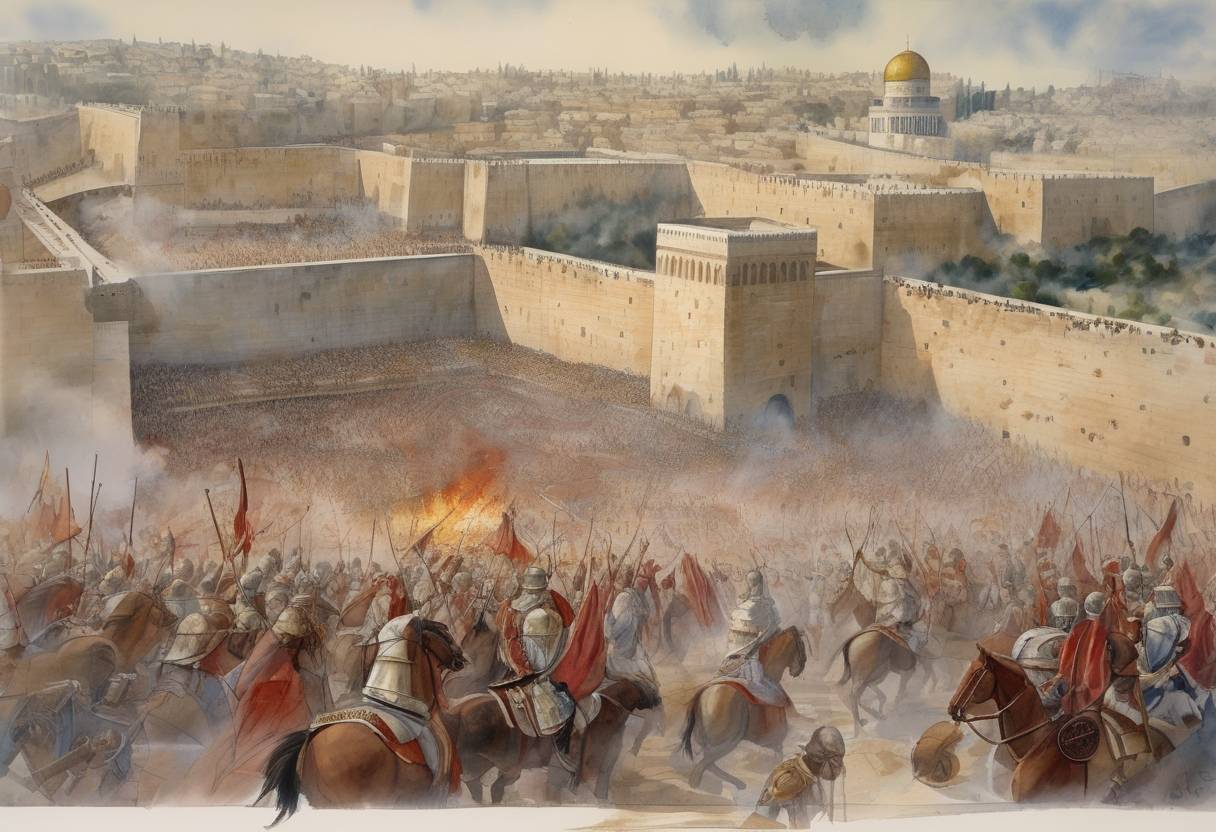
The Siege of Jerusalem in 70 CE was a pivotal event during the First Jewish–Roman War, marking a significant moment in Jewish and Roman history. This siege, led by the Roman general Titus, who would later become Emperor, culminated in the destruction of Jerusalem and its Second Temple, a catastrophe for the Jewish people and a decisive assertion of Roman power.
The First Jewish–Roman War, also known as the Great Revolt, began in 66 CE as a result of growing tensions between the Jewish population in Judea and the Roman authorities. These tensions were fueled by religious and cultural differences, heavy taxation, and Roman disrespect for Jewish customs. The revolt initially saw some Jewish successes, including the defeat of a Roman legion at the Battle of Beth Horon.
However, the Roman Empire, determined to quell the rebellion, dispatched a large military force to Judea. By 70 CE, the Romans had recaptured much of the territory, and Jerusalem remained the last major stronghold of the Jewish rebels.
On May 10, 70 CE, Titus began the siege of Jerusalem. The Roman forces, numbering around 70,000 troops, were well-equipped and experienced. They constructed a series of fortifications and siege works around the city, effectively cutting off supplies and reinforcements to the defenders.
Jerusalem was defended by a complex system of walls and fortifications, and its defenders were divided among various factions, including the Zealots and other groups who were often in conflict with each other. This internal division weakened the city’s ability to mount a coordinated defense.
The siege lasted several months, during which time the Romans employed various tactics, including battering rams and siege towers, to breach the city’s defenses. The situation inside Jerusalem became increasingly desperate, with food shortages leading to famine and disease.
In August 70 CE, Roman forces breached the city’s defenses and entered Jerusalem. The fighting was fierce, but the Romans systematically overcame the defenders. The climax of the siege was the destruction of the Second Temple, a central symbol of Jewish faith and identity, which was set ablaze on the 9th of Av, a date that would become a day of mourning in Jewish tradition.
The fall of Jerusalem had profound consequences. It marked the effective end of the First Jewish–Roman War, although some resistance continued in other parts of Judea. The destruction of the Second Temple had a lasting impact on Judaism, leading to significant religious and cultural changes, including the shift towards Rabbinic Judaism.
For the Roman Empire, the victory reinforced their dominance in the region and served as a warning to other provinces about the futility of rebellion. Titus returned to Rome as a celebrated military leader, and the triumph was commemorated with the construction of the Arch of Titus, which still stands today.
The Siege of Jerusalem and the destruction of the Second Temple are remembered as defining moments in Jewish history, symbolizing both the loss and resilience of the Jewish people. The events of 70 CE also underscore the might of the Roman Empire and its ability to suppress dissent within its territories.
This historical episode continues to be a subject of study and reflection, illustrating the complexities of imperial rule, religious conflict, and cultural survival.
Source: en.wikipedia.org