Founding of NACA: March 3, 1915
1915 · Washington, D.C., United States
NACA, the predecessor of NASA, is founded in the United States.
March 16, 1926
Robert Goddard launches the world's first liquid-fueled rocket in Auburn, Massachusetts, marking a significant milestone in the development of rocket technology.
Auburn, United States
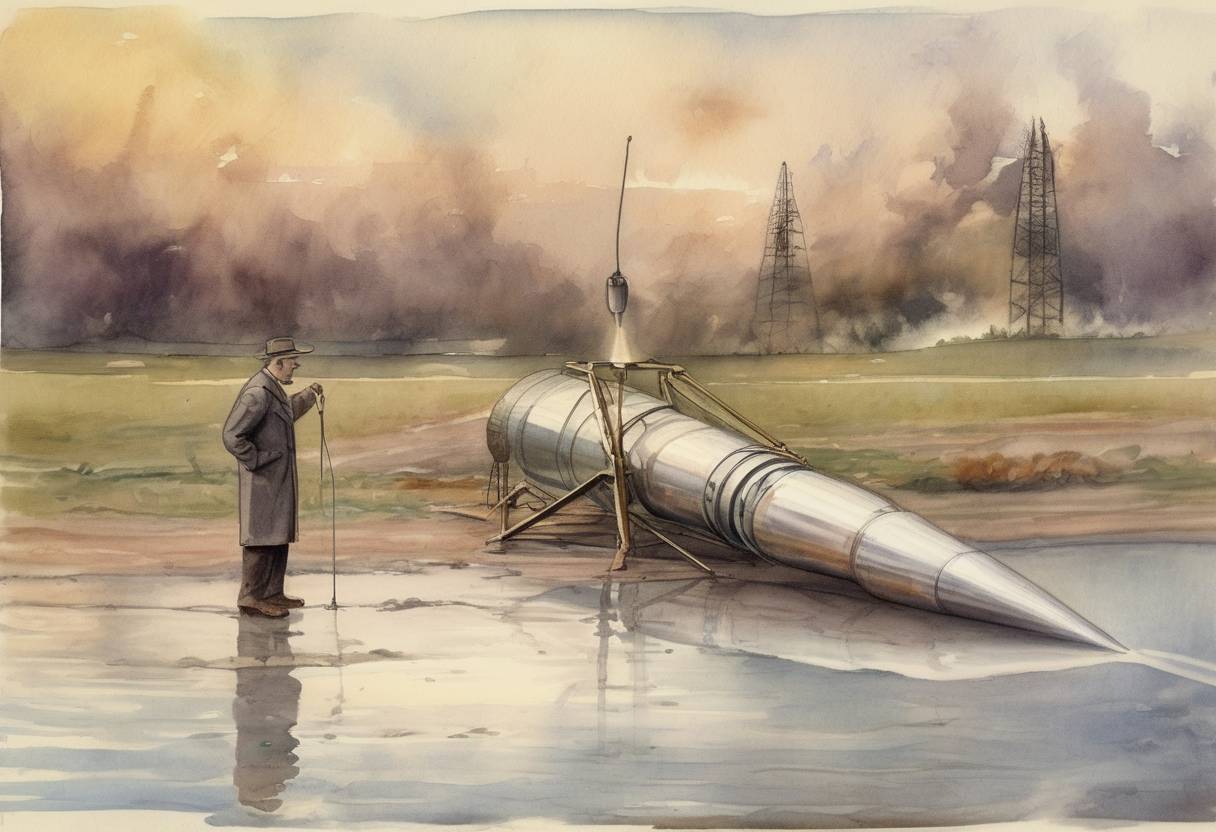
On March 16, 1926, Robert H. Goddard, an American physicist and engineer, successfully launched the world’s first liquid-fueled rocket in Auburn, Massachusetts. This event marked a pivotal moment in the history of rocket technology and laid the groundwork for future advancements in space exploration.
Robert Goddard, often referred to as the “father of modern rocketry,” had been fascinated by the potential of rockets since his youth. His interest was further fueled by the works of pioneers like Konstantin Tsiolkovsky and Hermann Oberth. Goddard’s research into rocketry began in earnest in the early 20th century, focusing on the use of liquid propellants, which he believed would provide greater efficiency and thrust compared to solid fuels.
Goddard’s successful launch was a monumental achievement in the field of rocketry. It proved that liquid-fueled rockets could be controlled and that they had the potential to reach higher altitudes and greater distances than their solid-fueled counterparts. This innovation was crucial for the development of modern space exploration technologies.
Robert Goddard’s launch on March 16, 1926, remains a testament to human ingenuity and the relentless pursuit of knowledge, marking the dawn of a new era in the exploration of the cosmos.
Source: en.wikipedia.org