Edward I Becomes King of England
1272 · London, England
Edward I becomes King of England, although he is not crowned until August 19, 1274.
October 19, 1216
King John of England dies at Newark Castle, leading to the ascension of his nine-year-old son, Henry III, to the throne.
Newark, England | English Monarchy
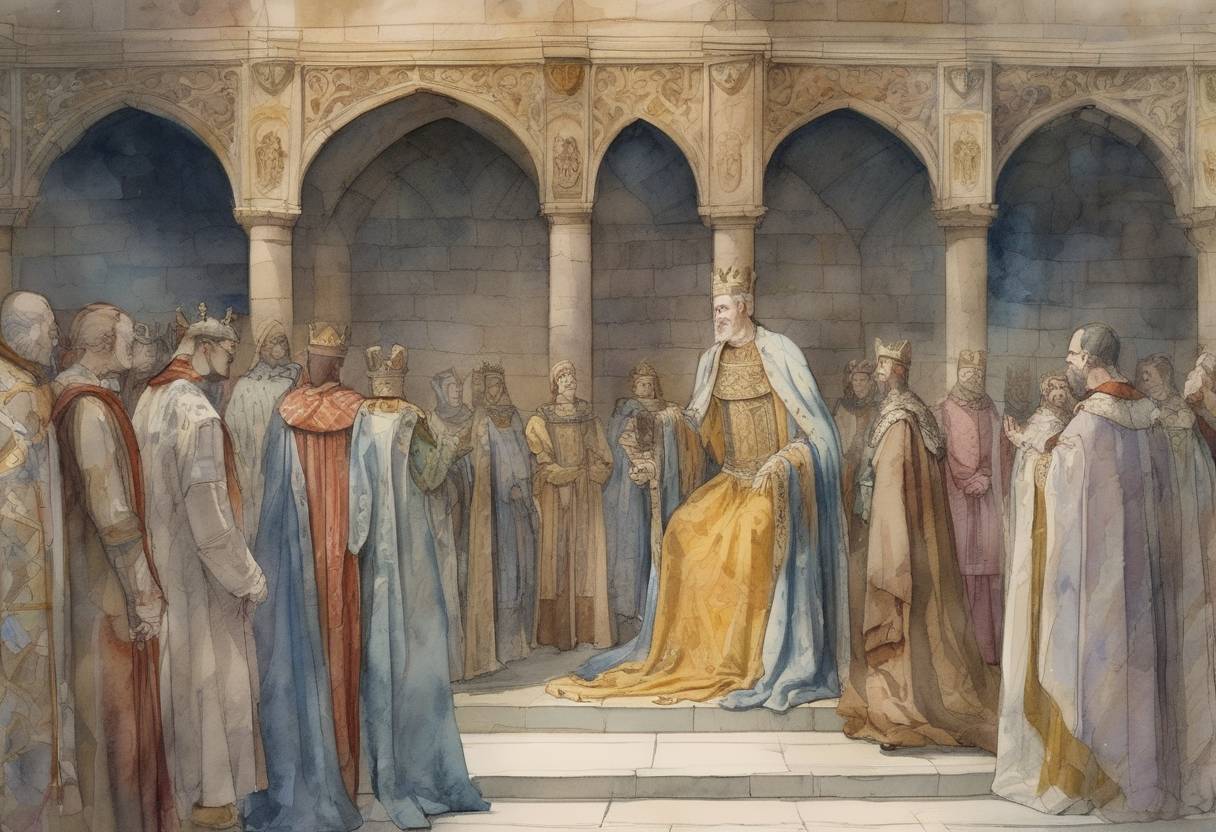
On October 19, 1216, King John of England passed away at Newark Castle, marking a pivotal moment in English history. His death led to the ascension of his nine-year-old son, Henry III, to the throne. This transition occurred during a turbulent period marked by internal strife and external threats.
King John, born on December 24, 1166, was the youngest son of King Henry II and Eleanor of Aquitaine. He ascended to the throne in 1199 following the death of his brother, Richard the Lionheart. John’s reign was characterized by a series of conflicts, both domestic and international. His loss of territories in France, heavy taxation, and disputes with the nobility culminated in the sealing of the Magna Carta in 1215, a document intended to limit royal power and protect baronial rights.
By 1216, England was embroiled in the First Barons’ War, a civil conflict between King John and a group of rebel barons. The barons, dissatisfied with John’s rule, had invited Prince Louis of France to take the English throne. This foreign intervention further complicated the political landscape.
King John’s health deteriorated rapidly in the autumn of 1216. It is believed that he succumbed to dysentery, a common and often deadly ailment of the time. His death at Newark Castle left the kingdom in a precarious position, with a young heir and ongoing conflict.
Henry III was only nine years old when he became king, necessitating a regency to govern on his behalf. William Marshal, the esteemed Earl of Pembroke, was appointed as regent. Marshal’s leadership was instrumental in stabilizing the kingdom and securing Henry’s position as king.
One of the first actions taken by the regency was to reissue the Magna Carta in 1216, albeit in a modified form, to appease the barons and restore peace. This move was crucial in gradually turning the tide against Prince Louis and the rebel barons.
Henry III’s reign, which lasted until 1272, was one of the longest in English history. His early years were dominated by efforts to consolidate royal authority and resolve the conflicts inherited from his father. The reissuance of the Magna Carta during his reign laid the groundwork for the development of constitutional governance in England.
The transition from King John to Henry III marked a significant turning point in English history. It underscored the importance of the Magna Carta and set the stage for the eventual establishment of parliamentary democracy. The events surrounding John’s death and Henry’s ascension highlight the complexities of medieval politics and the enduring impact of these historical developments.
Source: en.wikipedia.org