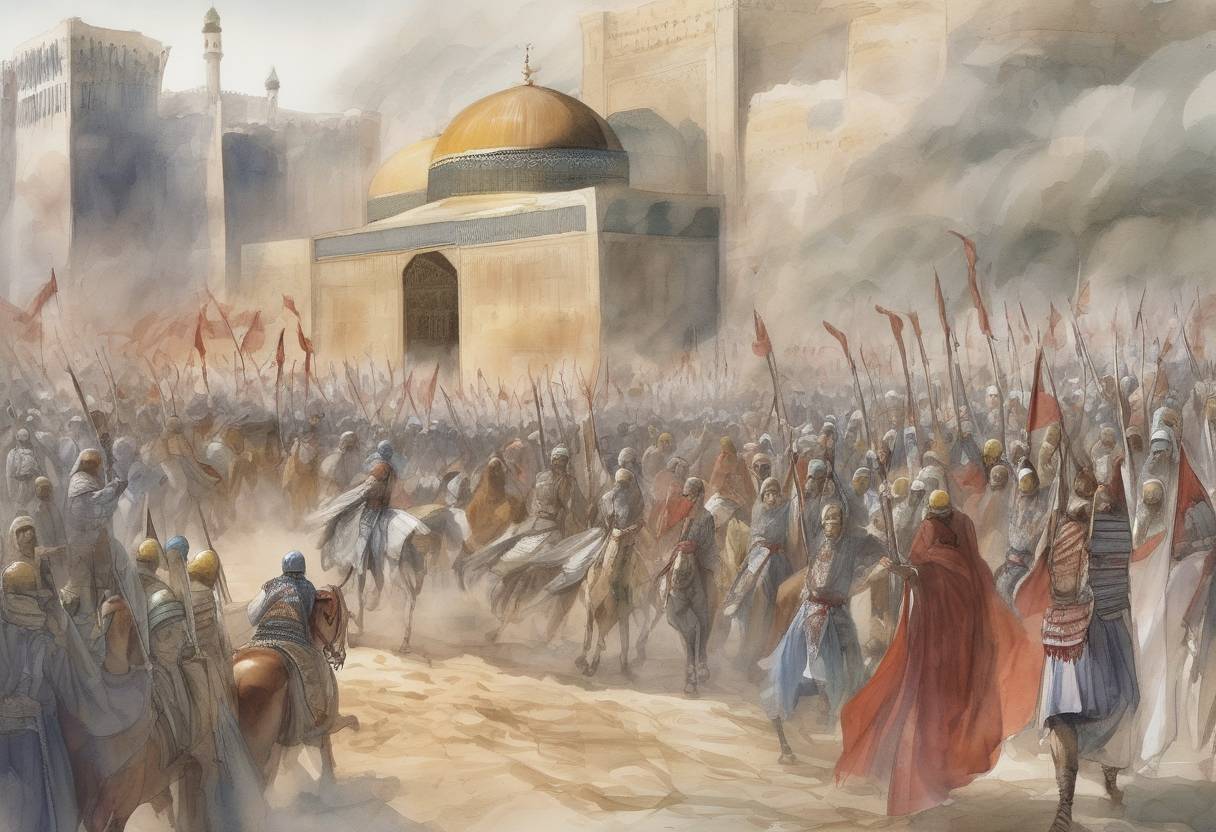
The Death of Yazid I: August 26, 683
Yazid I, the second Umayyad Caliph, passed away on August 26, 683. His reign, which lasted from 680 to 683, was marked by pivotal events that had lasting impacts on Islamic history, most notably the Battle of Karbala.
Background
Yazid I was born in 645 and was the son of Muawiya I, the founder of the Umayyad Caliphate. Upon Muawiya’s death in 680, Yazid ascended to the caliphate, marking the first instance of dynastic succession in Islamic history. This transition was controversial, as it deviated from the previous practice of selecting caliphs through consensus or election among the Muslim community.
Key Events During Yazid’s Reign
The Battle of Karbala
- Date: October 10, 680
- Significance: The Battle of Karbala is one of the most significant events in Islamic history. It involved the forces of Yazid I and a small group led by Husayn ibn Ali, the grandson of the Prophet Muhammad.
- Outcome: Husayn and his followers were killed, which led to widespread outrage and became a defining moment for Shia Islam. The martyrdom of Husayn is commemorated annually during the observance of Ashura, symbolizing the struggle against tyranny and injustice.
Aftermath of Karbala
- The Battle of Karbala deepened the rift between Sunni and Shia Muslims, a division that continues to have profound religious and political implications.
- Husayn’s martyrdom became a rallying point for opposition against the Umayyad rule, contributing to future uprisings and movements.
Yazid’s Death and Legacy
Yazid I died on August 26, 683, in the city of Damascus. His death marked the end of a turbulent and controversial reign. Yazid’s rule is often criticized for its authoritarian nature and the violent suppression of dissent, particularly in the context of the events at Karbala.
Consequences
- Succession: Yazid was succeeded by his son, Muawiya II, whose reign was short-lived. The instability following Yazid’s death led to further challenges to Umayyad authority.
- Historical Impact: The events during Yazid’s caliphate, especially the Battle of Karbala, have had enduring religious and cultural significance, shaping the identity and beliefs of Shia Muslims.
Yazid I’s reign, though brief, left an indelible mark on Islamic history, influencing the political and religious landscape of the Muslim world for centuries to come.