September 3, 1935

Sir Malcolm Campbell sets a new world land speed record of 301.337 mph (484.955 km/h) at the Bonneville Salt Flats in Utah.


Bonneville Salt Flats, United States | none
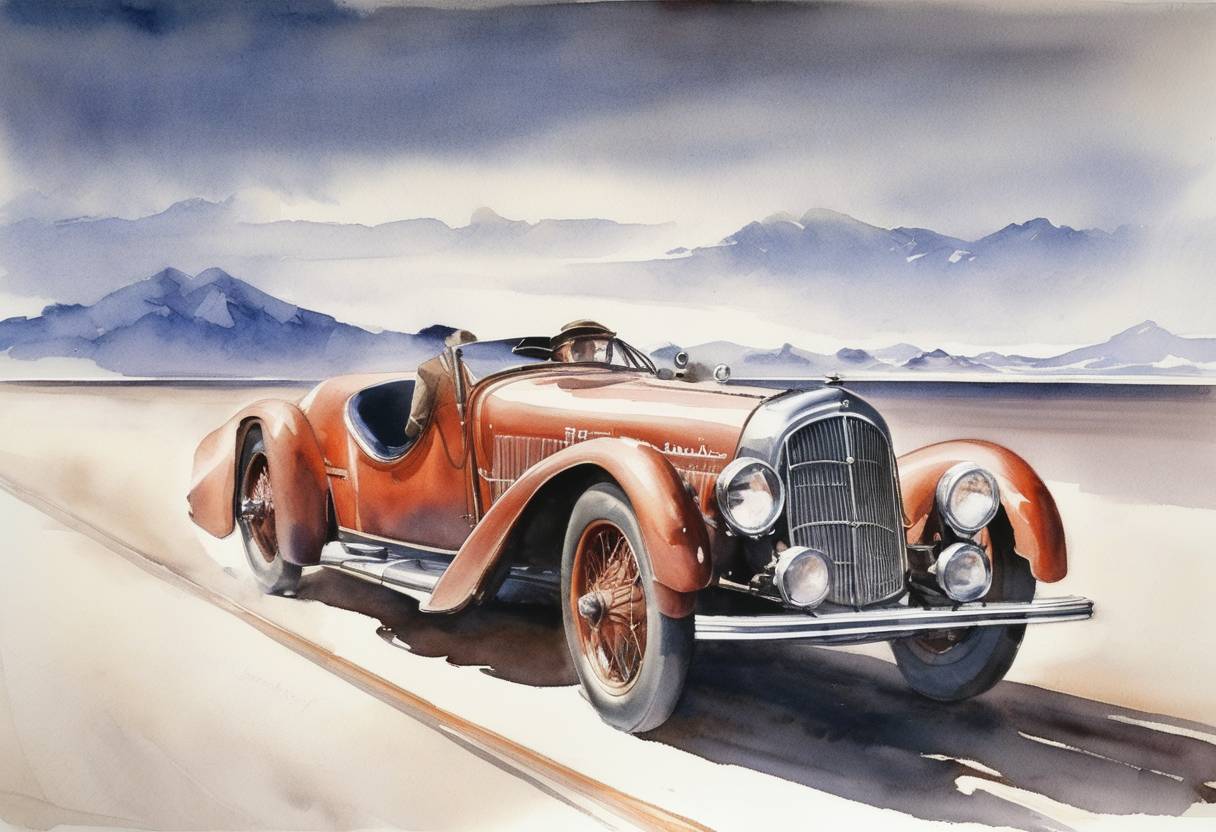
Watercolor painting based depiction of Sir Malcolm Campbell sets a new world land speed record of 301.337 mph (484.955 km/h) at the Bonneville Salt Flats in Utah. (1935)

Sir Malcolm Campbell Sets a World Land Speed Record

On September 3, 1935, Sir Malcolm Campbell set a new world land speed record at the Bonneville Salt Flats in Utah. This momentous achievement marked an important milestone in the history of automotive engineering and the pursuit of high-speed travel.

The Event

  • Location: Bonneville Salt Flats, Utah, USA
  • Achievement: New world land speed record
  • Speed: 301.337 miles per hour (484.955 kilometers per hour)

Campbell’s record-breaking run was conducted in his famous vehicle, the Blue Bird. This achievement was the culmination of years of engineering advancements and personal determination by Campbell, who had already set several speed records throughout his career.

The Blue Bird

  • Engine: The vehicle was powered by a Rolls-Royce R V12 aero engine.
  • Design: The Blue Bird featured a streamlined design, optimized for cutting through air resistance and achieving maximum speed.

Context and Significance

  • The Bonneville Salt Flats provided a unique location for such attempts due to their vast, flat, and hard surface, ideal conditions for high-speed trials.
  • This record was part of a fierce competition among speed enthusiasts throughout the early 20th century, symbolizing human ingenuity and the quest for pushing technological boundaries.
  • Campbell’s achievement inspired future generations of racers and engineers, establishing Bonneville as a legendary site in the world of land speed records.

Aftermath

  • After setting this record, Campbell continued to be a prominent figure in the world of motorsport, and his achievements were celebrated in the UK and around the world.
  • The record highlighted the potential and limits of contemporary automotive engineering, influencing future designs and innovations in high-speed vehicles.

Sir Malcolm Campbell’s accomplishment on September 3, 1935, remains a significant event in the history of speed records, reflecting both the daring spirit of the era and the relentless advancement of technology.