Establishment of the Irish Free State: December 6, 1922
1922 · Dublin, Ireland
The Irish Free State was established as a self-governing dominion of the British Commonwealth of Nations.
April 24, 1916
The Easter Rising began in Dublin, Ireland, as Irish republicans launched an armed insurrection against British rule.
Dublin, Ireland
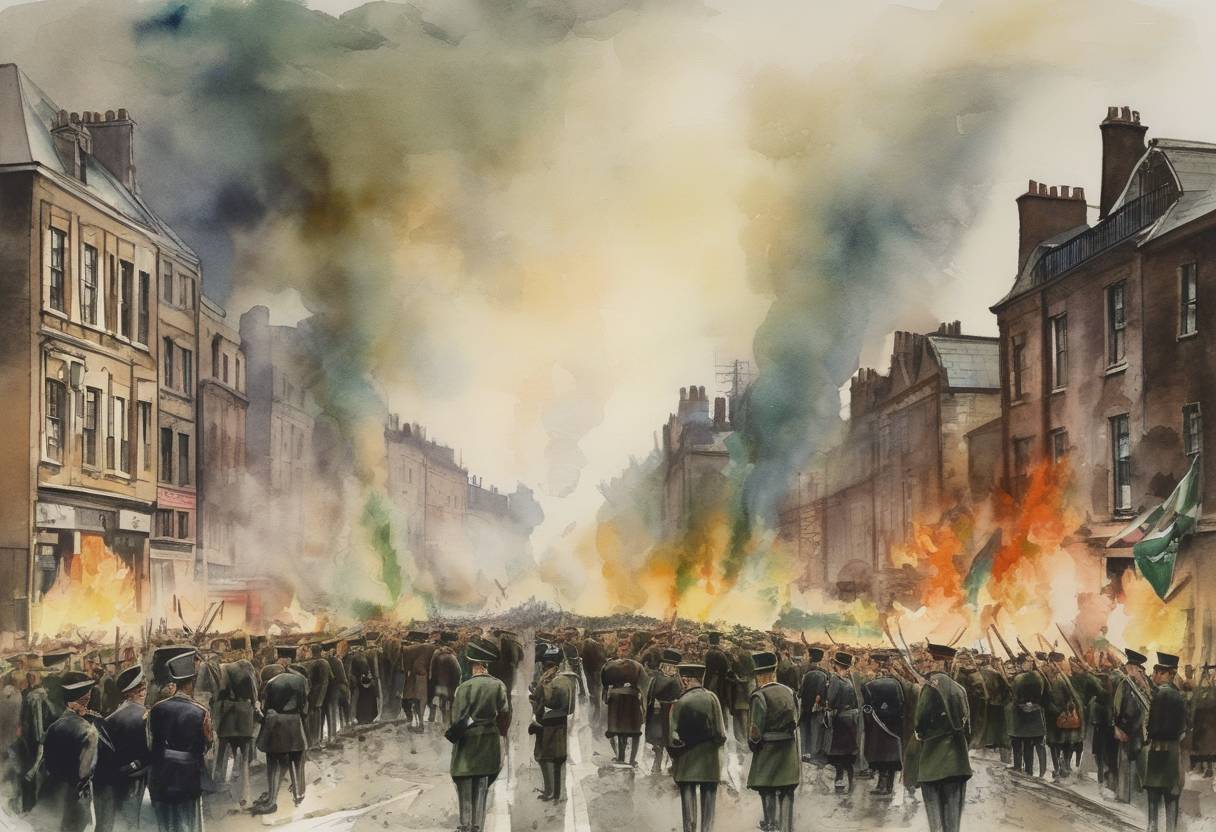
The Easter Rising, which began on April 24, 1916, was a pivotal event in Irish history, marking a significant moment in the struggle for Irish independence from British rule. This armed insurrection was orchestrated by Irish republicans who sought to establish an independent Irish Republic.
The early 20th century was a period of intense political activity in Ireland. The Home Rule movement, which aimed to secure self-government for Ireland within the United Kingdom, had gained momentum. However, its progress was stalled by the outbreak of World War I and opposition from Unionists in the north of Ireland.
Amidst this backdrop, a more radical faction within the Irish nationalist movement began to advocate for complete independence. This group included members of the Irish Republican Brotherhood (IRB), the Irish Volunteers, and the Irish Citizen Army. They saw the war as an opportunity to strike against British rule while Britain was preoccupied with the conflict in Europe.
April 24, 1916: The insurrection began on Easter Monday. Approximately 1,200 rebels took control of key locations in Dublin, including the General Post Office (GPO), which served as their headquarters. Leaders such as Patrick Pearse, James Connolly, and Thomas Clarke were central figures in the uprising.
Proclamation of the Irish Republic: From the steps of the GPO, Patrick Pearse read the Proclamation of the Irish Republic, declaring Ireland’s independence and the establishment of a provisional government.
Combat and British Response: The British authorities were initially caught off guard but quickly responded by deploying thousands of troops to suppress the rebellion. Intense fighting ensued, particularly around the GPO and other strategic locations.
Surrender: After six days of fighting, the rebels were overwhelmed by the superior numbers and firepower of the British forces. On April 29, Pearse and other leaders agreed to an unconditional surrender to prevent further civilian casualties.
Executions and Public Opinion: In the weeks following the uprising, 16 of the rebellion’s leaders were executed by the British, including Pearse, Connolly, and Clarke. These executions, coupled with the harsh treatment of the rebels, shifted public opinion in Ireland, garnering sympathy for the nationalist cause.
Rise of Sinn Féin: The political landscape in Ireland changed dramatically after the Rising. Sinn Féin, a nationalist party that had little involvement in the uprising, gained widespread support. By 1918, it had become the dominant political force, leading to the establishment of the First Dáil and the subsequent War of Independence.
Long-term Impact: The Easter Rising is seen as a catalyst for the eventual establishment of the Irish Free State in 1922. It remains a symbol of Irish resistance and the struggle for self-determination.
The Easter Rising of 1916 was a defining moment in Irish history, setting the stage for the eventual independence of Ireland and leaving a lasting legacy on the country’s national identity.
Source: en.wikipedia.org