Protests in Kenosha, Wisconsin: The Aftermath of Jacob Blake's Shooting
2020 · Kenosha, United States
Protests erupt in Kenosha, Wisconsin, following the police shooting of Jacob Blake, leading to widespread demonstrations against racial injustice.
July 7, 2016
A sniper attack occurred in Dallas, Texas, during a protest against police shootings of African Americans. Five police officers were killed, and nine others were injured. The gunman was later killed by a robot-delivered bomb.
Dallas, United States | Lone gunman
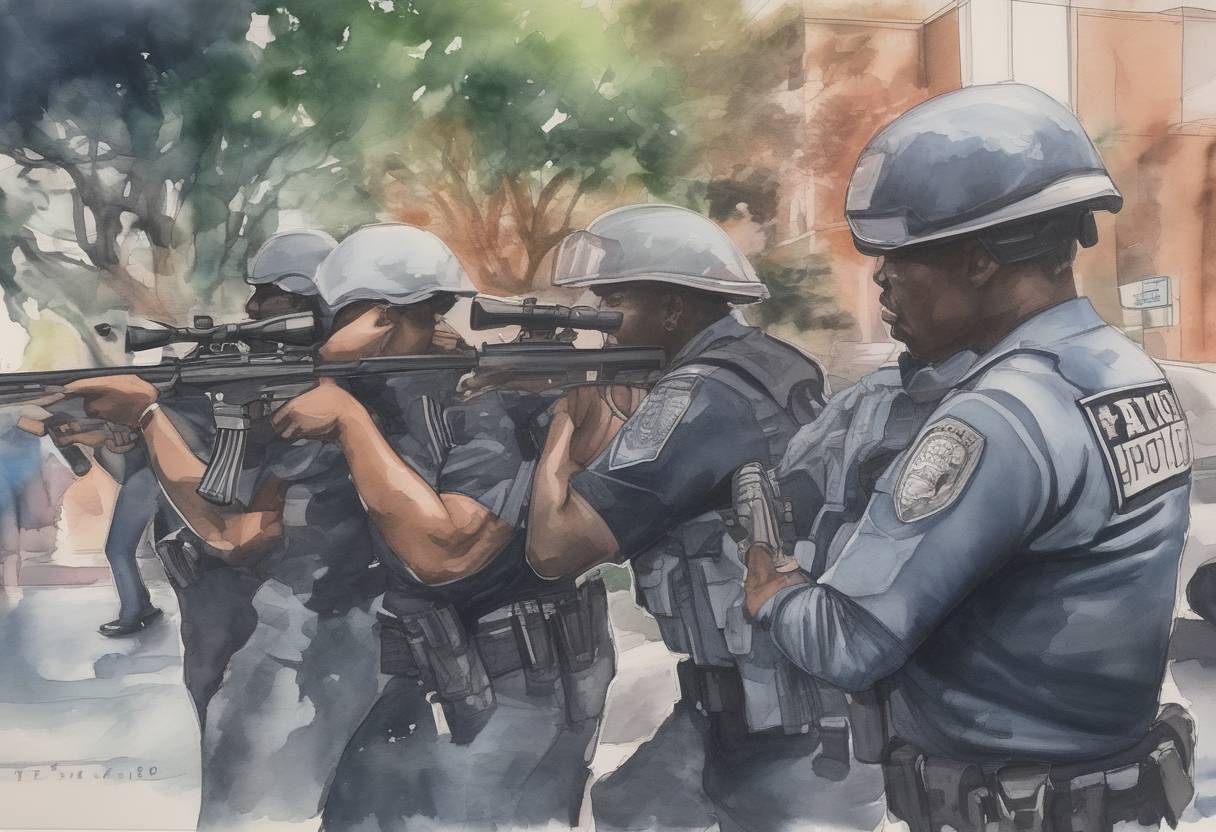
On July 7, 2016, a tragic and unprecedented event unfolded in Dallas, Texas, during a protest against police shootings of African Americans. The protest was part of a nationwide series of demonstrations following the police-involved shootings of Alton Sterling in Baton Rouge, Louisiana, and Philando Castile in Falcon Heights, Minnesota. These incidents had sparked widespread outrage and calls for justice and police reform.
During the peaceful protest in downtown Dallas, a sniper opened fire on police officers, resulting in the deaths of five officers and injuries to nine others, including two civilians. The attack marked the deadliest day for U.S. law enforcement since the September 11 attacks in 2001.
The five officers who lost their lives were:
The gunman was identified as Micah Xavier Johnson, a 25-year-old Army Reserve veteran. Johnson, who had served in Afghanistan, was reportedly motivated by a desire to retaliate against police officers for the shootings of African Americans. During the standoff with police, he expressed his anger and stated that he was not affiliated with any groups.
After a prolonged standoff, Dallas police made the unprecedented decision to use a bomb disposal robot to deliver an explosive device to the gunman’s location. This action resulted in Johnson’s death and marked the first time in U.S. history that law enforcement used a robot to kill a suspect.
The attack had significant repercussions:
National Impact: The event intensified the national debate over race relations, policing, and gun violence in the United States. It highlighted the tensions between law enforcement and communities of color.
Law Enforcement: The attack prompted law enforcement agencies across the country to reassess their strategies for handling protests and potential threats to officer safety.
Community Response: In Dallas, the community came together in the aftermath of the tragedy, with vigils and memorials held to honor the fallen officers and promote unity.
The Dallas sniper attack remains a poignant reminder of the complex and often fraught relationship between law enforcement and the communities they serve, as well as the ongoing challenges of addressing racial inequality and violence in America.
Source: en.wikipedia.org