Rudolf II Crowned King of Hungary
1564 · Székesfehérvár, Hungary
Rudolf II was crowned King of Hungary in Székesfehérvár, an important political event in Hungarian history.
December 25, 1000
Stephen I of Hungary is crowned the first King of Hungary, establishing the Christian Kingdom of Hungary and marking a significant step in the Christianization of Central Europe.
Esztergom, Hungary | Catholic Church
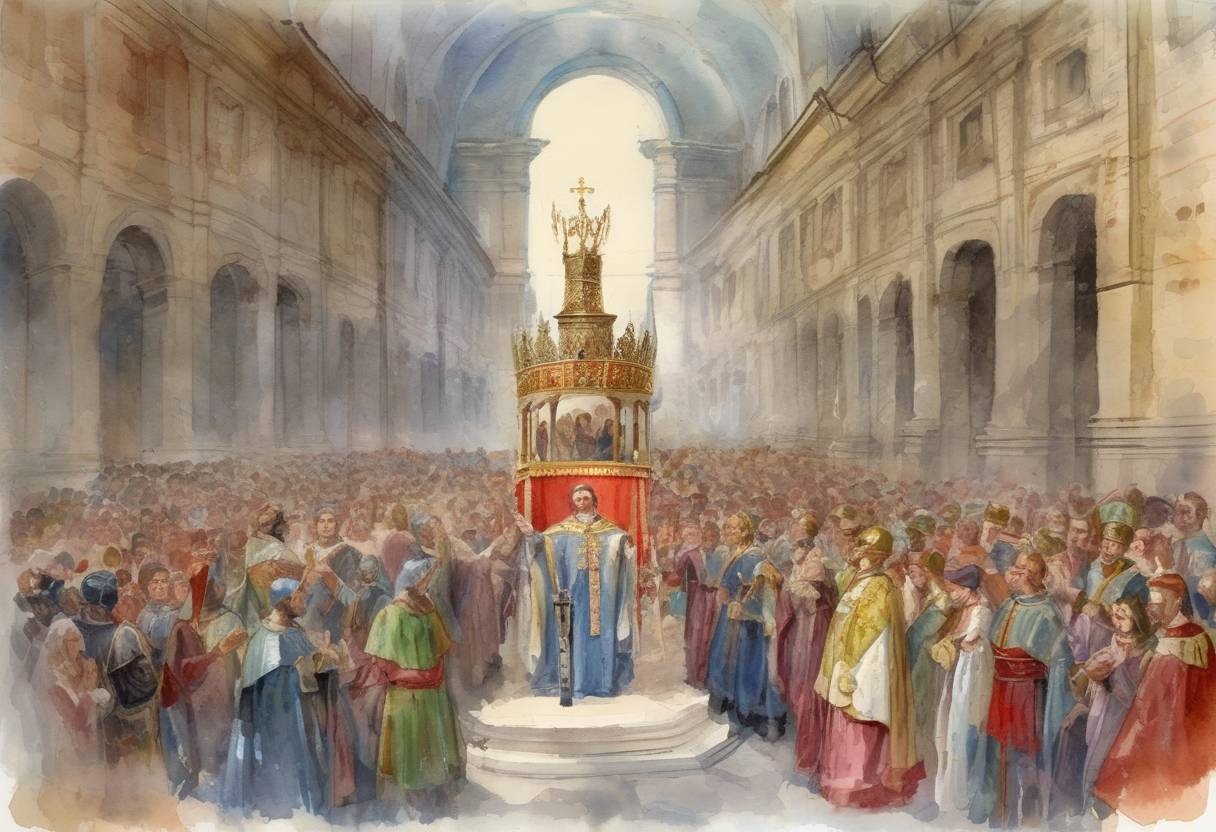
On December 25, 1000, Stephen I of Hungary was crowned as the first King of Hungary, a pivotal event in the history of Central Europe. This coronation marked the establishment of the Christian Kingdom of Hungary and was a significant step in the Christianization of the region.
Stephen’s Early Life: Born as Vajk in Esztergom around 975, Stephen was the son of Grand Prince Géza of Hungary and Sarolt, a noblewoman of Transylvanian origin. He was baptized as Stephen, named after the first Christian martyr, reflecting his family’s conversion to Christianity.
Christianization Efforts: Stephen’s father, Géza, had already initiated the process of Christianization in Hungary, recognizing the political and cultural advantages of aligning with Western Christendom. However, the task of consolidating Christianity in Hungary fell to Stephen.
Papal Support: Stephen sought and received the support of Pope Sylvester II, who sent him a crown, symbolizing papal approval and the recognition of Hungary as a Christian kingdom. This papal endorsement was crucial for Stephen’s legitimacy as a ruler.
Ceremony: The coronation took place on Christmas Day in the year 1000 or possibly on January 1, 1001, according to some sources. The ceremony was held in Esztergom, the ecclesiastical center of Hungary.
Christian Kingdom: Stephen’s coronation established Hungary as a Christian kingdom, integrating it into the cultural and political sphere of Western Europe. This move helped to secure Hungary’s borders and fostered alliances with other Christian states.
Centralization of Power: As king, Stephen worked to centralize power, establishing a feudal system and creating a network of counties governed by royal officials. He also founded numerous churches and monasteries, promoting Christianity throughout his realm.
Legacy: Stephen I is revered as a national hero and a saint in Hungary. He was canonized in 1083 by Pope Gregory VII, and his feast day is celebrated on August 20, a national holiday in Hungary.
Cultural Integration: The establishment of a Christian kingdom facilitated Hungary’s integration into the European cultural and political landscape, influencing its development for centuries.
Dynastic Stability: Stephen’s reign laid the foundation for the Árpád dynasty, which ruled Hungary for several centuries, ensuring a period of relative stability and growth.
Stephen I’s coronation was not just a significant event for Hungary but also a crucial moment in the broader Christianization of Central Europe, shaping the region’s religious and political trajectory for generations to come.
Source: www.britannica.com