Triumph of Byzantine Emperor Constantine V - August 25, 766
766 · Constantinople, Byzantine Empire
The Byzantine Emperor Constantine V celebrates a triumph in Constantinople after his successful campaigns against the Bulgars.
June 15, 0763
The Byzantine Empire, under Emperor Constantine V, achieves a significant victory over the Abbasid Caliphate at the Battle of Anchialus.
Anchialus, Byzantine Empire | Byzantine Empire
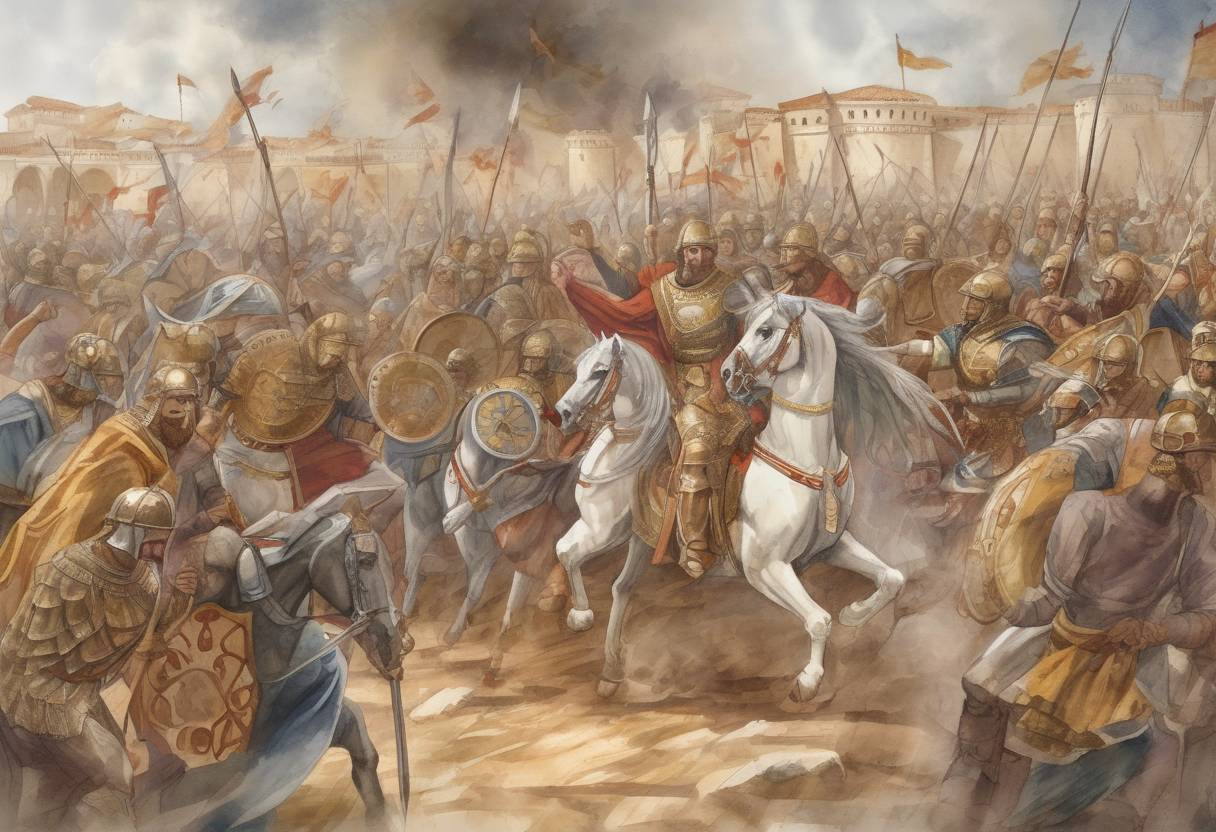
The Byzantine Empire, during the 8th century, was a formidable power in the Eastern Mediterranean. Under the rule of Emperor Constantine V (741–775), the empire was engaged in a series of conflicts with the Abbasid Caliphate, which had emerged as a dominant Islamic power following the Umayyad Caliphate. The Abbasids, under Caliph Al-Mansur, sought to expand their influence into Byzantine territories, leading to frequent military confrontations.
The Byzantine Empire, under Constantine V, was known for its military prowess and strategic acumen. Constantine V had focused on strengthening the empire’s defenses and military capabilities, particularly against the persistent threat from the Abbasids. The battle at Anchialus was part of a broader series of conflicts aimed at securing the empire’s northern frontiers and repelling Abbasid advances.
The Battle of Anchialus was a significant engagement between the Byzantine forces and the Abbasid army. Constantine V, leveraging his military experience and strategic insight, managed to orchestrate a decisive victory against the Abbasids. The Byzantine forces utilized their superior knowledge of the terrain and effective military tactics to outmaneuver the Abbasid troops.
The Battle of Anchialus on June 15, 763, stands as a testament to the Byzantine Empire’s military capabilities under Emperor Constantine V. It highlights the ongoing struggle between the Byzantine and Abbasid empires, reflecting the complex geopolitical dynamics of the 8th century. This victory not only secured Byzantine territories but also underscored the empire’s strategic importance in the medieval world.
Source: en.wikipedia.org