USAir Flight 427 Crash - September 8, 1994
1994 · Pittsburgh, United States
USAir Flight 427 crashes on approach to Pittsburgh International Airport, killing all 132 on board.
October 10, 1933
A United Airlines Boeing 247 is destroyed by sabotage, the first proven case of air sabotage in commercial aviation history.
Chesterton, United States | United Airlines
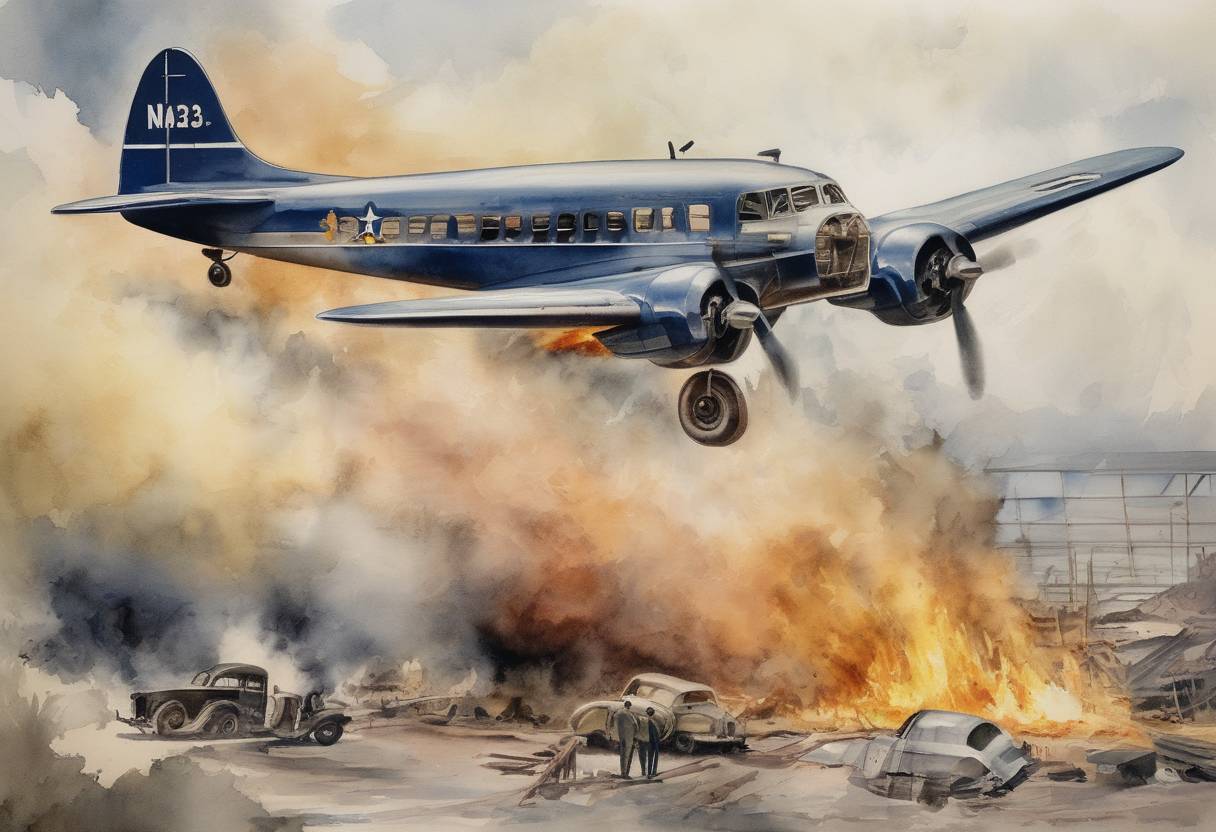
On October 10, 1933, a United Airlines Boeing 247 was destroyed by an act of sabotage, marking the first proven case of air sabotage in commercial aviation history. This tragic event unfolded in the skies over Chesterton, Indiana, and had significant implications for aviation security and safety protocols.
The Boeing 247 was a state-of-the-art aircraft for its time, representing a leap forward in commercial aviation with its all-metal construction and twin-engine design. United Airlines was one of the leading carriers utilizing this model, which was known for its speed and reliability.
The destruction of the United Airlines Boeing 247 in 1933 underscored the potential threats to commercial aviation and set a precedent for future safety and security measures. It served as a grim reminder of the vulnerabilities inherent in air travel and the need for vigilance in protecting passengers and crew.
This event is a pivotal moment in aviation history, illustrating the challenges of ensuring safety in an increasingly interconnected world.
Source: en.wikipedia.org