Champollion's Decipherment of the Rosetta Stone: October 28, 1822
1822 · Paris, France
Jean-François Champollion announced that he had deciphered the Rosetta Stone, thereby unlocking the ability to understand ancient Egyptian hieroglyphs.
July 15, 1799
The Rosetta Stone is discovered in the Egyptian village of Rosetta by French soldiers during Napoleon's campaign in Egypt, providing the key to deciphering Egyptian hieroglyphs.
Rosetta, Egypt | French Army
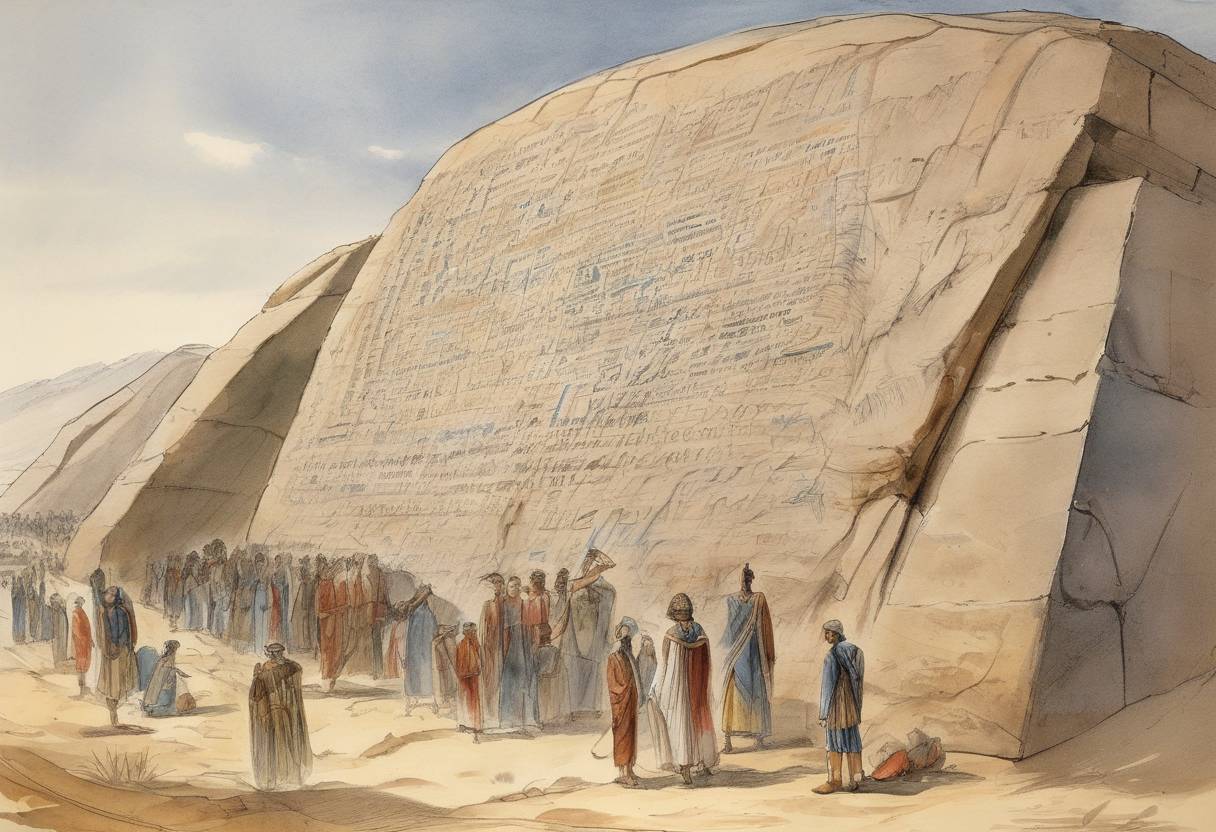
On July 15, 1799, during Napoleon Bonaparte’s campaign in Egypt, French soldiers made a groundbreaking archaeological discovery in the Egyptian village of Rosetta (modern-day Rashid). This artifact, known as the Rosetta Stone, would become instrumental in deciphering Egyptian hieroglyphs, a script that had been undecipherable for centuries.
Napoleon’s Egyptian campaign, which began in 1798, was not only a military endeavor but also an intellectual expedition. Accompanying the French army were a group of scholars and scientists, known as the Commission des Sciences et des Arts, tasked with studying and documenting the ancient and contemporary culture of Egypt.
The Rosetta Stone was discovered by a French soldier named Pierre-François Bouchard while he was working on the fortifications of Fort Julien near the town of Rosetta. The stone is a granodiorite stele inscribed with a decree issued in 196 BCE during the reign of King Ptolemy V. What made the stone particularly significant was that the decree was inscribed in three scripts: Greek, Demotic, and Egyptian hieroglyphs.
The presence of the Greek script, which was well understood by scholars of the time, provided the key to deciphering the other two scripts. This breakthrough was achieved by the British polymath Thomas Young and the French scholar Jean-François Champollion. Champollion’s work, in particular, laid the foundation for modern Egyptology by demonstrating that hieroglyphs were a combination of phonetic and ideographic symbols.
The Rosetta Stone was seized by British forces in 1801 following the defeat of the French in Egypt and was transported to the British Museum in London, where it remains one of the most visited exhibits. The decipherment of the hieroglyphs opened up vast new understandings of ancient Egyptian civilization, allowing historians and archaeologists to read and interpret countless other texts and inscriptions.
The discovery and subsequent decipherment of the Rosetta Stone marked a pivotal moment in the field of archaeology and the study of ancient languages. It not only unlocked the secrets of ancient Egypt but also demonstrated the power of linguistic and cultural scholarship in bridging the gaps between past and present civilizations.
The Rosetta Stone continues to be a symbol of linguistic discovery and remains a testament to the enduring quest for knowledge and understanding of human history.
Source: en.wikipedia.org